Seasonal Production Planning: How Factory Calendars Shape Your Apparel Timeline
Every apparel brand plans around retail calendars, sell-in windows, and trade show dates. The factory that produces your garments plans around none of those things. Factory capacity is booked seasonally, allocated in blocks, and filled months before production begins. Buyers who understand how that calendar works secure better capacity, better pricing, and fewer surprises. Buyers who treat factories like on-demand services spend their seasons chasing availability.

The Production Calendar Is Not the Retail Calendar
Retail operates on a familiar cycle: spring/summer merchandise ships to stores in early spring, fall/winter arrives in late summer. Buyers plan backward from those delivery dates, and most of the conversation in a brand's office centers on the selling season.
The production calendar starts much earlier and runs on different logic. A factory does not wait for purchase orders to arrive and then build garments. It fills its production lines for the coming season by allocating capacity months in advance, based on confirmed bookings from its buyer base. Those allocations determine which lines run which programs, how many operators are assigned to each style, and when raw materials need to arrive.
For buyers, the practical effect is that the window to secure factory capacity for a given season closes well before the window to finalize a retail assortment. A brand that selects styles in March for August delivery is already late for most factories producing complex garments. The production calendar has already moved on.
When Booking Windows Open and Close
Most garment factories operate on two primary seasonal blocks, roughly aligned with spring/summer and fall/winter production. The booking process for each season follows a similar pattern, offset by about six months.
For a typical fall/winter program delivering between July and September, factories begin accepting capacity commitments in November or December of the prior year. Fabric sourcing begins shortly after, followed by sample development and approval, with bulk production running from roughly April through July. The spring/summer cycle mirrors this, shifted forward.
These windows vary by product complexity. A basic knit T-shirt program with stock fabric can compress its total timeline significantly. A structured suit program or a technical outerwear style with custom fabric development, specialized trims, and multiple rounds of fit approval may need eight to ten months from initial commitment to shipment. The more construction complexity a garment carries, the earlier the booking window closes.
Fabric sets the actual timeline
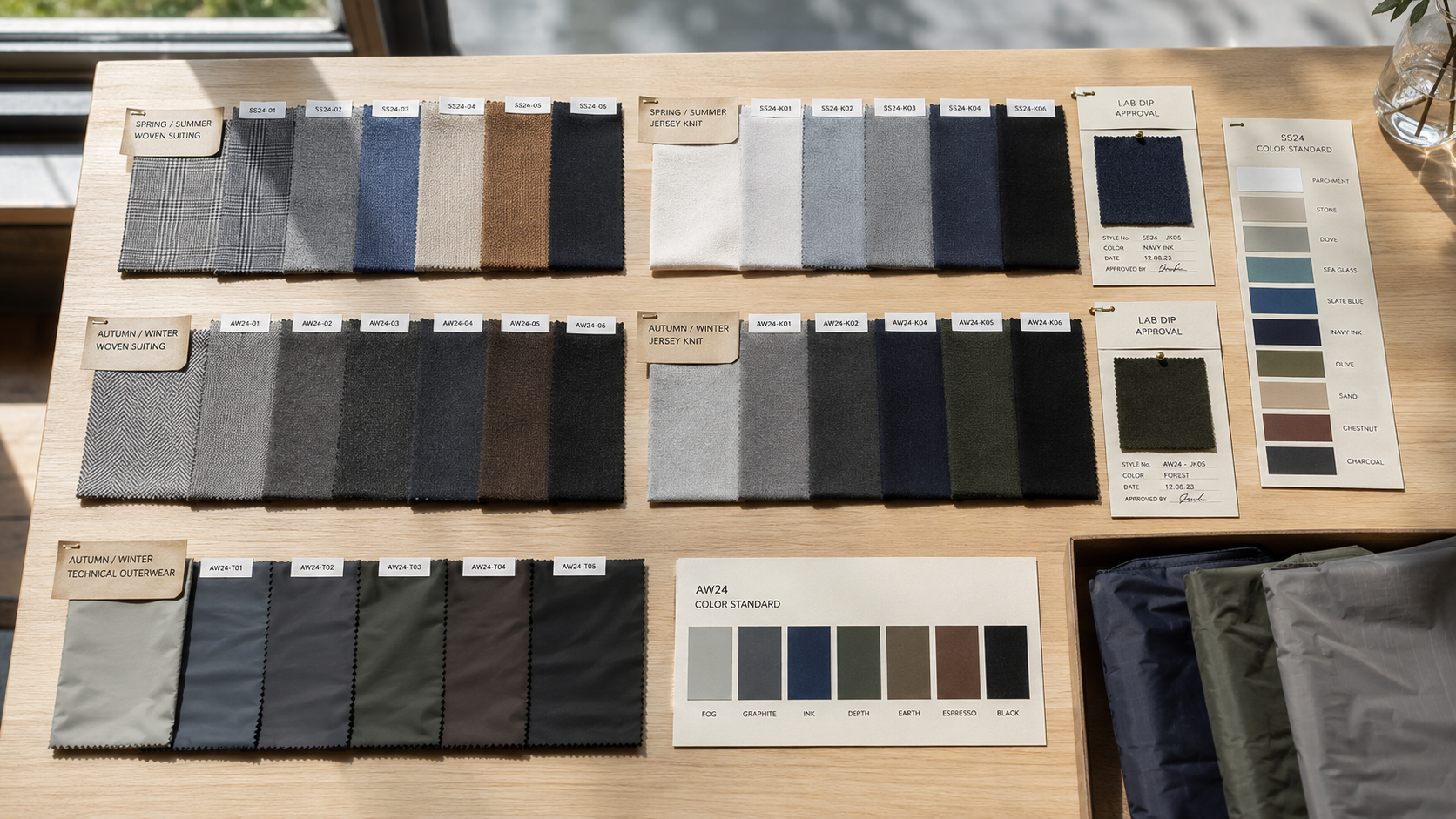
Most buyers focus on garment production lead times when planning their calendar. The constraint they underestimate is fabric. A factory can cut and sew a standard order in four to six weeks. But the fabric for that order may require eight to twelve weeks of mill lead time, depending on the construction, the fiber content, and whether the fabric is a stock program or a custom development.
This is where the production calendar diverges most sharply from a buyer's planning instinct. A brand that finalizes its fabric selection three months before delivery expects to be early. In many cases, that timeline is already too tight for the mill to produce the fabric, ship it to the garment factory, and leave enough runway for incoming fabric inspection and any necessary re-orders before cutting begins.
Fabric mills also observe their own seasonal patterns and holiday schedules. When the mill and the garment factory share the same holiday calendar, the compounding effect can remove four to six weeks of productive time from a season. Buyers who plan around the factory's schedule alone, without accounting for the mill behind it, often discover that the fabric was the bottleneck all along.
How Factories Allocate Capacity
A garment factory is not an empty room waiting for orders. It is a set of production lines, each staffed by operators who specialize in certain construction types, running on a schedule that extends months into the future. When a factory books capacity, it commits a specific number of lines, operators, and machine hours to a buyer's program for a defined production window.
That commitment carries real cost. A line allocated to one buyer's program cannot simultaneously run another buyer's work. If a booking falls through after capacity has been reserved, the factory absorbs idle time or scrambles to fill the gap with whatever work is available, often at unfavorable terms. This is why factories treat capacity allocation seriously and why committed buyers receive preferential treatment.
Committed Bookings
Backed by a deposit, confirmed quantities, approved samples, and a production-ready tech pack. The factory assigns lines, orders fabric, and schedules operators. This booking holds firm in the production calendar.
Tentative Bookings
Capacity is noted but not secured. No deposit, no fabric ordered, no line assignment. If a committed buyer needs that same window, the tentative booking gets displaced. Tentative slots are a courtesy, not a guarantee.
Repeat programs get first priority
Factories allocate capacity to their repeat production programs first. A buyer who has run the same style across multiple seasons, with proven patterns, approved fabric sources, and predictable quantities, represents the lowest-risk booking for a factory. The patterns are already graded. The operators know the construction. The quality standards are established. There is almost no ramp-up cost.
New programs, by contrast, require sample development, pattern adjustment, operator training on unfamiliar construction, and a higher rate of quality review during the initial production run. Factories accept new programs willingly, but they do not prioritize them over proven ones when capacity is constrained. A new buyer approaching a factory during peak booking season is competing with established programs that the factory already knows will run efficiently.
Seasonal Compression and Peak Demand
Not every month in the production calendar carries equal demand. Certain periods concentrate booking requests from a disproportionate share of the buyer base, creating compression where available capacity fills rapidly and late commitments struggle to find production windows.
The most common compression points occur when multiple markets converge on the same production season. A factory producing for American, European, and Asian buyers simultaneously may receive fall/winter commitments from all three markets within a narrow window. Each market has slightly different delivery requirements, but the production windows overlap heavily. The factory's total capacity does not expand to accommodate the overlap; instead, later commitments either get pushed to less favorable production windows or declined entirely.
The factory's capacity does not expand because your deadline arrived. The buyers who committed earliest are the buyers who produce on schedule.
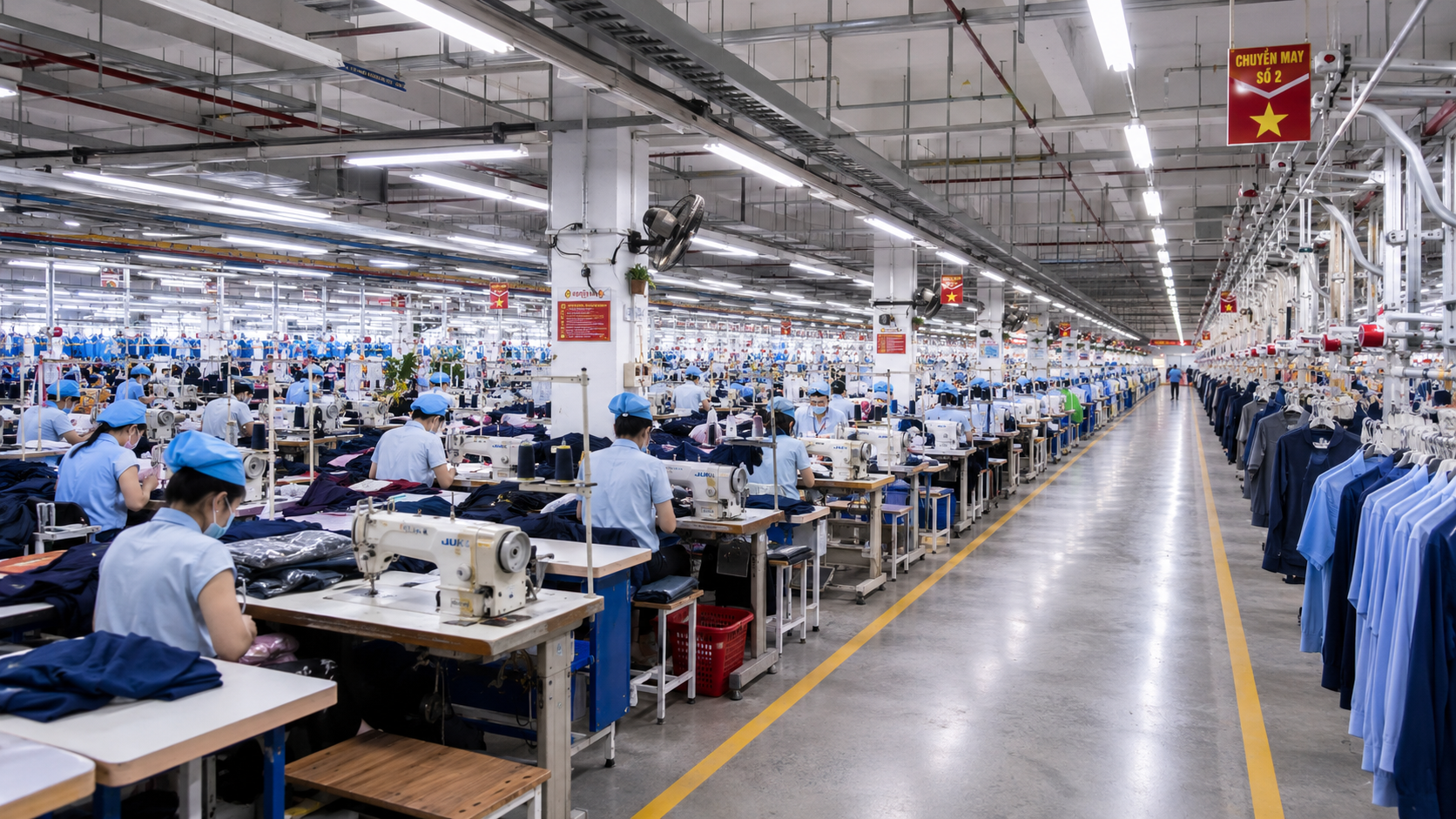
In Vietnam, Tet (Lunar New Year) is the single largest disruption on the production calendar. The official holiday runs roughly one week, but the effective production impact is far longer. Much of Vietnam's garment workforce migrates from rural provinces to industrial centers for work. In the weeks before Tet, workers begin returning home, and factory efficiency drops steadily. After the holiday, recalling the full workforce, reassembling trained line teams, and rebuilding production rhythm can take two to three additional weeks. The effective loss of capacity often runs three to four times the length of the official shutdown.
The disruption compounds because the same holiday affects the upstream supply chain. Chinese New Year falls on the same date as Tet, which means fabric mills in China go dark at the same time Vietnamese garment factories shut down. A buyer who plans production around the garment factory's Tet calendar alone, without accounting for the fabric mill shutdown, will often discover that the material never arrived in time for the post-holiday restart. Both sides of the supply chain stop simultaneously, and both sides need time to recover.
Buyers who recognize these patterns plan their commitments to land outside the compression windows, or commit early enough to secure their allocation before the window tightens. Buyers who wait until the compression is obvious have already lost the capacity they needed.
What You Need Before You Book
A factory cannot hold capacity against a concept. Booking production time requires specific, actionable information that allows the factory to assess the work, assign resources, and begin procurement. The further a buyer is from providing this information, the further they are from securing a production slot.
Before approaching a factory for seasonal capacity
At Pham Fashion House, we work with buyers who are ready to move from planning into production. The information below is what allows us to assess fit, provide accurate pricing, and commit a production window. Buyers who arrive with this information move through the process efficiently. Buyers who are still developing their program are welcome to reach out early, so we can advise on timing and preparation.
Production-ready tech packs
Complete technical packages with construction details, measurements, graded specs, and material callouts. Reference photos and sketches are a starting point, not a substitute for a production-ready tech pack.
Confirmed quantities
Total units per style, broken down by colorway and size. A factory needs firm numbers to assign line capacity and order the correct fabric yardage. Ranges or estimates do not allow for accurate booking.
Materials direction
Fabric type, weight, and composition. Whether the buyer is sourcing independently or relying on the factory's fabric sourcing network. Any specialized trims, hardware, or branded components that require separate procurement.
Target delivery and destination
When the finished goods need to arrive and where they are shipping. The delivery date is what the factory works backward from to set the production window, fabric order date, and inspection schedule.
Planning Backward from Delivery
The most reliable approach to production planning starts with the delivery date and works backward through each stage of the process. This is how experienced buyers and production partners build a calendar that accounts for every dependency, rather than discovering them sequentially.
Working backward from a target delivery date, the timeline layers as follows. Shipping and logistics occupy two to five weeks, depending on mode and destination. Pre-shipment quality inspection requires one to two weeks. Bulk production runs four to six weeks for most programs. Sample approval, including any revision cycles, takes three to six weeks. Fabric procurement, from order to delivery at the garment factory, runs eight to twelve weeks for custom programs. And the initial commitment, including tech pack review, costing, and booking confirmation, adds another two to four weeks at the front end.
Added together, a complex program may need six to eight months of total lead time from first conversation to delivered goods. Simpler programs with stock fabrics and proven patterns can compress that timeline significantly, but the structure of the backward plan remains the same.
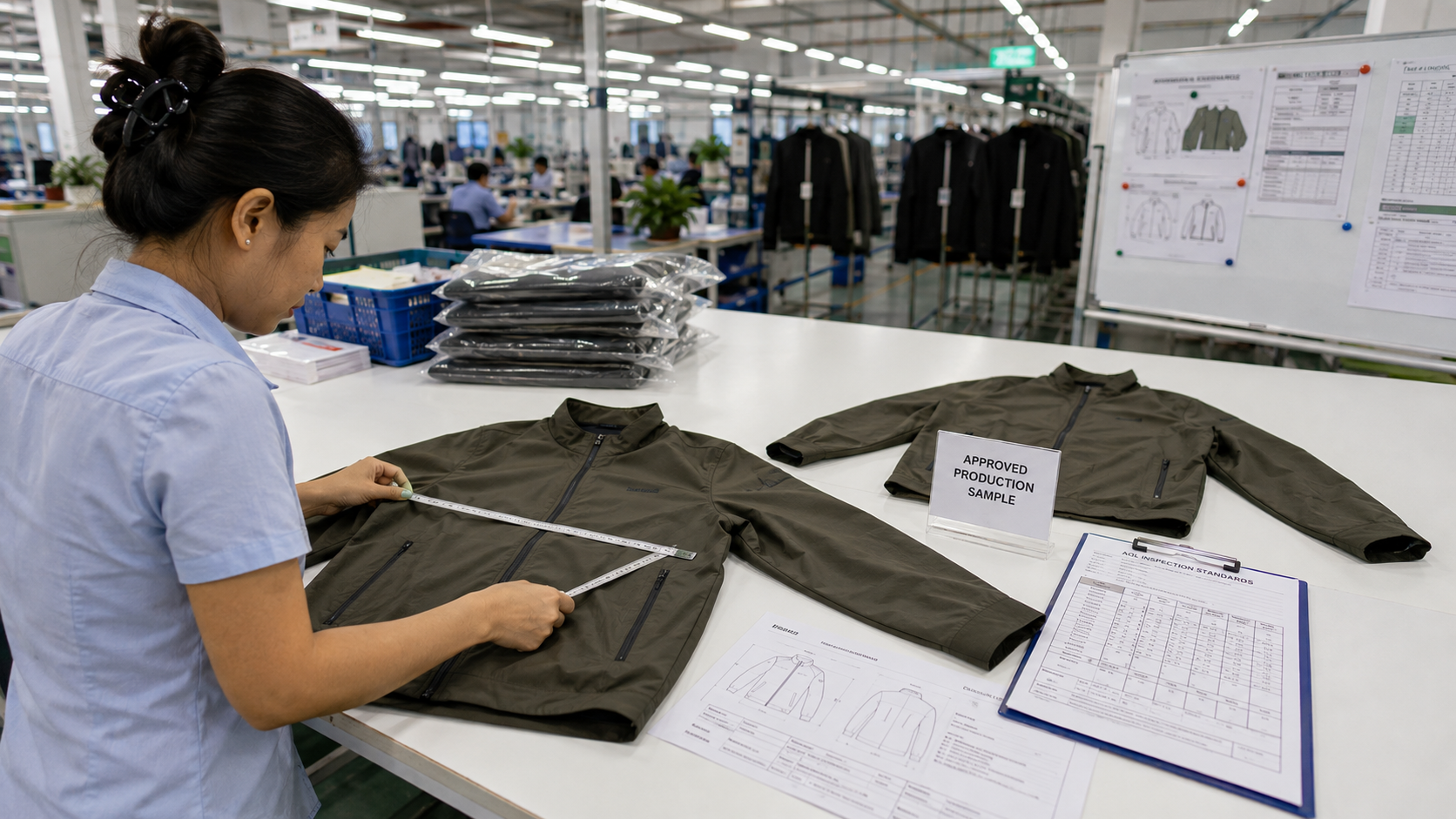
The backward planning approach also reveals a pattern that catches many first-time buyers: the earliest and most consequential decisions are the ones with the least visibility. By the time a buyer is reviewing production samples, the capacity is booked, the fabric is cut, and the program is committed. The decision to produce happened months earlier, when the buyer confirmed quantities, approved pricing, and placed a deposit. Everything after that point is execution.
Buyers who choose production partners with strong planning infrastructure benefit from this structure rather than fighting against it. A well-organized factory communicates booking windows, flags fabric lead times early, and builds the backward timeline collaboratively with the buyer. A disorganized one accepts orders without the upstream planning to support them, and the consequences surface as late deliveries, substituted materials, or production quality problems.
Plan Your Next Production Season
Start the Conversation Before the Calendar Decides for You
Pham Fashion House works with apparel brands and institutional buyers to build production calendars that account for every stage, from fabric procurement through final shipment. If you have tech packs and quantity targets for an upcoming season, we can assess fit and timeline before the booking window closes.
Get a Production Assessment