Every missed retail delivery traces back to the same root cause: a production calendar built on the timeline a buyer hoped for rather than the timeline the process requires. Understanding what each stage of Vietnam apparel production actually takes, and which stages can compress under pressure, is the difference between a program that ships on schedule and one that lives in expedite fees.
This guide walks through the full production timeline from finalized tech pack to goods on the water: development and sampling, fabric procurement, bulk production, quality control, and export. For each stage we cover the realistic duration at scaled volumes, what drives variance, and where buyers have genuine leverage over the calendar.
The Timeline Starts at the Tech Pack, Not the Purchase Order
Buyers often date their production calendar from the purchase order. Factories date it from the moment the specification is complete. If the tech pack arrives with unresolved measurements, unapproved fabric, or missing construction details, the clock has not started, no matter what the PO says. Our guide to production-ready tech packs covers what a complete specification package contains.
From a complete tech pack, a typical scaled production program in Vietnam runs 90 to 150 days to ex-factory, depending on product complexity and fabric position. Here is where that time goes.
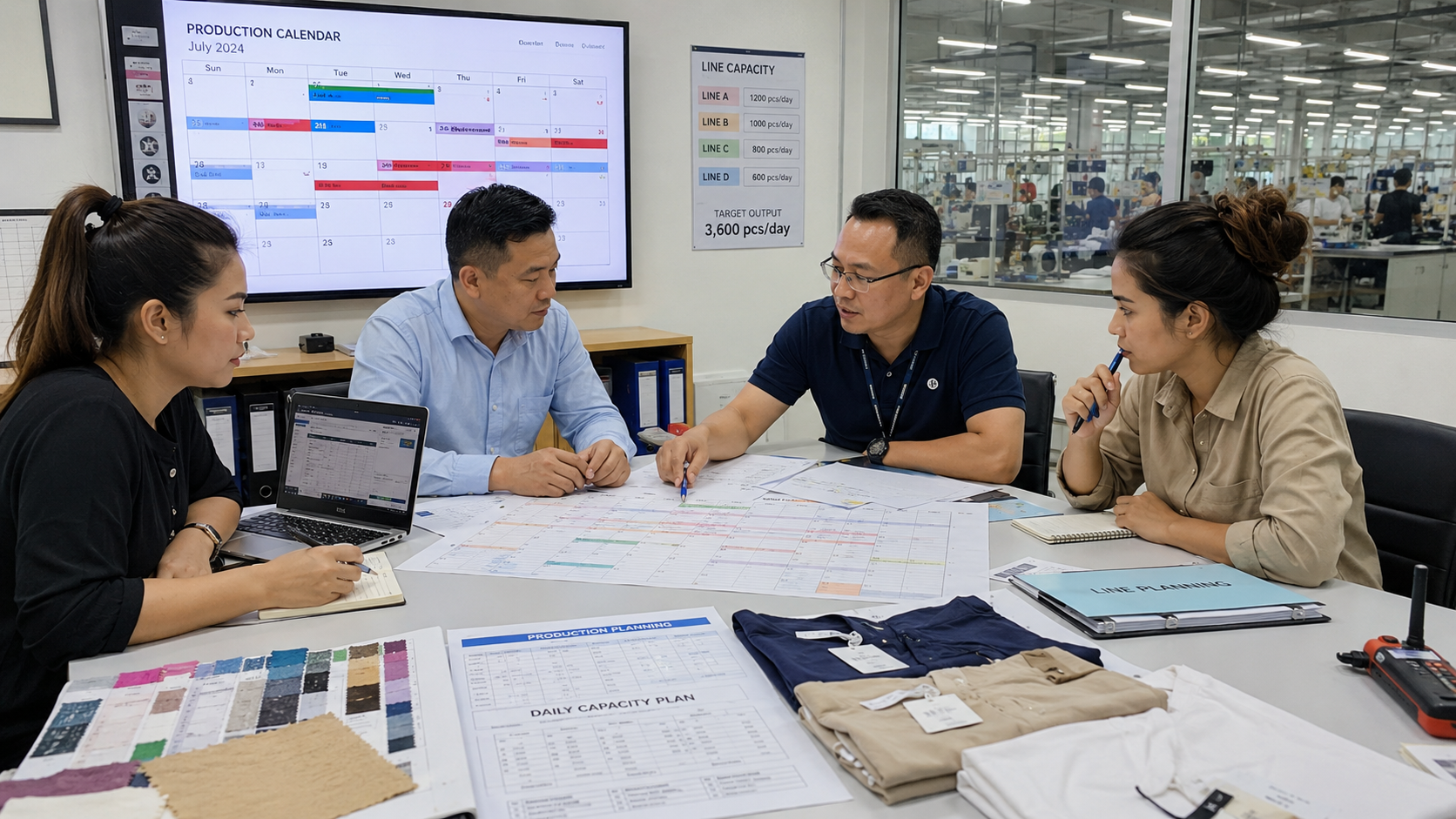
Stage by Stage: Where the Days Go
Development and sampling: 3 to 6 weeks
Proto and fit samples, buyer review, revisions, and final approval. Each revision round adds one to two weeks. Clean tech packs shorten this stage more than anything else.
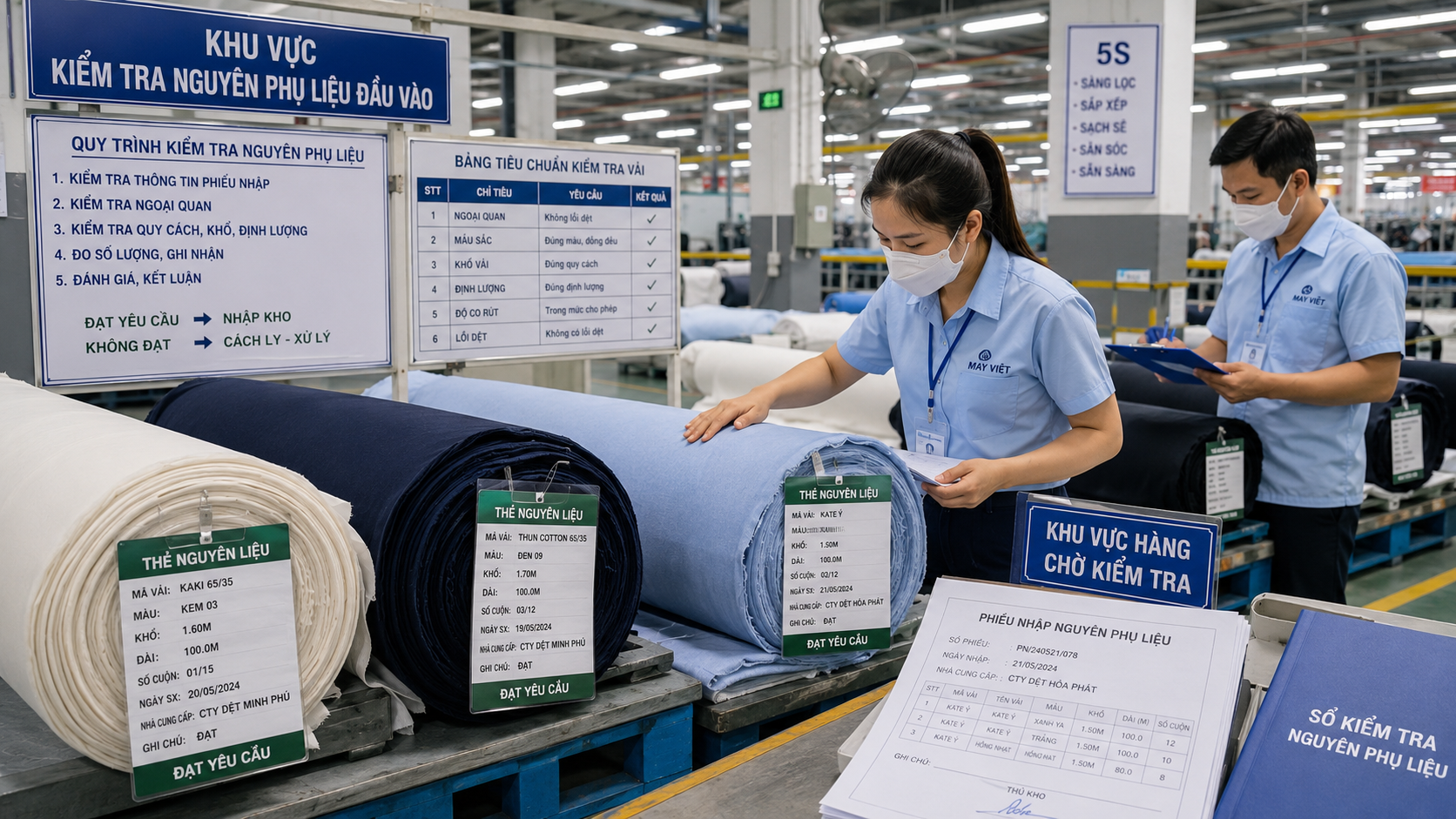
Fabric procurement: 4 to 10 weeks
The widest variance in the entire timeline. Stock fabrics ship in weeks. Custom-dyed, custom-knitted, or specialty technical fabrics can require two months or more from order to mill delivery.
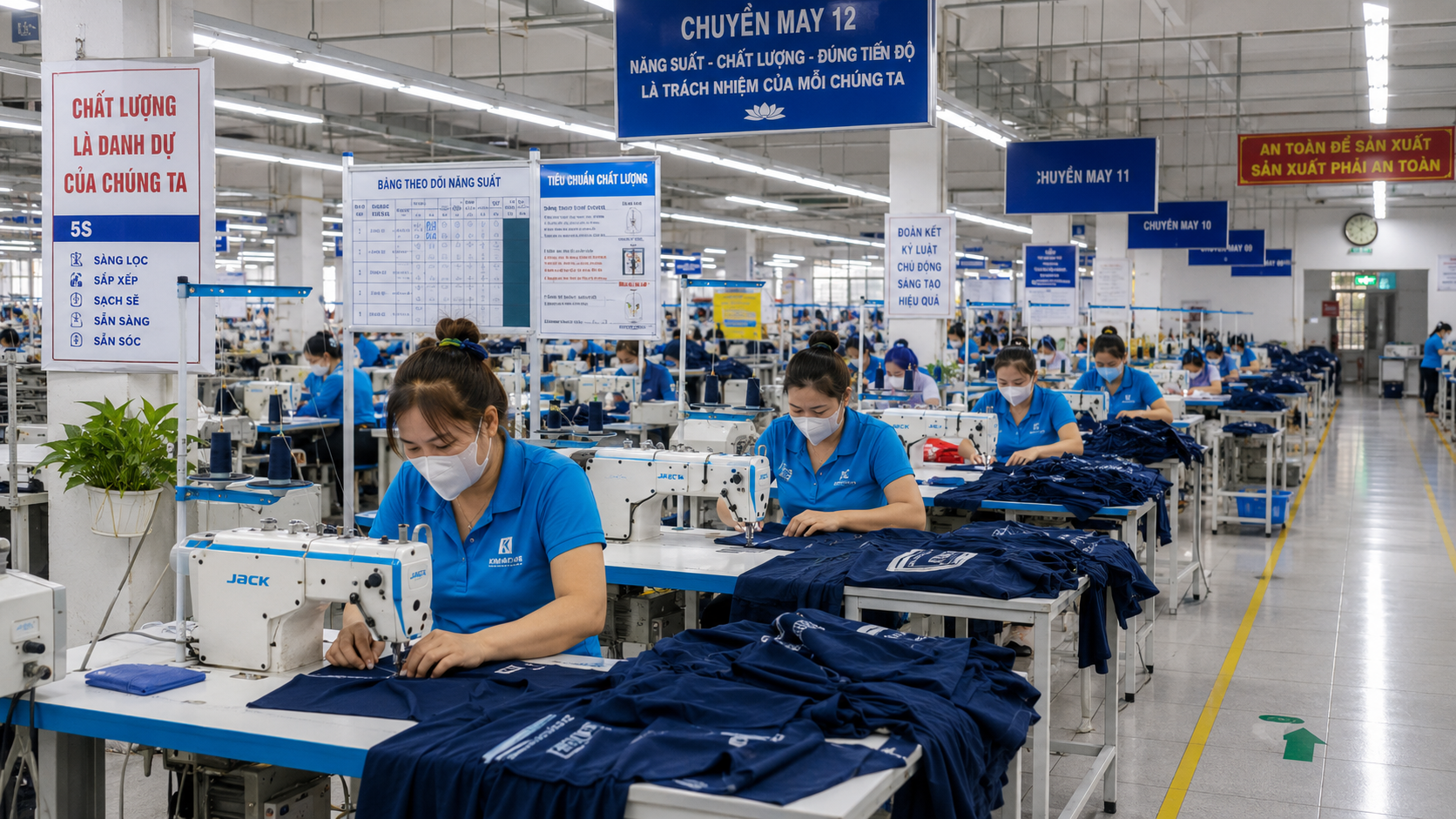
Bulk production: 4 to 8 weeks
Cutting, sewing, finishing, and pressing at scale. Duration depends on order size, product complexity, and where your order falls in the factory's booked capacity.
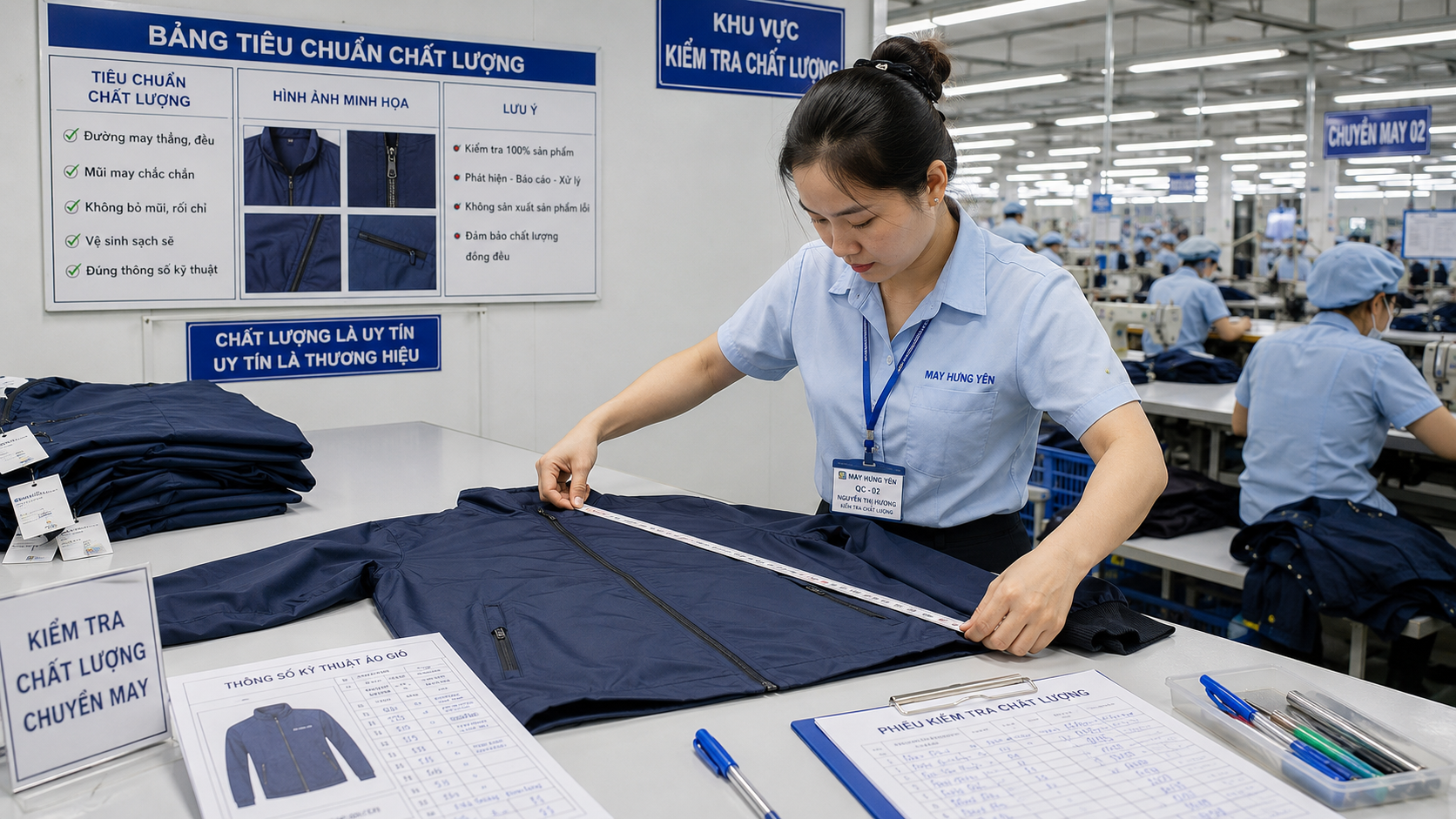
QC, packing, and export: 1 to 2 weeks
Final inspection, corrections if needed, packing, and export documentation. Ocean transit to the US East Coast then adds roughly four to five weeks beyond ex-factory.
Fabric is the long pole
Sampling can run in parallel with early fabric commitments, and production can flex with overtime, but fabric lead time is largely fixed once the order is placed. Buyers who approve fabric early, or who work with a partner able to source against defined criteria while sampling proceeds, routinely save four to six weeks against buyers who serialize every step.
What Compresses and What Does Not
When a delivery date is under pressure, buyers reasonably ask what can move. The honest answer is that some stages flex and others resist.
Where the calendar flexes
Sampling rounds compress when the buyer consolidates feedback into one revision instead of three. Fabric and sampling can overlap. Production can add lines or shifts when booked early. Air freight can recover two to four weeks at significant cost.
Where it does not
Custom fabric mill dates rarely move. Peak-season factory capacity is allocated months ahead and cannot be conjured. Final inspection cannot be skipped without accepting quality risk into the market. These constraints reward early booking, not late pressure.
Speed in apparel production is not bought at the end of the calendar. It is built at the beginning, in the tech pack and the fabric decision.
Capacity Booking: The Lever Most Buyers Use Too Late
Vietnamese factories running programs for major Western brands allocate production capacity by season, and the best line positions go to buyers who commit early. A brand that confirms orders four to six months ahead of its target ship date gets first position in the calendar, priority when disruptions hit, and often better pricing, because the factory can plan labor efficiently. A brand that arrives eight weeks before it needs goods competes for whatever capacity remains.
This is also where timeline and cost intersect. Rushed programs pay for their compression through overtime premiums, air freight, and split shipments, all of which land in the final invoice. Our guide to apparel costing and FOB pricing covers how these factors flow into unit economics, and our overview of the sample development process shows how disciplined sampling protects the downstream calendar.
Quality assurance deserves the same calendar respect. Inline and final inspections are scheduled events with defined durations, not formalities to squeeze into whatever days remain. Our guide to quality control and inspection in Vietnam covers how a properly staged QC program fits inside the production timeline rather than extending it.
Planning a Program Around Real Dates
The buyers who ship on time share a pattern. They work backward from the in-market date through transit, export, production, fabric, and sampling, then add margin at the stages with the widest variance. They approve fabrics early, consolidate sample feedback, and book capacity before the season tightens. None of this requires special leverage. It requires a calendar built on how production actually works.
Pham Fashion House builds that calendar with every client at program start, with visibility into factory capacity and fabric lead times before the first commitment is made. For brands planning Spring/Summer 2027 deliveries, the booking window is open now.
Vietnam apparel production partner
Planning your next production calendar?
Pham Fashion House works with established brands and institutional buyers to build realistic Vietnam production timelines, from tech pack review through capacity booking and delivery. Programs typically start at 3,000 units per style.
Discuss Your Program