Sustainable Fabric Sourcing in Vietnam: A Buyer's Guide to Eco-Friendly Materials
Sustainable fabric sourcing is often treated as a marketing decision rather than a specification decision. A buyer decides their next collection or program should be "more sustainable," and the conversation stops at the fabric name rather than continuing into certification, traceability, cost premium, and lead time. The fabric name on its own tells a buyer very little about whether a program is actually meeting the standard it claims to meet.
This guide covers the sustainable fabric categories most commonly sourced from Vietnam, the certifications that actually carry weight for buyers with sustainability reporting requirements, and what needs to be specified before a sustainable fabric program reaches the factory floor.
How this guide fits with our other manufacturing content
Our sustainable garment manufacturing guide covers environmental certifications and compliance at the factory level. Our guide to polyester and fabric specification covers recycled polyester in the context of general fabric specification discipline. This article is narrower: it is a practical reference for selecting and sourcing sustainable fabric categories specifically.
Fabric Selection Is a Sourcing Decision, Not a Marketing Decision
A sustainable fabric claim is only as good as the documentation behind it. Buyers with retail or institutional sustainability reporting requirements need certified chain of custody, not a fiber name on a hangtag. A fabric labeled organic, recycled, or eco-friendly without third-party certification does not satisfy most retailer ESG programs, and increasingly does not satisfy regulatory disclosure requirements in the EU either.
That means the sourcing conversation has to go past the fiber category into documentation, cost premium, and production lead time. Each sustainable fabric category below comes with a different answer on all three.
The Core Sustainable Fabric Categories
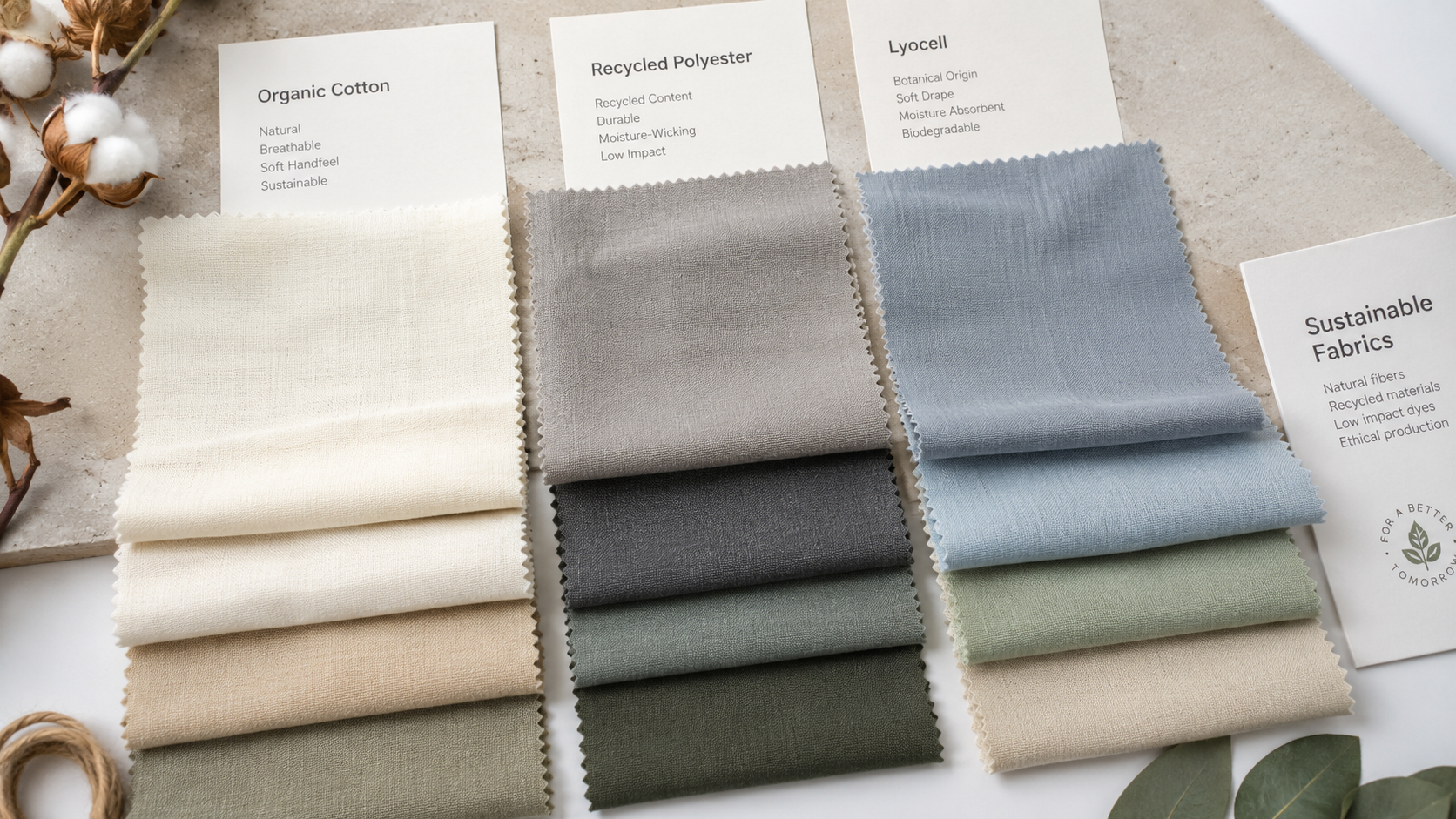
Organic Cotton
Cotton grown without synthetic pesticides or fertilizers, typically certified under GOTS (Global Organic Textile Standard) or OCS (Organic Content Standard). Strong fit for premium basics, childrenswear, and natural-fiber programs. Cost premium over conventional cotton is typically meaningful, and supply is more limited than conventional cotton, which affects lead time and minimum order quantities.
Recycled Polyester (rPET)
Polyester produced from recycled plastic, most commonly post-consumer PET bottles, certified under GRS (Global Recycled Standard) for verified recycled content and chain of custody. Strong fit for activewear, outerwear linings, and programs needing polyester's performance characteristics with a documented recycled content claim. Cost premium varies depending on recycled content percentage and certification level.
Tencel and Lyocell
A cellulosic fiber made from wood pulp through a closed-loop production process that recovers and reuses most solvents. Known for a silky hand feel and lower water usage in production compared to conventional cotton. Strong fit for blouses, dresses, and drapey woven applications. Sourcing is more concentrated among specific certified mills, which affects supplier options.
Recycled Nylon
Nylon produced from recycled sources, including pre-consumer manufacturing waste and post-consumer materials like fishing nets, typically certified under GRS. Common in technical outerwear, activewear, and swimwear where nylon's performance properties are required alongside a recycled content claim.
Bamboo Viscose
A cellulosic fiber processed from bamboo, valued for softness and breathability. Buyers should know that the environmental profile of bamboo fabric depends heavily on the processing method, conventional viscose processing uses significant chemical inputs, so certification of the specific production process matters more than the bamboo source material itself.
Hemp and Linen Blends
Natural bast fibers that generally require less water and fewer pesticides than conventional cotton to grow. Durable and breathable, well suited to casualwear and warm-weather programs. Hand feel and wrinkle behavior differ meaningfully from cotton, which affects design and construction decisions.

The Certifications That Actually Matter for Fabric Sourcing
Fabric-level certifications are a different category from the factory compliance audits covered in our sustainable manufacturing guide. These certify the material and its supply chain specifically, not the factory's labor or environmental practices as a whole.
GOTS (Global Organic Textile Standard)
Certifies organic fiber content and restricts processing chemicals, dyes, and additives across the full textile supply chain from fiber to finished product. The most widely recognized certification for organic cotton and other organic natural fibers.
GRS (Global Recycled Standard)
Certifies recycled content and chain of custody for recycled materials including polyester and nylon. Covers both the recycled content verification and the responsible production practices used to process it.
OCS (Organic Content Standard)
Verifies the presence and percentage of organically grown material in a product, without the processing restrictions included in GOTS. A lighter-weight certification useful when a buyer needs verified organic content without the full GOTS chemical processing scope.
OEKO-TEX Standard 100
Tests the finished fabric for harmful substances and chemical residues. Does not certify organic or recycled content, but is frequently required alongside fiber certifications as a chemical safety baseline, particularly for childrenswear.
Production network certification
Our production network in Vietnam holds GOTS, Global Recycled Standard, and Organic Content Standard certifications across applicable product lines, alongside the broader compliance certifications covered in our sustainable manufacturing guide. Specific certifications and supplier options vary by fabric category and order volume, and we confirm applicable certifications during the factory matching process.
What Buyers Need to Specify Before Sourcing Begins
A sustainable fabric program moves faster and produces more accurate pricing when the buyer arrives with clear specifications rather than a general direction toward "eco-friendly materials." The fabric category alone does not give a factory enough information to quote or source materials accurately.
Certification requirement
Specify which certification is required, GOTS, GRS, OCS, or another standard, and at what minimum recycled or organic content percentage. Different retailers and reporting frameworks require different certification thresholds.
Fabric weight and construction
Sustainable fiber content does not replace the need to specify GSM, weave or knit structure, and finish. A certified fabric in the wrong weight for the garment will still produce a quality problem.
Cost premium tolerance
Sustainable fabrics typically carry a cost premium over conventional equivalents, and that premium varies by category and certification level. Knowing the tolerance upfront speeds up factory matching and material sourcing.
Lead time expectations
Certified sustainable fabrics often have longer lead times and more limited supplier options than conventional materials. Building this into the production calendar from the start avoids compressed timelines later.
A sustainable fabric claim without certification documentation is a marketing statement. With certification, it becomes a sourcing specification a factory can actually fulfill.
How Pham Fashion House Supports Sustainable Fabric Sourcing
Pham Fashion House is a New York-based apparel sourcing and production partner with operations in Vietnam. We help established brands, uniform programs, and institutional buyers source certified sustainable fabrics, including organic cotton, recycled polyester, Tencel, and recycled nylon, as part of a coordinated production program rather than a standalone material request.
For buyers with specific certification or reporting requirements, we confirm which certifications apply during the factory matching process and build cost premium and lead time expectations into the production plan from the start. Programs typically start at 3,000 units per style. For buyers evaluating sustainability at the manufacturing level more broadly, our sustainable garment manufacturing guide covers factory-level certifications and compliance.

Vietnam apparel production partner
Sourcing certified sustainable fabrics for your next program?
Pham Fashion House helps established brands, uniform programs, and institutional buyers source GOTS, GRS, and OCS certified fabrics as part of a coordinated Vietnam production program. Programs typically start at 3,000+ units per style.
Discuss Your Program