Apparel Costing and FOB Pricing from Vietnam, Explained
Most pricing conversations between buyers and factories fail before they begin, and they fail for the same reason: the buyer asks what a garment costs before the garment is defined. An FOB price is a calculation built from a specific fabric, a specific construction, a specific quantity, and a specific set of finishing and packing requirements. Change any input and the number changes with it.
This guide breaks down what an FOB price actually contains, which factors move it up or down, and how to prepare for a pricing conversation so the quote you receive is one the factory will honor at production.
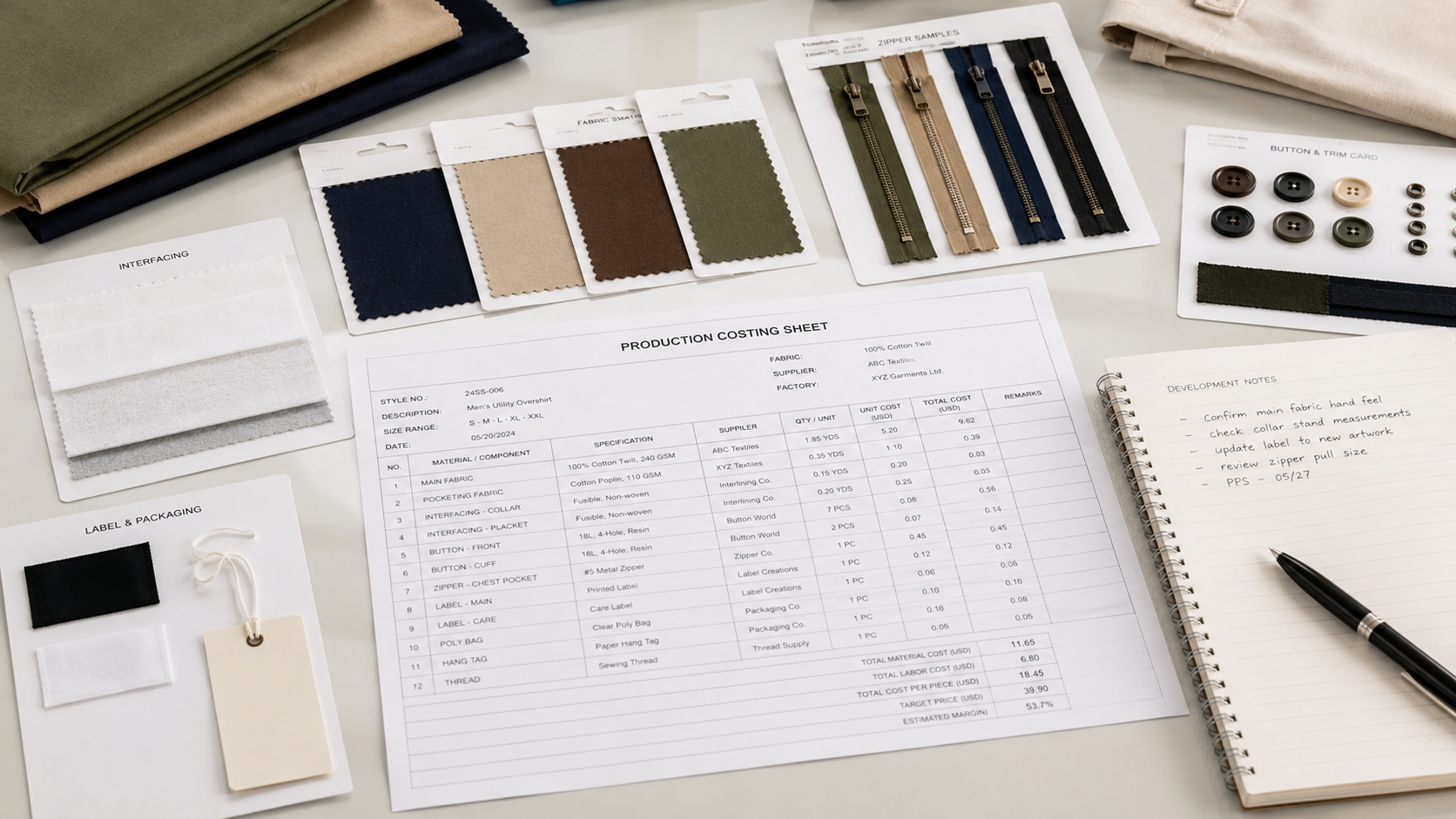
Accurate pricing starts with a finalized tech pack
Every cost component below depends on information that lives in a tech pack: the pattern that determines fabric consumption, the bill of materials, the construction details, and the packing requirements. Our guide to production-ready tech packs covers what a complete pack contains and why factories require one before quoting.
What FOB Pricing Includes
FOB (Free On Board) is the most common pricing basis in Vietnam apparel sourcing. An FOB price covers everything required to produce your garment and deliver it loaded at the Vietnamese port of export: materials, labor, factory overhead, packing, and local logistics to the port. From that point, ocean freight, insurance, import duties, and inland delivery to your warehouse are the buyer's responsibility.
This matters when comparing quotes. An FOB price from Vietnam and a DDP (Delivered Duty Paid) price from another supplier are not comparable numbers, and buyers comparing them directly routinely draw the wrong conclusion. Always confirm the incoterm before comparing anything. For the duty side of the landed cost calculation, our Vietnam apparel tariffs guide covers current US duty rates by product category and how Vietnam's trade agreements affect other markets.
The Five Components of a Garment Cost
1. Fabric
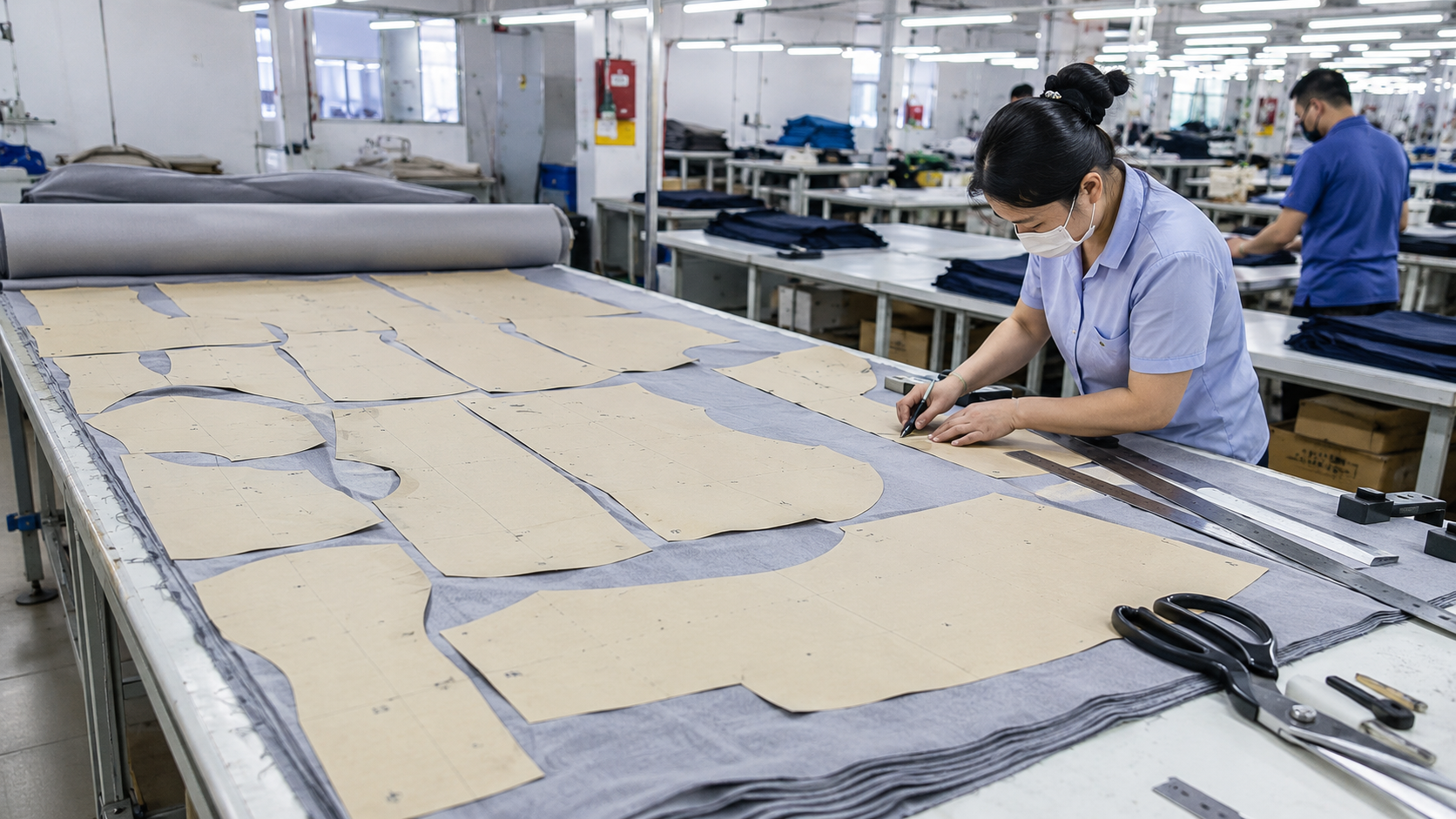
Fabric is typically 50 to 65 percent of a garment's FOB cost, which makes fabric consumption the single most important number in the calculation. Consumption is the yardage required per garment after marker efficiency, and it is determined by the pattern, the size range, and the fabric width. This is why a factory cannot price from a reference photo: without a pattern, consumption is a guess, and a guess on the largest cost component is not a price.
2. Trims and Accessories
Zippers, buttons, threads, labels, interlinings, elastics, drawcords, and hangtags. Individually small, collectively meaningful, especially on technical garments. A waterproof jacket can carry 30 or more trim components, and the difference between a standard zipper and a branded waterproof zipper is measured in dollars per garment, not cents.
3. Cut, Make, and Trim (CM Labor)
The labor cost of cutting, sewing, and finishing the garment, driven by the number of operations and the standard minutes required per unit. A basic T-shirt might carry 8 to 12 minutes of sewing time; a lined blazer carries well over 100. Factories calculate this using engineered time standards, so construction complexity in your tech pack translates directly into this line.
4. Washing, Printing, Embroidery, and Special Processes
Garment washing, screen printing, embroidery, seam sealing, and lamination are priced as separate operations, often involving specialized facilities. Each process adds cost and, equally important, adds time to the production calendar.
5. Overhead, Packing, and Margin
Factory overhead, quality control, testing, poly bags, cartons, and the factory's margin. Packing requirements set by major retailers (specific carton specs, hanger packing, retail-ready presentation) belong in your tech pack because they belong in your price.
A price built on complete information is the only price that survives contact with production.
What Moves the Price
Order quantity
Volume spreads fixed costs (marker making, sampling amortization, line setup) across more units and improves fabric purchasing terms. The efficiency gains between 1,000 and 3,000 units per style are significant, which is one reason our programs start at 3,000 units per style across up to three colorways.
Colorway count
Each additional color means a separate fabric lot, separate mill minimums, and additional shade approval rounds. Three colorways at 1,000 units each does not cost the same as one colorway at 3,000 units.
Fabric minimums
Mills carry their own MOQs per color, typically 500 to 1,000 meters or more for custom-dyed goods. Orders below fabric minimums either absorb surcharges or adapt to stock fabrics.
Construction complexity
Every additional seam, pocket, lining piece, and topstitch detail adds standard minutes. Simplifying construction where it does not affect the product is the most direct cost lever a designer controls.
Testing and compliance
Retailer testing protocols, third-party inspections, and certification requirements are real costs that belong in the quote rather than surfacing as surprises after it.
Seasonality
Factory capacity is not priced evenly across the year. Programs booked into peak season compete for line time; programs planned into open capacity windows negotiate from a better position.

How to Prepare for a Pricing Conversation
A buyer who arrives with the following receives a fast, accurate, defensible quote:
Finalized tech packs
Graded specs and a complete bill of materials. Without these, consumption and labor minutes are guesses, and the quote reflects that.
Target quantity
Units per style and per colorway. Volume is the single largest driver of unit cost and determines what fabric pricing and line terms are available.
Fabric direction
Whether you have a nominated mill, a fabric reference, or need sourcing support. The fabric decision shapes every other cost component in the quote.
Target FOB range
If you have one, share it. Doing so saves time on both sides and is not a negotiating disadvantage. A target that cannot be met at your spec is better discovered before sampling than after.
Delivery window
Your required in-warehouse date and shipping destination. Lead times from Vietnam vary by product complexity, fabric sourcing, and factory scheduling, and the calendar works backward from your date.
Program intent
Whether this is a one-time order or the beginning of an ongoing production program. Factories price repeat programs differently, and declaring your intent at the start positions the conversation correctly.
The last point deserves emphasis. Factories price ongoing programs differently than one-off orders because repeat production carries lower risk and better line planning. If you intend to build a program, say so at the start. Our guide to repeat production programs covers how pricing stability works across recurring orders.
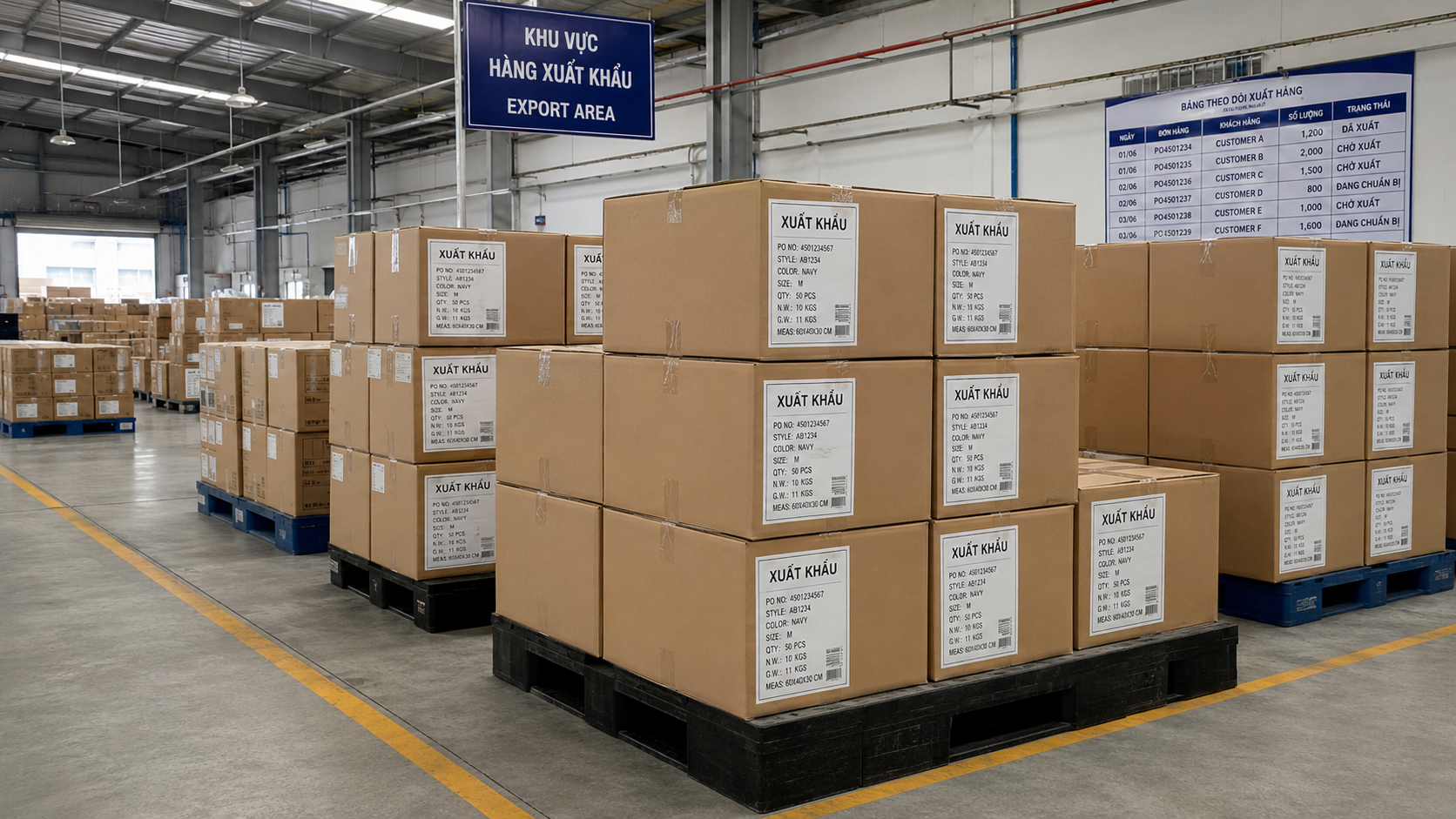
How Pham Fashion House Manages Costing
Pham Fashion House is a New York-based apparel sourcing and production partner with operations in Vietnam. We manage the costing process between you and our production partners: we review your tech packs for completeness before they go to the factory, flag specification gaps that would inflate the quote, and return pricing with the assumptions documented so you know exactly what the number contains.
Our production network runs GSD Cost Foundation for standardized cost engineering, which means quotes are built from engineered time standards rather than estimates, and pricing stays consistent and defensible across repeat runs. Where a design decision is driving cost without driving value, we tell you, because a program that prices correctly at the start is a program that renews. Our guide to what it actually costs to make a jacket walks through how those components appear in a real garment and how to verify the numbers. For buyers still earlier in the evaluation process, our guide to choosing an apparel manufacturing partner in Vietnam covers the full framework.
Vietnam apparel production partner
Have tech packs ready for pricing?
Pham Fashion House reviews your tech packs for completeness, structures the costing conversation with our Vietnamese production partners, and returns pricing with the assumptions documented. Programs typically start at 3,000+ units per style.
Request a Tech Pack Review