How Quality Control Works in Vietnam Apparel Manufacturing
Every production failure a buyer experiences overseas traces back to the same root cause: quality control that started too late. By the time a defect appears in a final inspection report, the fabric has been cut, the labor has been spent, and the shipping window is closing. Quality is not inspected into a garment at the end. It is built in at four distinct stages, and each stage catches problems the later ones cannot.
This guide explains how a structured quality control program works inside a large-scale Vietnamese garment operation, what AQL sampling actually means for your order, how factory QC and independent inspection work together, and what buyers should require in writing before committing volume.
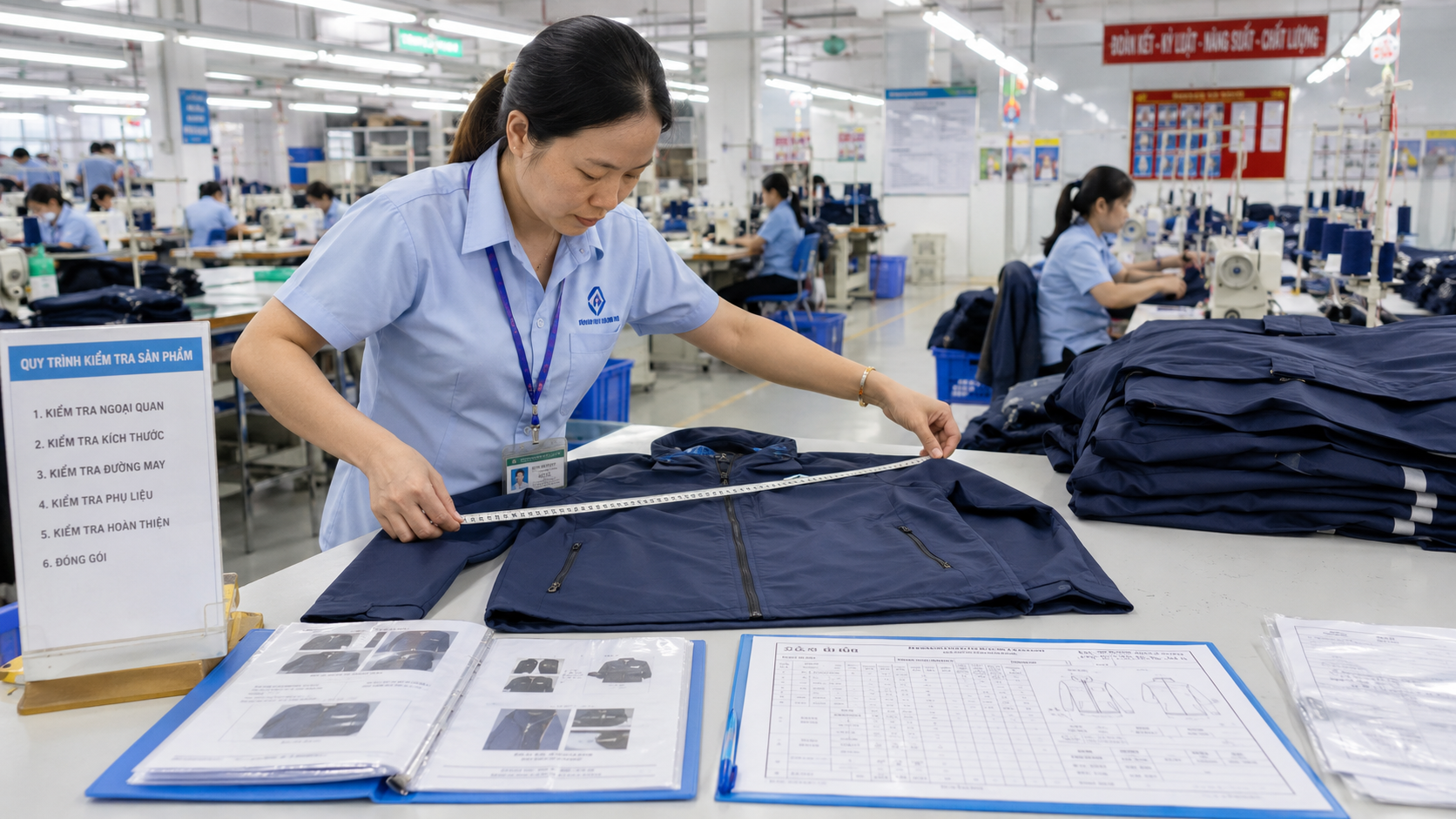
This guide covers the inspection process within a single production run
Keeping quality consistent across the second, tenth, and twentieth order is its own discipline, covered in our guide to repeat production programs. For the broader factory evaluation framework, see how to choose an apparel manufacturing partner in Vietnam and maintaining quality while scaling production.
The Four Inspection Stages
A serious factory does not treat inspection as a single event. Quality control runs through the entire production timeline, and each checkpoint exists because the cost of correcting a defect multiplies the further downstream it travels.
1. Fabric and Trim Inspection
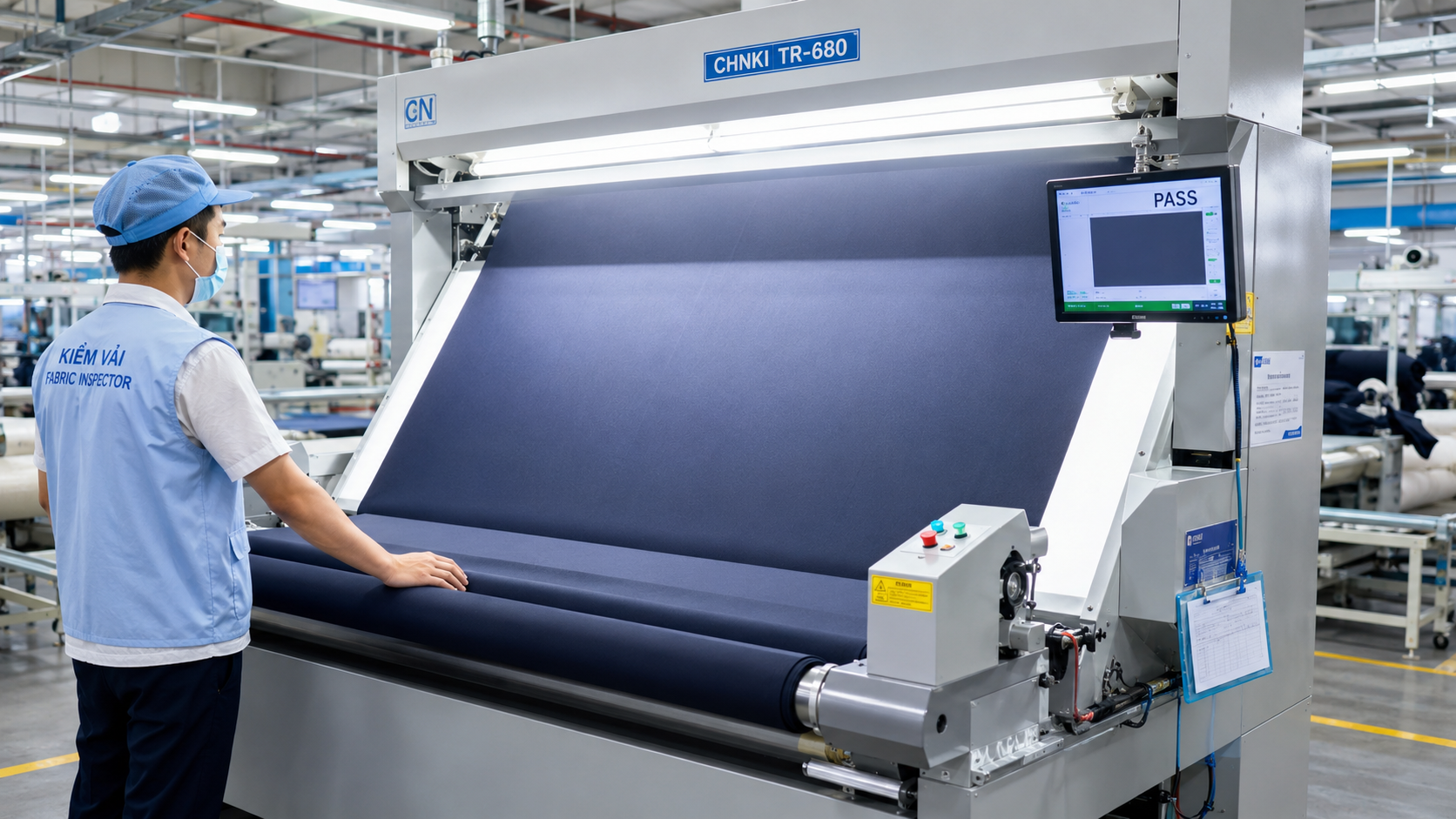
Before a single panel is cut, incoming fabric is inspected against the approved standard: shade continuity across rolls, weight, hand feel, shrinkage behavior, and visual defects logged under the industry-standard four-point system. Trims (zippers, buttons, labels, elastics) are checked against approved samples for color, function, and durability. Factories running automated fabric inspection systems alongside manual review identify defective goods and claim against the mill before the material enters production, rather than discovering the problem in a finished garment.
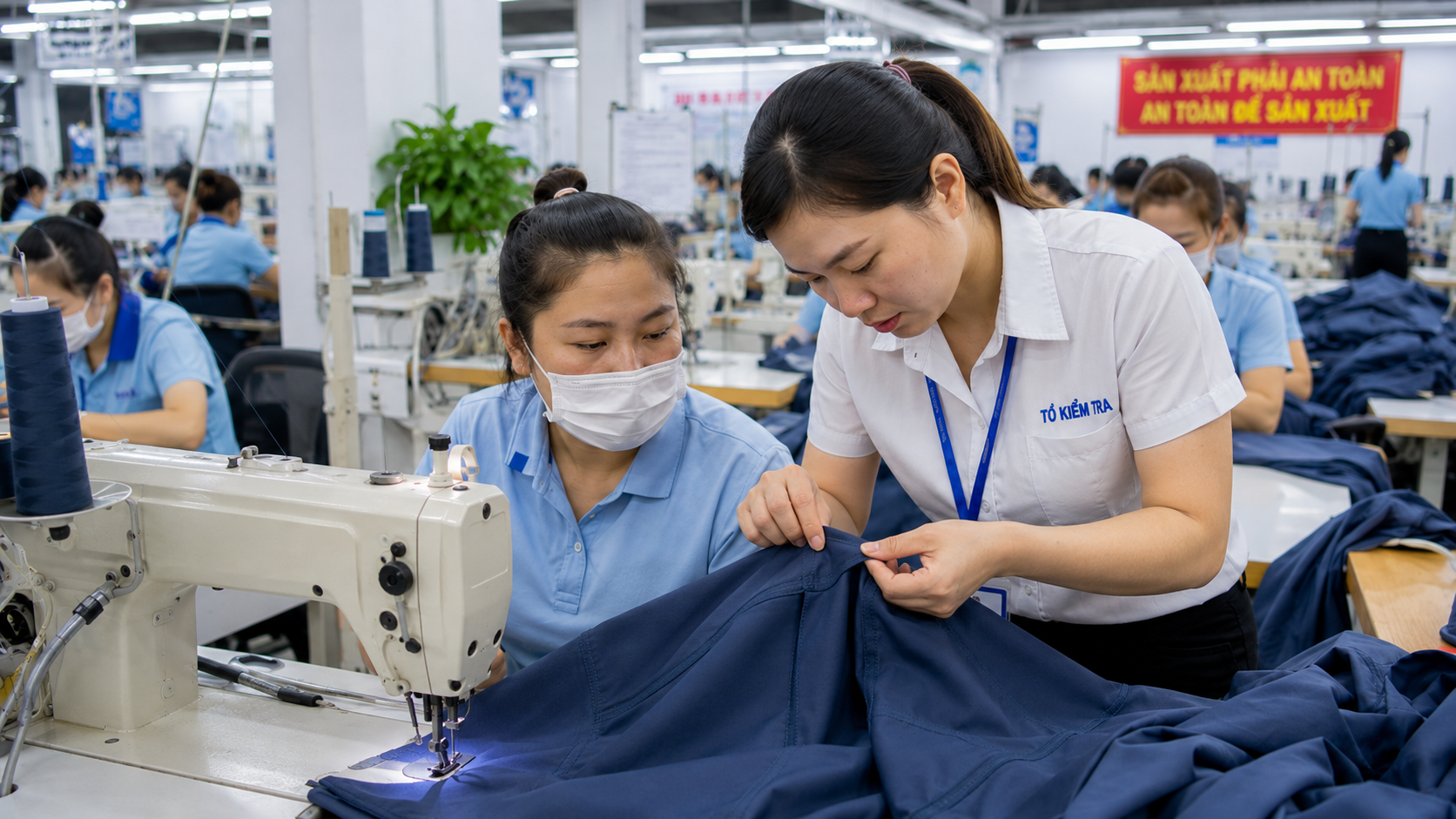
2. Inline Inspection During Production
Inline inspectors work the sewing floor while your order is in progress, checking seam construction, stitch density, measurement tolerances, and workmanship at the operation level. This is the stage that protects your delivery date. Inline inspection also generates the data that tells production management whether a specific line or operation needs intervention before defects compound across thousands of units.
3. Pre-Final Inspection
When production reaches roughly 80 percent completion, a pre-final inspection reviews finished goods against the full specification: measurements against the graded spec from your tech pack, construction against the approved sealed sample, labeling, packing method, and carton markings. This checkpoint exists to surface any systemic issue while there is still time to correct the remaining units and rework what has already been packed.
4. Final Random Inspection
Once the order is 100 percent complete and at least 80 percent packed, a final random inspection is conducted using AQL sampling. This is the inspection most buyers know, and it is the formal gate before goods ship. Cartons are pulled at random across the full order, opened, and inspected for critical, major, and minor defects. The result is a documented pass or fail against the AQL standard agreed in your purchase terms.
A construction error caught at piece 200 is a correction. The same error caught at piece 20,000 is a crisis.
What AQL Sampling Means for Your Order
AQL (Acceptable Quality Limit) is the statistical standard that governs final inspection across the apparel industry. Rather than inspecting every unit, which is neither practical nor more accurate at scale, a defined sample size is drawn from the completed order and inspected in full. The AQL level sets the maximum number of defects permitted in that sample before the order fails.
Most branded apparel programs run AQL 2.5 for major defects and AQL 4.0 for minor defects. Programs with higher quality requirements, such as technical outerwear or tailored garments, often specify AQL 1.5 for majors. Three points matter for a buyer. The AQL level should be written into your purchase terms before production begins. The defect classifications (critical, major, minor) should be defined in advance so nothing is negotiated at inspection time. And a failed inspection should trigger a defined process of 100 percent re-screening and re-inspection at the factory's cost.
Lab Testing and Compliance Verification
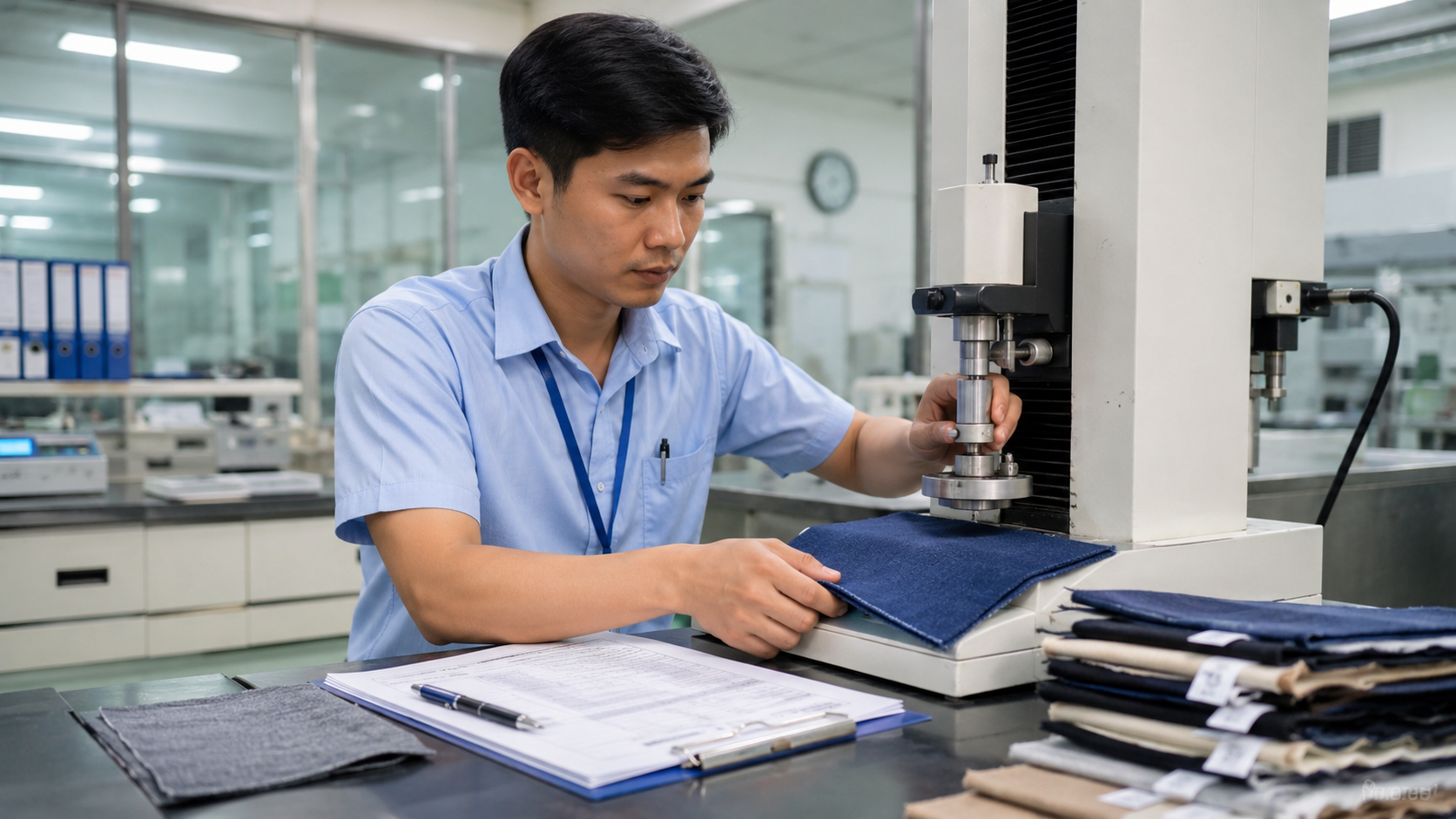
Visual inspection confirms workmanship. It cannot confirm colorfastness, shrinkage after wash, seam strength, pilling resistance, or fiber content. Those require lab testing, and for many retail programs testing is not optional: major retailers and import regulations require documented test results before goods can be received.
Our production network operates an in-house testing laboratory equipped to run textile and garment tests to international standard methods and buyer-specific protocols. In-house testing capability matters for two practical reasons. First, speed: fabric can be tested and approved in days rather than waiting on third-party lab queues during peak season. Second, cost control: routine development testing happens without accumulating external lab invoices, with third-party verification reserved for the certifications and final reports your retail partners require.
Factory QC and Independent Inspection Work Together
Buyers sometimes assume third-party inspection replaces factory quality control. It does not, and treating it as a substitute is expensive. The two serve different functions.
Factory QC builds quality
The factory's internal system works every day of production across all four stages. It is the mechanism that prevents defects, catches drift early, and keeps the order on specification while there is still time to act.
Independent inspection verifies
Third-party inspectors, or your production partner acting on your behalf, provide independent verification at defined moments, most importantly final inspection. Verification confirms what the process built. It cannot substitute for the process itself.
This is one of the practical advantages of working through a production partner with direct oversight of your order. Pham Fashion House manages the inspection cadence with the factory, reviews inline and pre-final findings as they happen, and represents your quality standard on the ground, so that final inspection confirms what the process already built rather than discovering what it missed.
What to Require From Your Production Partner
Before committing volume to any factory, a qualified buyer should confirm the following in writing. Factories that run structured QC programs answer these questions quickly because the documentation already exists. Hesitation on any of them is information.
A documented four-stage process
Not just a final inspection promise. Ask to see the inline inspection format and how findings are reported to you during production.
Agreed AQL levels
AQL levels and defect classifications written into purchase terms before the first order, so inspection results are measured against a standard both sides accepted in advance.
Approved sealed samples
Sealed samples held at the factory as the reference standard for production, signed by both parties, so quality disputes resolve against a physical benchmark.
Testing matched to your market
US and EU programs carry different regulatory requirements. Your partner should know which testing protocols apply to your product category and destination.
A defined failure process
What happens when an inspection fails should be agreed before it ever does: re-screening scope, cost responsibility, and how the delivery date is handled.
Current, verifiable certifications
Social compliance audits (BSCI, SMETA, WRAP, SA8000) and quality management certification (ISO 9001) that are current and independently verifiable, matched to your program requirements.
How Pham Fashion House Manages Quality
Pham Fashion House is a New York-based apparel sourcing and production partner with operations in Vietnam. We place production with large-scale manufacturing partners that operate full-stage QC systems, in-house testing laboratories, and current social and quality certifications, the same infrastructure supporting their existing programs for major US and European brands.
We manage the inspection process on your behalf from fabric approval through final inspection, and we structure AQL terms, sample approvals, and testing protocols into your program before production begins. Programs typically start at 3,000 units per style. For buyers evaluating how quality holds up as volumes grow, our guide to scaling apparel production without losing quality covers that transition in detail.
Vietnam apparel production partner
Evaluating production partners for an upcoming program?
Pham Fashion House structures quality control into your program before production begins: agreed AQL terms, sealed sample approvals, staged inspections, and testing protocols matched to your market. Programs typically start at 3,000+ units per style.
Discuss Your Program