Repeat Production Programs in Vietnam: How to Maintain Consistency Across Every Order
Most of the attention in apparel manufacturing goes to the first order. Fabric is sourced fresh, the sample is developed from scratch, the factory is focused on the new program, and every detail gets scrutiny because nothing has been approved yet. What happens on the second order, and the tenth, and the twentieth, gets far less attention but matters far more. Can the fabric be matched? Can the fit stay consistent? Can the factory reproduce the approved standard without the same level of development effort every time?
For uniform programs, private label retail lines, hospitality groups, corporate apparel buyers, and wholesale programs with recurring seasonal orders, repeat production reliability is not a secondary consideration. It is the primary measure of whether a production relationship is working. This guide covers what makes repeat production consistent, what can go wrong between runs, and what buyers should specify to protect quality across the life of a program.
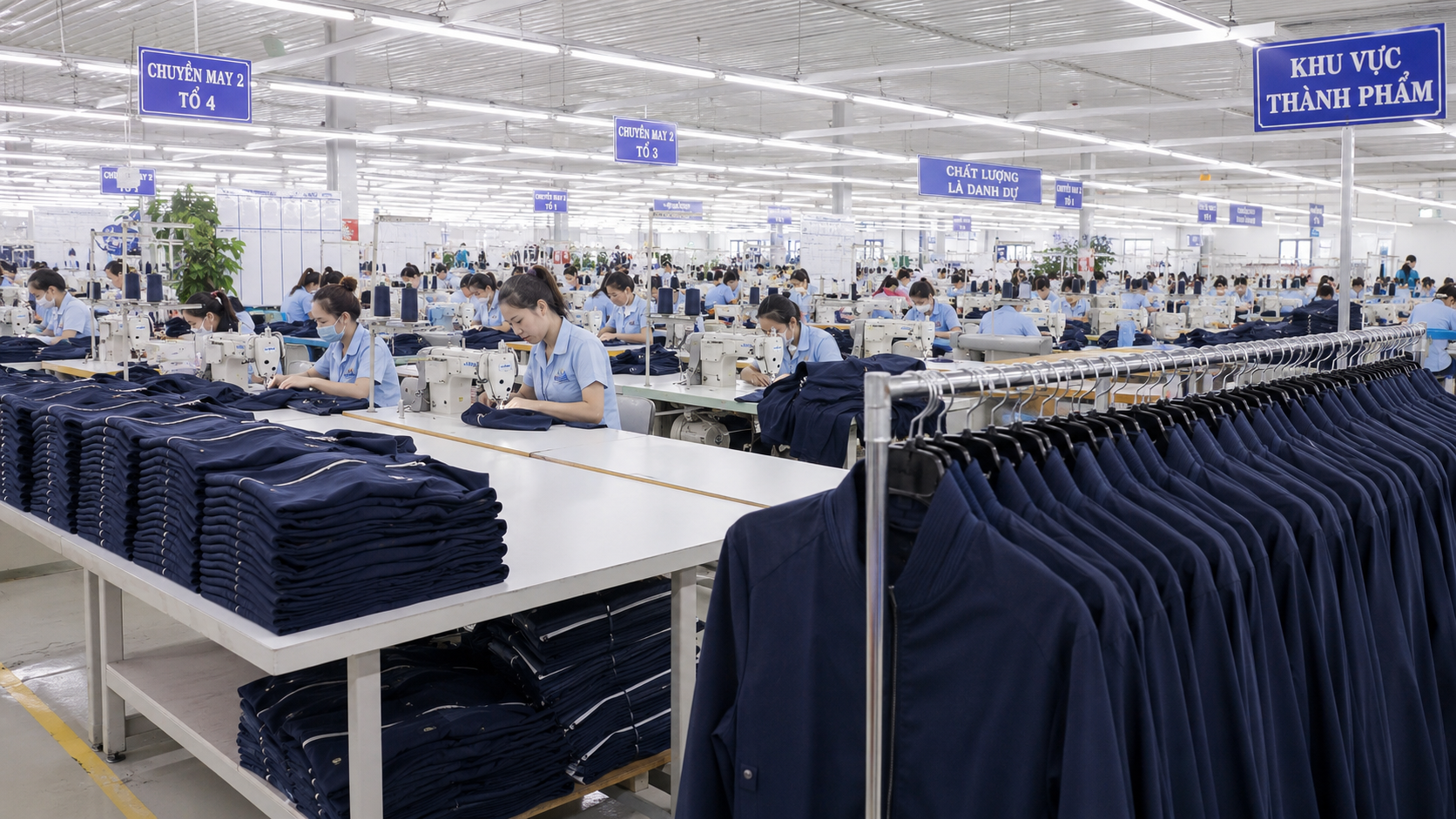
This guide is about what happens after the first order ships
Our category-specific guides cover uniform manufacturing, outerwear, dresses and blouses, private label, and other product types in detail. This article addresses the operational discipline that keeps any of those programs consistent across multiple production runs over time.
What Changes Between a First Order and a Repeat
A first order benefits from concentrated attention. The factory is learning the product, the buyer is reviewing every detail, and both sides are focused on getting the approval sample right. By the time the first bulk production ships, every specification has been scrutinized.
A repeat order does not get that same level of discovery. The assumption, on both sides, is that the program is established and the factory knows what to produce. That assumption is where problems enter. Fabric mills change stock, dye lots shift, trims are substituted because the original supplier is out of inventory, and the factory may assign different production staff or adjust its workflow based on current capacity. None of these changes are communicated automatically. Each one can produce a finished garment that looks slightly different from the approved standard, and "slightly different" across thousands of units becomes a visible quality problem.
The buyers who manage repeat programs well are the ones who treat each reorder as a production event that requires its own specification confirmation, not a simple rerun of the previous purchase order.
Fabric Continuity Across Production Runs
Fabric is the single largest variable in repeat production consistency. A garment program built on a specific fabric weight, hand feel, color, and drape behavior needs that fabric to remain available and consistent across every subsequent order.
Dye lot management
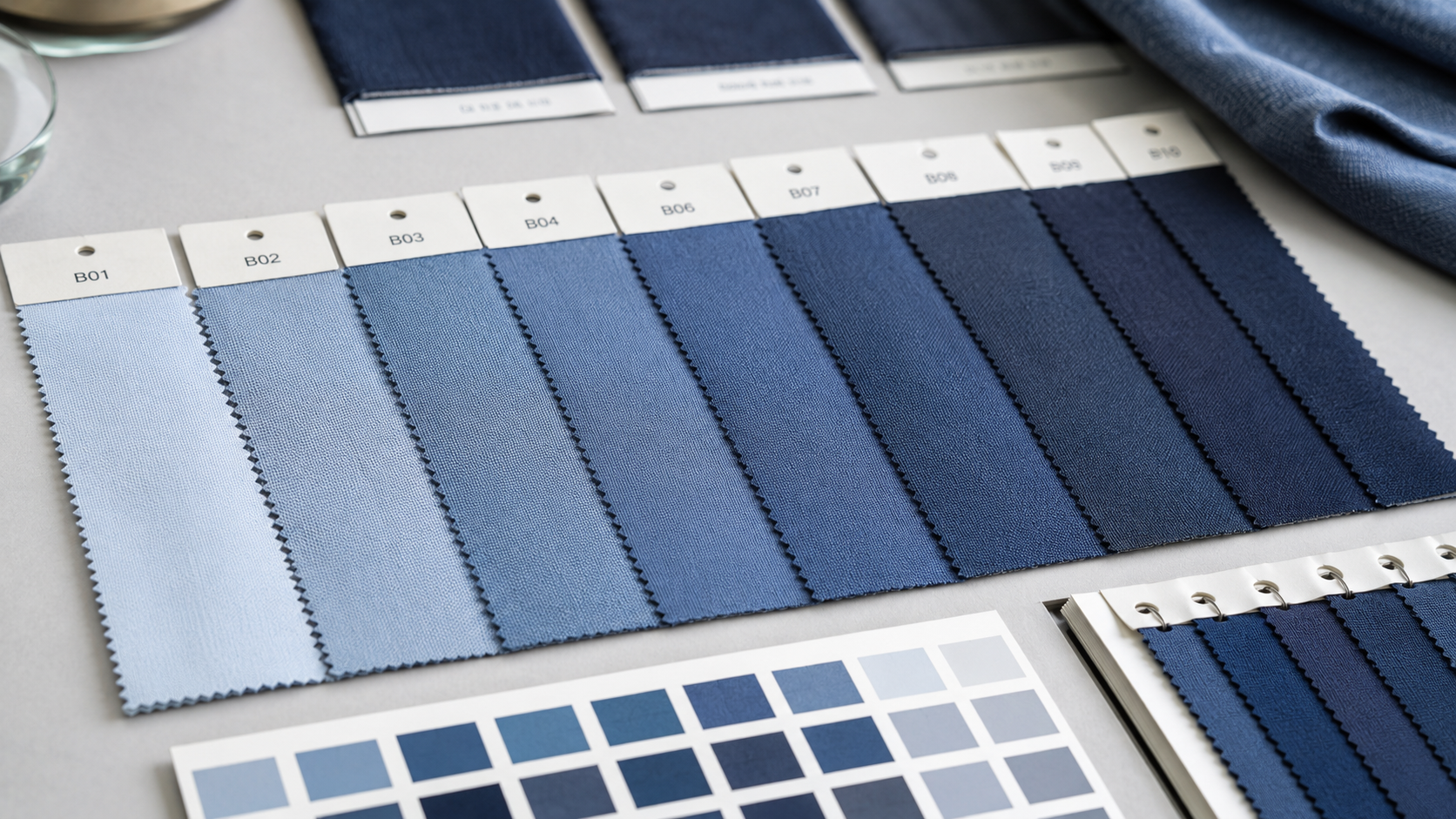
Color can shift between dye lots even from the same mill using the same formula. Buyers managing programs where color consistency matters across deliveries, uniforms being the clearest example, need to specify acceptable shade tolerance and require lab dip approval before each production run begins.
Mill and supplier continuity
Switching fabric mills between orders, even when the specification appears identical on paper, can produce noticeable differences in weight, hand feel, and drape. The production partner should confirm whether the same mill and fabric lot are being used for each repeat, and flag any supplier changes before production starts.
Fabric availability and lead time
A fabric that was readily available for the first order may have longer lead times or limited availability for repeats, particularly for specialty materials or certified sustainable fabrics. Building fabric availability confirmation into the reorder process avoids compressed timelines later.
Contingency planning
For longer-running programs, buyers should discuss with their production partner what happens if the original fabric becomes permanently unavailable. Having an approved alternative fabric identified and tested before it becomes urgent is better than scrambling after a mill discontinues the material mid-program.
Fit and Sizing Consistency Across Runs
A garment that fits correctly in the first production run should fit correctly in the fifth. In practice, fit drift across repeat orders is common enough that it deserves specific attention in the reorder process.
The causes are usually subtle rather than dramatic: fabric shrinkage behavior shifts slightly between lots, a different cutting operator lays the pattern differently, the sewing team adjusts construction methods based on efficiency rather than specification, or the grading was never formally documented and the factory is working from an earlier sample rather than a locked spec sheet. Each of these is individually minor. Across a size range and a production run, they compound.
Lock the specification
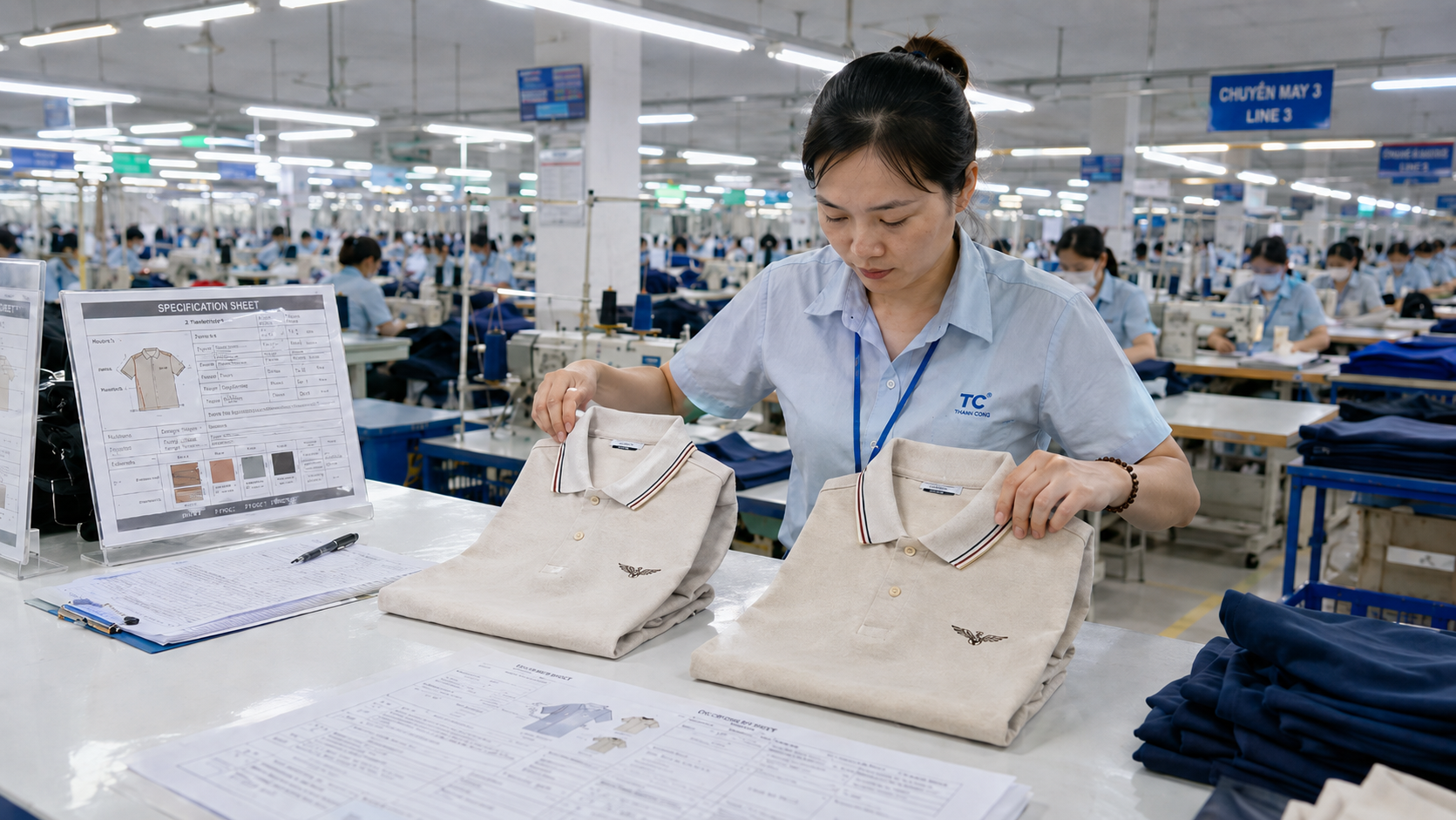
The approved measurements, tolerances, and grading from the first production run should be documented as the formal specification for all future orders. This means a locked spec sheet, not a reference sample that degrades over time or a verbal understanding with the factory.
Measure against the standard
Each repeat production run should be measured against the locked specification, not against the previous order. Measuring against the last run allows incremental drift to accumulate across orders without any single run appearing out of tolerance.
Trim, Hardware, and Label Continuity
Fabric gets the most attention in repeat production planning, but trims, hardware, and labels are equally capable of creating visible inconsistency. A zipper pull that changes finish, a button that shifts shade, a label that prints slightly differently, or elastic that behaves differently after laundering can all produce a garment that does not match the approved standard even when the fabric and construction are identical.
For programs where brand consistency matters across locations or seasons, trim specification should be documented with the same rigor as fabric specification. Approved supplier, part number, color reference, and an approved physical sample should all be part of the repeat production brief rather than assumed from the previous order.
Production Planning for Repeat Orders
One of the practical advantages of repeat production is that the development phase is already complete. The product has been sampled, approved, and produced. Lead times should be shorter, pricing should be more stable, and the factory should be able to schedule production with less ramp-up time.
Whether those advantages actually materialize depends on how the reorder process is managed. Buyers who treat repeat orders as new development projects lose the efficiency benefit. Buyers who treat them as automatic reruns risk the quality drift described above. The productive middle ground is a structured reorder process that confirms materials, reviews the specification, and schedules production without rebuilding the program from scratch.
Shorter lead times
With patterns, specifications, and supplier relationships already established, repeat orders should move through development faster than initial orders. The production partner should be able to provide a tighter timeline commitment.
Pricing stability
Repeat programs benefit from established fabric pricing and production efficiency. While raw material costs can shift between orders, the cost engineering for a repeat should be more predictable than a first order since the construction is already understood.
Reorder cadence planning
Buyers with predictable reorder cycles, seasonal programs, annual uniform refreshes, or quarterly replenishment, should communicate the cadence to the production partner so materials sourcing and factory scheduling can be planned ahead rather than reacting to each order individually.
Volume adjustments
Repeat orders do not always match the original quantity. Size ratio adjustments based on actual sell-through or usage data, colorway additions or removals, and volume changes up or down all need to be communicated early enough for the factory to plan accordingly.
Quality Benchmarking: Using the First Run as the Standard
The approved first production run should become the documented quality benchmark for every subsequent order. That means retaining approved production samples, locking the specification sheet with measurements and tolerances, archiving approved lab dips and trim samples, and establishing clear pass/fail criteria for each repeat run.
This is where product lifecycle management infrastructure makes a practical difference. A production partner with a PLM system that stores approved specifications, fabric references, trim details, and quality standards in a single retrievable record produces more consistent repeat programs than one relying on email threads, spreadsheet versions, and physical sample archives that degrade over time.
The first order establishes the standard. Every repeat order is measured against that standard, not against the last shipment. That distinction is what prevents incremental drift from compounding across the life of a program.
When to Refresh a Repeat Program
Not every repeat program should run unchanged indefinitely. Fabrics age out of mill inventories, construction standards evolve, end-user expectations shift, and a program that was well-specified three years ago may need an update to remain competitive or compliant.
The question is whether a change should be treated as a specification refresh within the existing program or as a new development cycle. Minor adjustments, such as updating a trim supplier, adjusting a colorway, or shifting the size ratio based on usage data, can usually be handled within the existing production framework. Larger changes, such as switching to a new fabric, redesigning the fit, or adding new styles, are better treated as new development to avoid compromising the consistency of the existing program.
A well-managed program should be easy to refresh
If the specification, approved samples, fabric references, and trim details have been documented properly throughout the program's life, a refresh becomes a targeted update rather than a reconstruction. The documentation discipline that supports consistent repeat production is the same discipline that makes updates manageable.
Who Repeat Production Programs Serve
Uniform programs
Healthcare, hospitality, education, and corporate uniform buyers ordering the same styles across multiple locations and seasons, where consistency across deliveries and years is a core program requirement.
Private label retail
Retailers and department stores with ongoing private label programs where seasonal reorders need to match established quality, fit, and brand standards without rebuilding the specification each time.
Wholesale buyers
Buyers distributing apparel to multiple retail accounts on a recurring basis, where production reliability and reorder consistency determine which accounts the program can maintain.
Corporate and branded apparel
Companies with ongoing branded merchandise, staff apparel, or event apparel programs where brand presentation needs to remain consistent across every order, regardless of when or how many units are produced.
How Pham Fashion House Supports Repeat Production Programs
Pham Fashion House is a New York-based apparel sourcing and production partner with operations in Vietnam. Repeat production management is a core part of how we work with established buyers, not an afterthought applied to reorders.
Our production network runs Centric PLM for product lifecycle management, which means approved specifications, fabric references, trim details, and quality standards are stored in a structured system that carries across orders rather than living in email threads or spreadsheets. GSD Cost Foundation provides standardized cost engineering that keeps pricing transparent and consistent across repeat runs. Smart warehouse systems track materials inventory and finished goods, supporting tighter coordination between fabric sourcing and production scheduling for recurring programs.
We work with uniform programs, private label retail buyers, hospitality groups, corporate apparel buyers, and wholesale programs with recurring production needs. Programs typically start at 3,000 units per style. For buyers earlier in the process of evaluating a production partner, our guide to choosing an apparel manufacturing partner in Vietnam covers the full factory evaluation framework.
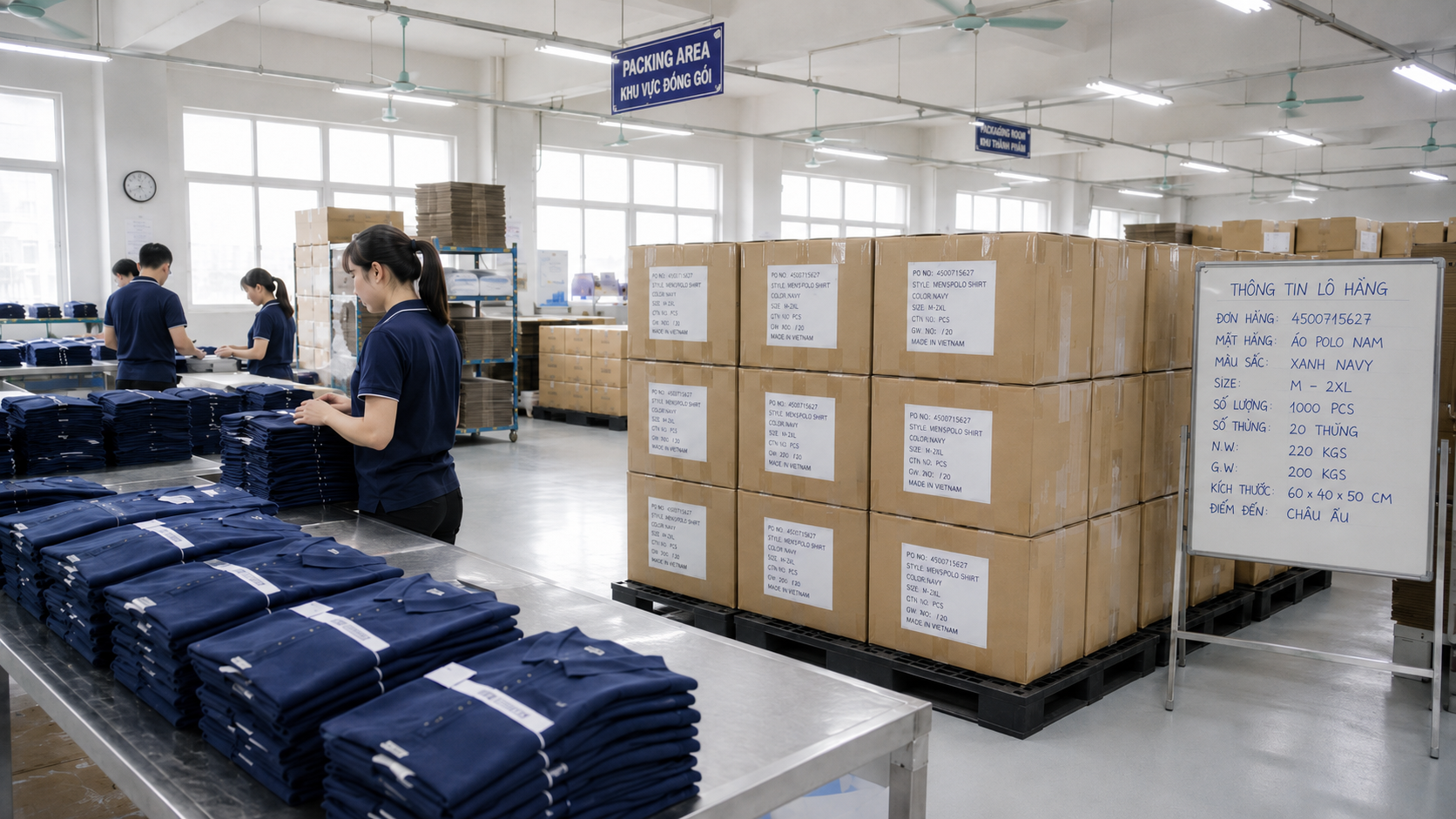
Vietnam apparel production partner
Managing a repeat production program?
Pham Fashion House supports established brands, uniform programs, and institutional buyers with repeat apparel production in Vietnam, built on PLM-managed specifications, consistent fabric sourcing, and structured quality benchmarking across every order. Programs typically start at 3,000+ units per style.
Discuss Your Program