Fall/Winter 2027 Fashion Trends: The Textures and Silhouettes Taking Shape Now
Pick up a well-made coat and one of the first things you notice is the weight. The fabric falls cleanly across your hand and holds its shape when folded. That feeling was decided long before the coat reached a rack, when a mill chose the construction and a brand committed to the fabric.
We looked at the color story for autumn/winter 2027 in our companion piece on the palette set for the season. Color may set the mood, but material is what gives that mood a surface. From there, fabric weight, texture, and construction begin to shape the silhouette itself.
In the autumn of 2026, that work is well underway for autumn and winter 2027. The palette is set. Now the question is what the season will actually feel like.
A Season Becomes a Material
Première Vision Paris ran its AW 27/28 edition from September 1 to 3, 2026, at Paris Nord Villepinte. The season's overarching theme, "Living Matter," points to a clear shift in emphasis: materials are moving from carrying the creative idea to defining it.
Two scenarios frame the season. "Matter of Time" treats longevity as a source of value, with classical references, more complex construction, and materials that look as though they can age well. "Wild Matter" takes a looser approach, drawing on living systems, organic variation, and irregular texture with an emphasis on the way natural systems grow, adapt, and change.
For brands and manufacturers, the message is fairly direct: expect more texture, more weight, and less interest in perfectly uniform surfaces. Across WGSN, C2 Fashion Studio, and the Première Vision fashion team, the same idea keeps surfacing. For AW 27/28, the hand of the fabric matters as much as the way it looks on a screen.
The Textile Directions Defining the Season
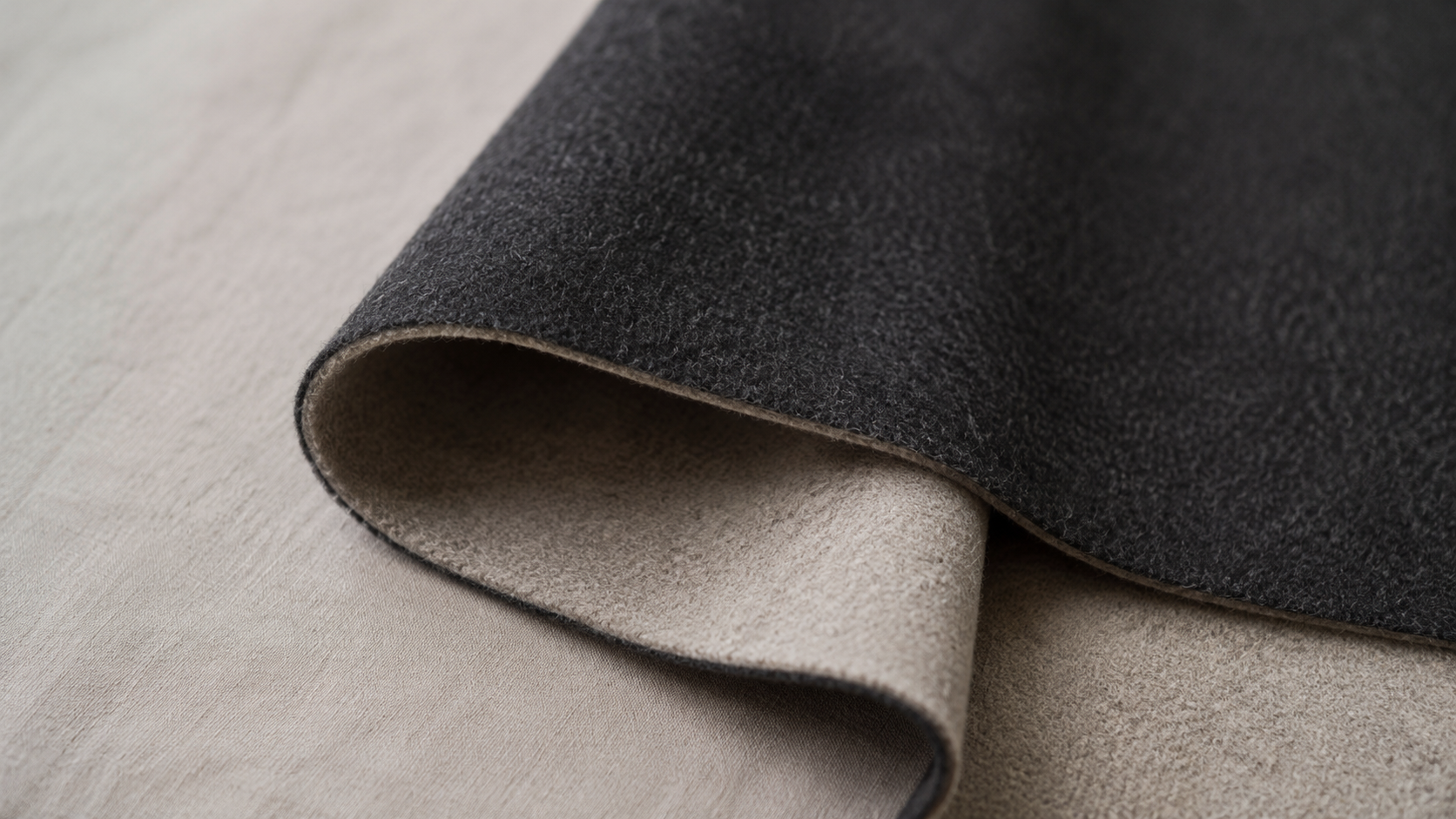
Double-face and bonded constructions
Double-face wool has two finished surfaces and can be made without a conventional lining, giving a coat or jacket the substance of a structured garment while keeping the inside clean. Mills developing for AW 27/28 are showing the construction in both pure wool and wool blends, sometimes with contrasting tones on the face and reverse.
Double-face construction has been used for years, but its prominence across the current AW 27/28 forecasts deserves attention. It also asks more of both the mill and the factory. Double-face fabric needs careful pressing, bound seams or other clean interior finishing, and pattern engineering that accounts for the extra weight. It is slower to cut, more expensive to sew, and often comes with higher mill minimums than a comparable single-layer fabric. Brands using it for the first time should also allow more room in sampling, something we discuss in our guide to how apparel production lead times work in Vietnam.
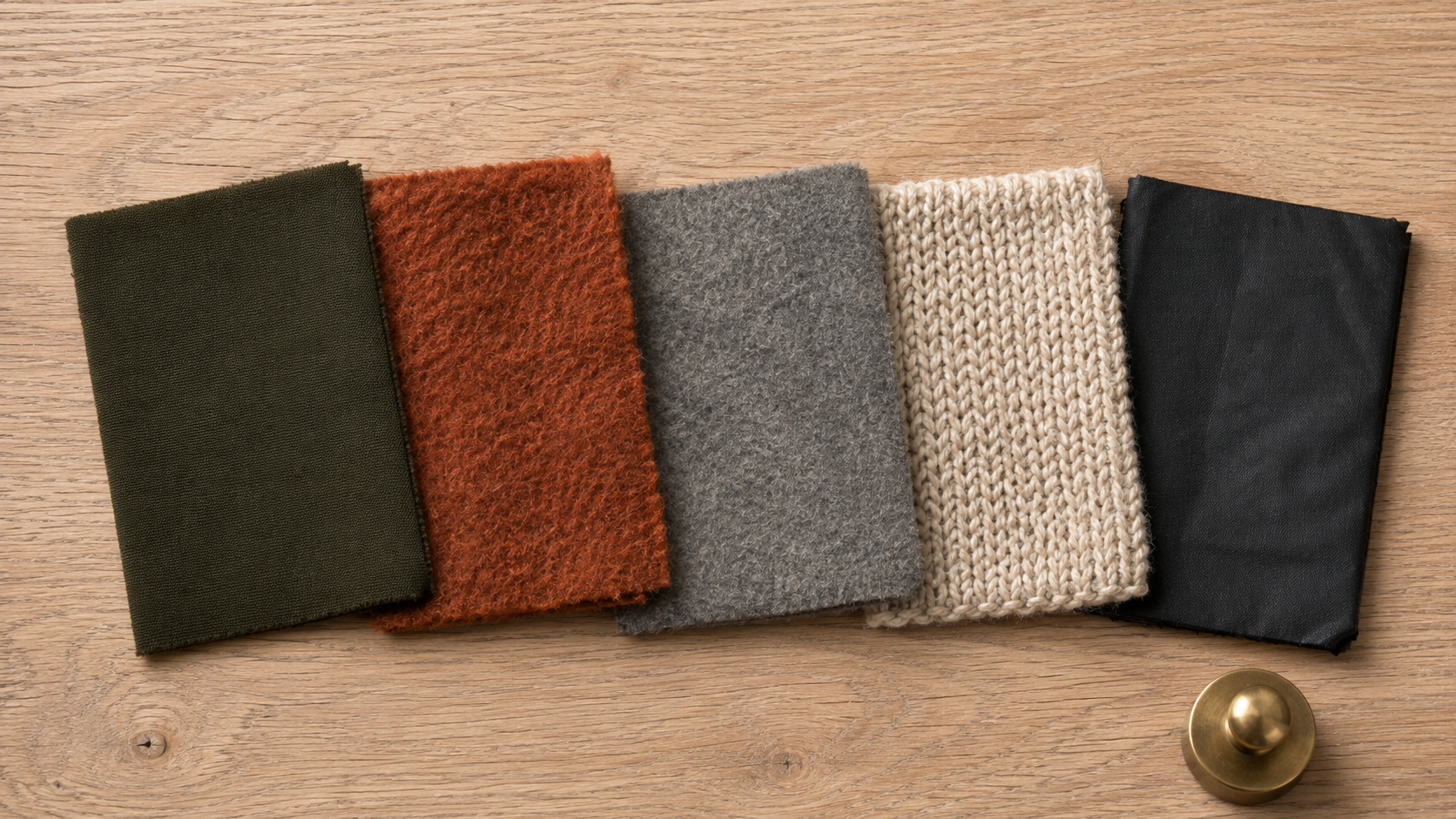
Brushed, felted, and matte surfaces
Another consistent theme is the move away from high shine and overly smooth finishes. AW 27/28 favors fabrics that are brushed, felted, or left with enough surface character for the fiber itself to remain visible. Première Vision's "Living Matter" theme makes the point clearly: color works with the grain and texture of the material, allowing the surface to stay visible.
From a production standpoint, finishing becomes just as important as the weave. Brushing can make a fabric feel richer, but it can also expose weaknesses in the greige goods underneath. Whether a brushed wool keeps its surface or starts pilling quickly often comes back to fiber length and finishing method, which we cover in Pham Fashion House's guide to what worsted, woolen, and merino specifications actually mean.
Raw and textured knits
Knitwear for AW 27/28 is getting heavier and more tactile, with irregular stitches, dimensional surfaces, and a deliberate sense of imperfection. In production terms, that can mean gauge variation, raised textures, and knit-woven hybrids that combine a jersey or fully fashioned panel with a more structured woven element.
Vietnam has meaningful industrial capacity in this category. Tier 1 knit facilities work with flat-bed machines, fully fashioned panel construction, and linking, all of which can support the heavier gauges and more textured constructions coming through for the season. The difference between something that feels intentionally raw and something that simply looks unfinished often comes down to yarn thickness, stitch tension, and how the garment is finished after knitting.
Performance and fashion crossing over
Technical outerwear continues to move into fashion. Laminated fabrics, membrane bonding, taped seams, and DWR (durable water repellent) finishes are appearing alongside wool coats and brushed knits in the same seasonal reports. For AW 27/28, the distinction between a performance jacket and a fashion jacket is getting narrower again.
That crossover carries specific manufacturing implications. Factories producing laminated outerwear need heat pressing and seam-taping equipment, waterproofing test capability, and, in many cases, approval or certification from the membrane supplier. We go into those requirements in our overview of outerwear manufacturing in Vietnam.
The Shapes Following the Fabric
Fabric and silhouette are never separate decisions. The constructions mills develop set limits, and create opportunities, for what designers can build. In AW 27/28, several of the strongest shapes follow directly from the heavier, softer, and more tactile materials moving through the market.
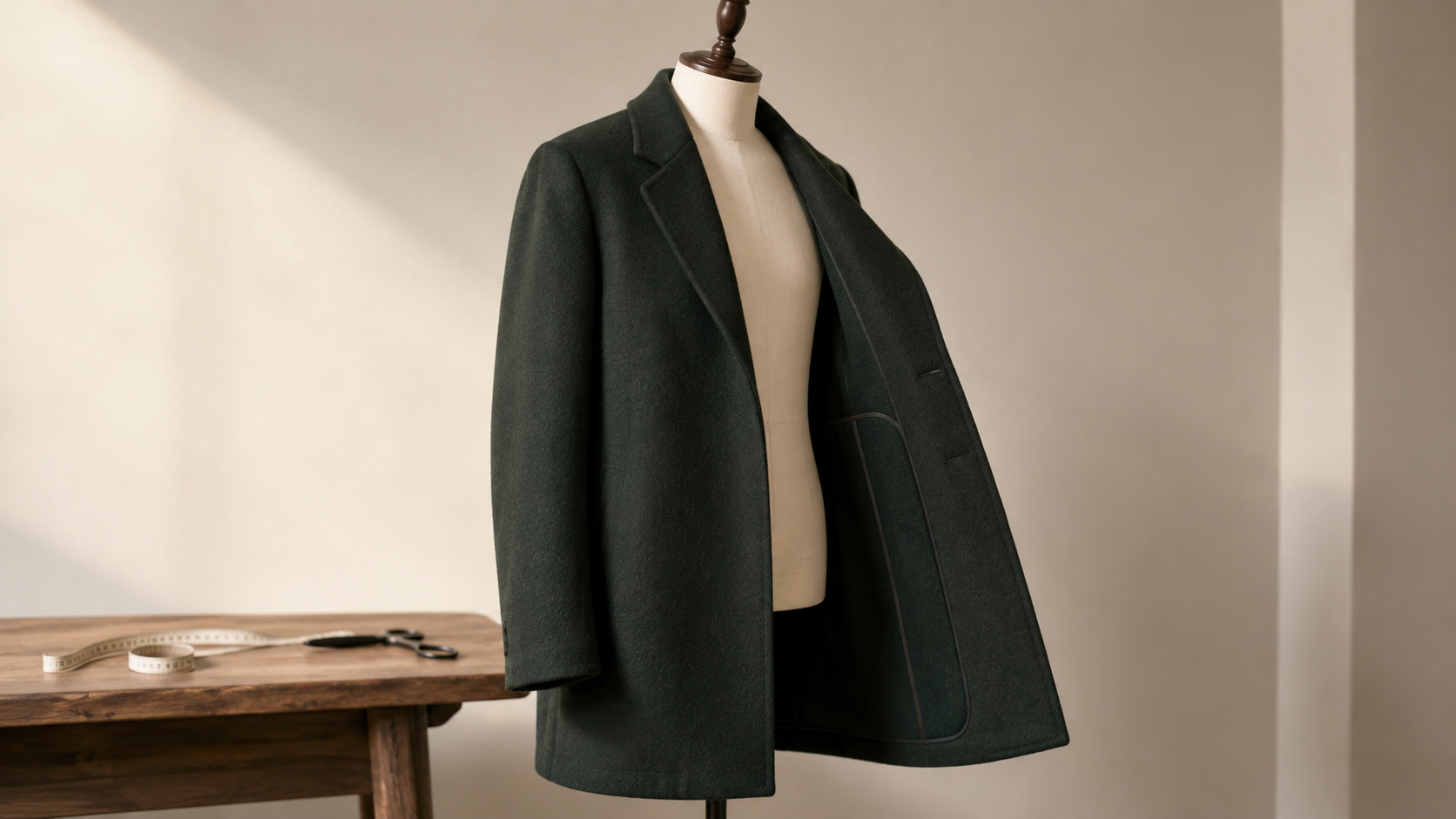
Outerwear as the foundational piece
Coats sit near the front of the production calendar. Wool has to be sourced, spun, woven, and finished before cutting can begin, which leaves outerwear with less schedule flexibility than many lighter categories. When Première Vision highlights double-face wool and brushed coatings, the garment most directly affected is the coat.
The silhouettes are broad and enveloping, with a softer sense of structure. Oversized proportions, dropped shoulders, and below-the-knee lengths appear repeatedly across the forecasts. Softer shoulders, limited internal canvassing, and enough weight in the cloth allow the fabric itself to hold the shape.
Softened tailoring
Tailoring for AW 27/28 takes a softer, less formal approach. Suiting moves toward half-canvassed and deconstructed builds, softer interlinings, and less internal structure. The jacket still holds its shape, with more of that shape coming from the drape and weight of the fabric.
That makes production skill especially visible. This direction suits factories with graded suiting capability, because deconstructed tailoring leaves very little room to hide inconsistency. Seam allowances, pressing, edge finishes, and balance all show up in the final garment.
Knitwear beyond filler
Knitwear is also taking on more of the work traditionally given to woven outer layers. Heavier gauges and textured surfaces allow knit pieces to function almost like jackets or lightweight coats. Hybrid garments that combine knitted and woven panels push that idea further, but they also require a factory that can manage both knitting and cut-and-sew production within the same program.
What it means for brands
AW 2027 fabric development is already underway. Brands working with double-face wool, brushed finishes, or technical constructions need to account for mill lead time, sampling, and production capacity through late 2026 and into early 2027. Outerwear and wool programs generally need earlier commitments than lighter-weight categories.
What it means for buyers
Institutional and uniform buyers using wool or technical materials can benefit from planning around the fashion production calendar. AW 2027 outerwear capacity is booked early, and programs tied only to a fiscal-year buying cycle can face fewer fabric choices and tighter production windows.
What a Mill Minimum Does to a Mood Board
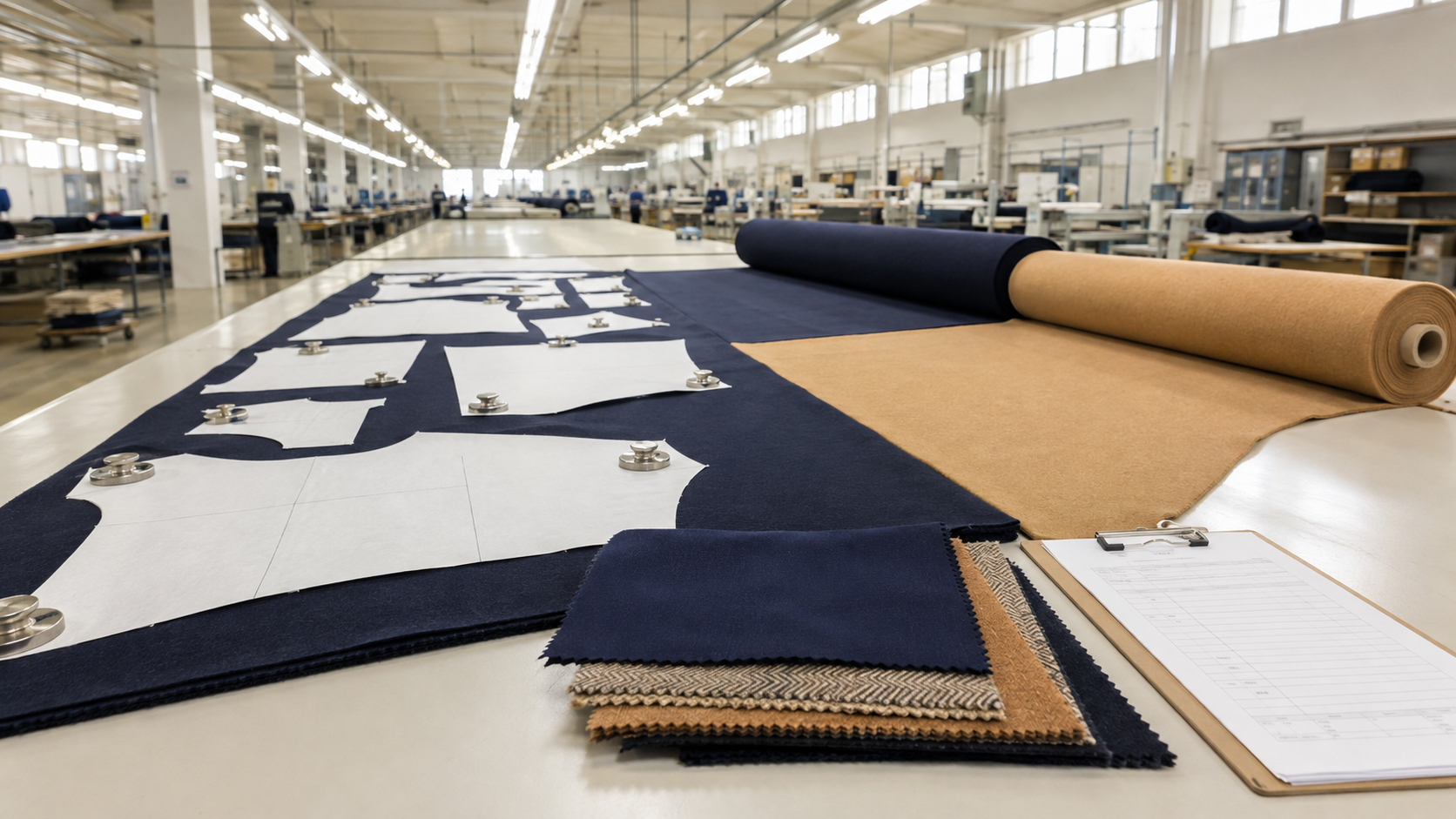
Trend direction is the easy part. Turning it into a production-ready garment means working through minimums, lead times, and factory capability. Double-face wool, for example, often carries a higher mill minimum than a standard single-layer coating because the setup is more involved and the fabric takes longer to produce. A specialty brushed finish may be available from one mill at development scale and nowhere else, forcing a brand to choose between committing early or substituting later.
This is where a mood board starts meeting the realities of production. A felted wool, a raw-gauge knit, and a laminated technical fabric can represent three supply chains, three development calendars, and three sets of factory requirements. Each material has to fit the concept and also work within the sourcing, sampling, volume, and production requirements of the program before the design is locked into a tech pack.
A mood board can represent three supply chains, three timelines, and three production capabilities. The harder question is which ideas can make the trip from swatch to shipping container.
That gap between design intent and production is where Pham Fashion House works. We coordinate Vietnam apparel production across many of the categories moving to the front of the AW 27/28 calendar, including wool coats and tailored suiting, knit programs at scale, and technical outerwear with membrane and lamination requirements. Our production guides also cover how responsible fabric sourcing works in Vietnam and what to look for in a manufacturing partner before committing capacity.
The Season After the Palette
The palette for autumn/winter 2027 is only the starting point. Material and construction are what determine how those colors feel once they reach a hanger, a fitting room, and eventually a wardrobe. Algae Gel can become a double-face wool coat. Russet can take on a brushed surface. Deep Green can become a laminated shell. The language of the forecast eventually has to become a set of decisions on the factory floor.
Most of those decisions happen away from the runway, in sample rooms, at cutting tables, and on pressing lines. That is where a trend report becomes a garment, and where Pham Fashion House works with brands to close the distance between an idea and production.
Vietnam apparel manufacturing and sourcing
Planning production for the seasons ahead?
Pham Fashion House coordinates Vietnam apparel production for brands, uniform programs, and institutional buyers, from factory matching through export. If you are planning a 2027 program, we are happy to talk through the production calendar, material requirements, and construction.
Start a ConversationOr start with our Autumn 2027 Production Calendar.