A tech pack line that reads one hundred percent wool, 280gsm leaves the most expensive decision in the program unmade. Two mills can read that line, quote two fabrics that both meet it exactly, and send back materials that cost twice as much apart and behave like unrelated products on a cutting table.
The gap comes down to two things the line never mentions: the spinning system behind the yarn, and the breed of sheep behind the fiber. Worsted and woolen are spinning systems. Merino is a fiber. Buyers regularly treat all three as options on a single menu, and that assumption is where wool programs go wrong long before a factory ever sees them.
This guide covers what each term actually controls, and more usefully, what each choice does to cost, mill minimums, lead time, finishing, and testing once a program moves into production.
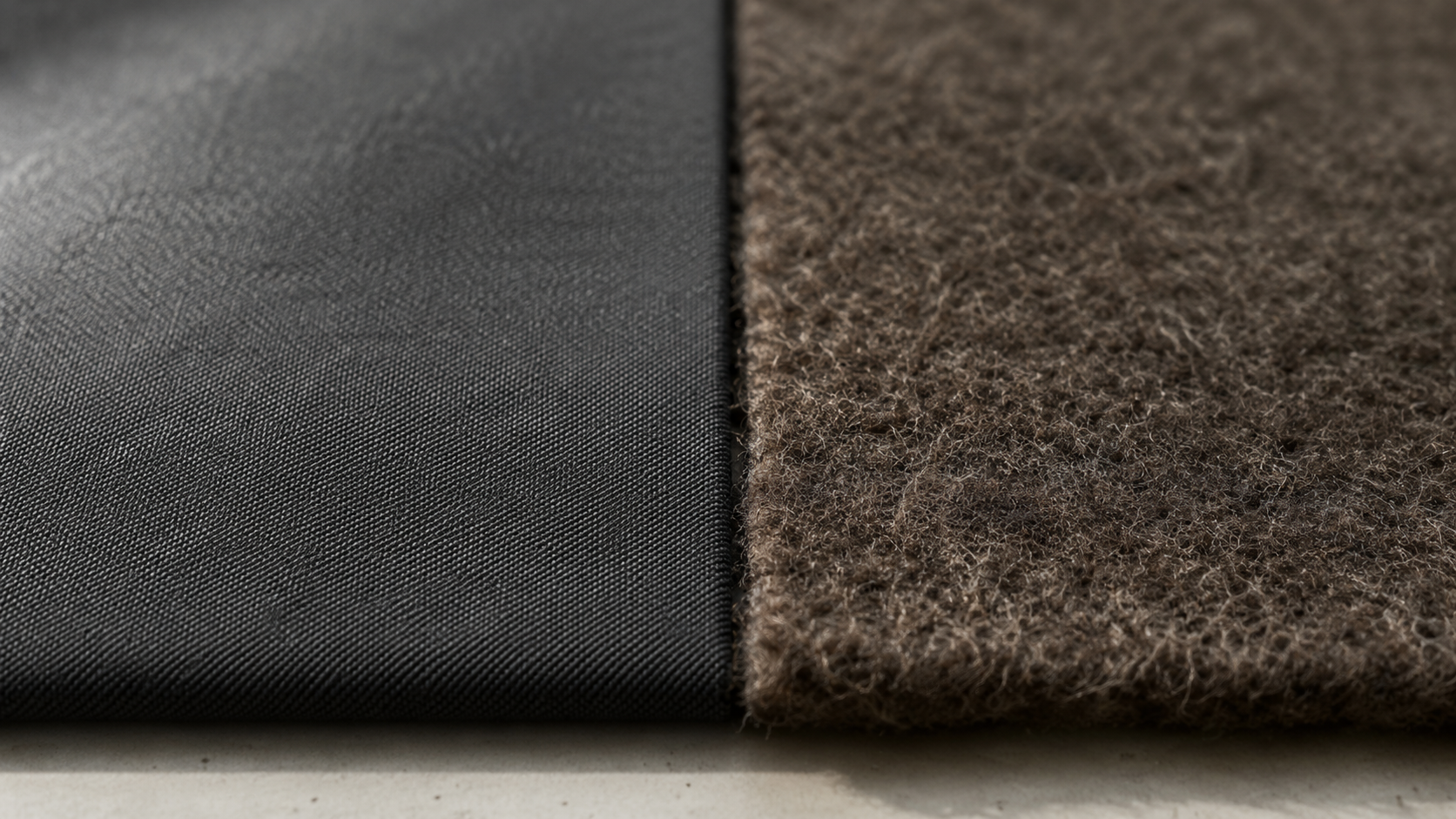
What Happens Before Wool Becomes Fabric
Wool arrives off the sheep with two properties that govern everything downstream. The first is fiber diameter, measured in microns, which determines how soft the fabric feels against skin. The second is staple length, meaning the length of the individual fibers, which determines how the wool can be processed.
Staple length is the gate. Long-staple wool can be combed. Short-staple wool cannot. That single fork produces the two spinning systems on which the entire wool trade runs, and a buyer who has not specified which one applies has left the most consequential decision in the program to whichever mill happens to quote.
Worsted and Woolen
Worsted
Long fibers, combed to strip out the short ones and lay the rest parallel, then spun into fine, dense, smooth yarn. The resulting fabric is crisp, holds a pressed crease, shows clear weave definition, and wears smooth rather than fuzzy. Suiting, tailored trousers, uniform jackets, and tropical-weight cloth all sit here.
Woolen
Shorter fibers, carded but never combed, left lying in random directions and spun into thicker, lofty yarn full of trapped air. The fabric is softer, fuller, hairier at the surface, and warmer for its weight. Tweed, flannel, melton, coating, and heavier knitwear all sit here.
The cost difference follows from the processing. Combing removes a significant share of the incoming fiber as noil, so a worsted mill gets less usable yarn from the same quantity of raw wool and puts it through more steps. At equivalent fabric weight, worsted generally lands higher per meter than woolen. That premium buys crispness and crease retention, and a buyer paying it for a garment that needs neither has spent money on a property the product will not use.
Where the specification breaks
One hundred percent wool at 280gsm describes a worsted suiting cloth and a woolen flannel equally well. Send that line to two mills and expect two different fabrics, two different prices, and two different lead times. Neither mill has made an error. The specification simply never told them which fabric to build.
Where Merino Fits
Merino is the name of a sheep breed. It identifies the raw fiber and says nothing about how that fiber is spun or built into cloth. What makes merino commercially significant is fineness: the fleece runs at a lower micron count than most other wool, which is why it can sit against skin without the prickle that coarser wool produces. Roughly speaking, wool coarser than about 30 microns is what most people register as itchy, and merino used in apparel typically falls well under that, with next-to-skin qualities generally in the high teens.
Merino can be spun either way. A merino worsted suiting and a merino base layer share a fiber and almost nothing else, because the spinning system, the construction, and the finish were all chosen separately. Specifying merino answers the softness question and leaves every other question open.
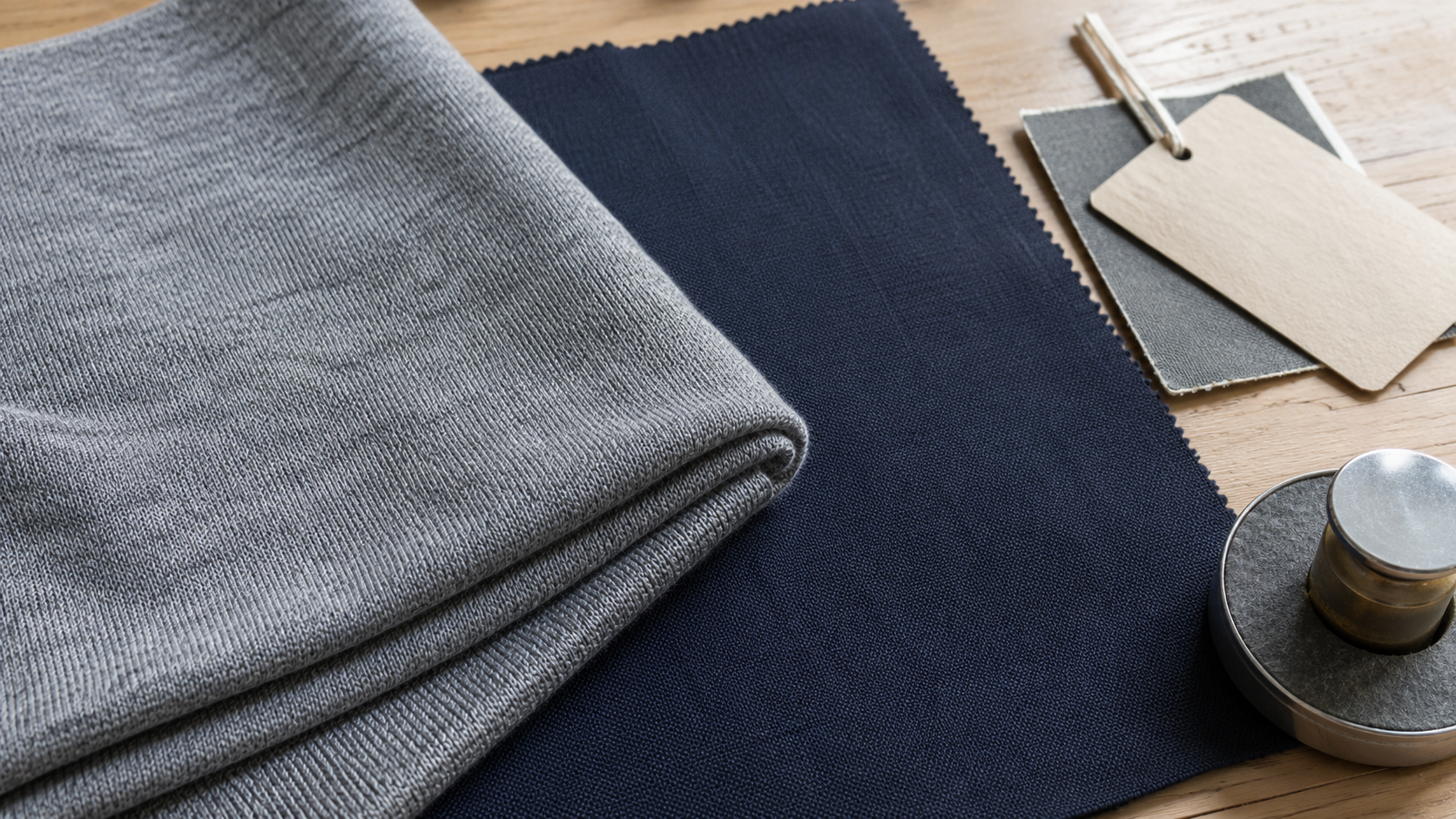
Why Merino Moved into Activewear
Merino's rise in performance apparel rests on properties synthetics struggle to match. It manages moisture as vapor rather than only as liquid, absorbing a substantial share of its own weight before feeling wet. It regulates temperature across a wider comfort range than most single-fiber synthetics. And it resists odor over repeated wear, which is the property that built the base layer and travel categories.
The tradeoff is abrasion. Fine merino is less durable than nylon or polyester at the same weight, which is why most commercial merino performance fabric is blended rather than pure. Nylon core-spun constructions wrap merino around a synthetic filament to carry the wear load, and elastane gets added where recovery matters. Buyers who specify one hundred percent merino for a high-abrasion garment often end up revisiting that decision after wear testing.
Machine washability is the other consideration. Untreated wool felts, so next-to-skin merino intended for domestic laundering is usually treated to prevent it. That treatment changes hand slightly, adds cost, and carries chemical and effluent implications worth understanding before it becomes a line in a sustainability claim. Our overview of performance apparel manufacturing in Vietnam covers the testing side of technical fabric development in more detail.
Naming the fiber identifies the raw material. Everything that determines cost, hand, and lead time is decided after that.
How Worsted, Woolen, and Merino Affect Cost, Mill Minimums, and Lead Time
The distinctions matter because each one attaches to a different set of production consequences. A buyer who understands them arrives with a specification a mill can quote directly. A buyer who does not arrives with a line that has to be interpreted, and interpretation is where cost and schedule variance enters a program.
Cost per meter
Worsted generally prices above woolen at equal weight because of combing loss and additional processing. Finer micron merino carries a further premium on top of whichever system is used.
Mill minimums by color
Wool mills typically hold higher per-colorway yardage minimums than synthetic mills. A program spread across many colorways can exceed its fabric budget on minimums alone.
Lead time
Wool fabric development runs longer than most other fibers, which puts wool programs on the seasonal calendar rather than the order calendar.
Finishing and relaxation
Woolen fabrics in particular need sponging or decating before cutting so the cloth relaxes ahead of the garment rather than after it. Skipping this stage shows up as sizing failure in bulk.
Testing deserves its own note. Wool programs should carry defined targets for pilling, abrasion, dimensional stability after laundering, and colorfastness, agreed before bulk fabric is committed. Pilling in particular behaves differently across the two systems, since woolen surfaces are hairier by design and a pilling standard written for worsted will fail a flannel that is performing exactly as intended.

What a Complete Wool Specification Contains
A wool line a mill can quote without follow-up questions generally carries all of the following:
- Fiber content and blend ratio. Full composition, including nylon or elastane content where present.
- Spinning system. Worsted or woolen, stated explicitly.
- Fineness. Micron target for merino or any other fine wool in the specification.
- Weight and construction. Grams per square meter, plus weave or knit structure.
- Finish. Milling, brushing, decating, or anti-felting treatment as applicable.
- Dimensional tolerance. Acceptable shrinkage after the intended care process.
- Color and dye method. Colorway references and whether the fabric is yarn-dyed or piece-dyed.
- Performance targets. Test standards and pass thresholds for the properties that matter to the product.
That level of detail belongs in the tech pack rather than in an email thread. Pham Fashion House reviews wool specifications at this level before a mill is approached, since an incomplete line produces quotes that cannot be compared against each other. Our guide to production-ready tech packs covers how these specifications sit alongside the rest of the documentation package.
RWS, Non-Mulesed Wool, and Where Certification Is Secured
Buyers sourcing wool, and merino especially, frequently ask about the Responsible Wool Standard and about non-mulesed declarations. Both questions are legitimate, and both are commonly directed to the wrong place in the supply chain.
RWS is a chain-of-custody standard that begins at the farm and passes through scouring, top-making, spinning, and weaving. Non-mulesed status originates at farm level as well. A cut-and-sew facility does not certify either one the way it holds a social compliance or facility audit certification. A buyer who needs an RWS claim on a finished garment has to specify it at fabric sourcing and carry valid scope certificates through every transaction in the chain, which means the requirement has to be raised at material selection rather than at production booking.
What the production side does contribute is traceability and impact reporting. The Vietnam production network Pham Fashion House works through operates automated lifecycle assessment for product-level environmental data, with supplier traceability tools feeding information up the chain. That reporting supports Corporate Sustainability Reporting Directive obligations now, and positions a wool program for the Digital Product Passport requirements expected to reach textiles later this decade under the Ecodesign for Sustainable Products Regulation. For programs bound for the European market, that capability is often the more immediate requirement. We cover the broader picture in responsible fabric sourcing in Vietnam.

Two Buyer Profiles, One Discipline
Brands and retail buyers
Tailored programs live on worsted, outerwear leans woolen, and performance ranges sit on fine merino blends. Specifying the system at design stage prevents the fabric from being chosen by whoever quotes first.
Uniform and institutional buyers
Multi-year programs depend on repeatability. Locking the spinning system, micron, finish, and test thresholds is what allows year three to match year one across dye lots and mill runs.
Wool rewards specificity more than almost any other fiber in commercial apparel. It also carries a longer development runway, which is why wool decisions get made against the seasonal calendar rather than a delivery date. We walked through how far ahead that calendar actually runs in our look at how early a season gets decided, and the construction side of tailored production in our guide to formal wear manufacturing in Vietnam. Buyers weighing a wool program against a supplier they have not worked with before may also want our guide to choosing an apparel manufacturing partner in Vietnam.
Vietnam apparel manufacturing and sourcing
Building a wool or merino program?
Pham Fashion House coordinates Vietnam apparel production for established brands, uniform programs, and institutional buyers, from material direction and factory matching through export. Programs typically start at 3,000 units per style.
Discuss Your Program