In an exhibition hall north of Paris in early September, mills, forecasters, and design teams spent three days settling on a green called Algae Gel. Most people will first see that green in the autumn of 2027, on a coat on a rack, with no idea it already had a name more than a year earlier.
Fashion runs on a calendar almost no one outside the industry ever sees. By the time a garment reaches a store, the decisions that shaped it are already old news to the people who made them. The color was locked in before the fabric existed. The fabric was chosen before the garment was designed. And the factory that will eventually cut and sew it was booked while the season was still just an idea on a color card.
Right now, in the autumn of 2026, that process is well underway for autumn and winter 2027.
Algae Gel
A regenerative green flagged for outerwear, performance pieces, and wool garments. From Premiere Vision's AW 27/28 palette, developed with predictive analytics firm Heuritech.
Mycelium Beige
A mineral, cross-category neutral that runs from apparel through footwear. Also from the Premiere Vision AW 27/28 palette.
Russet
WGSN and Coloro's warm reddish-brown, drawn from autumn landscapes and ripening fruit, meant to convey stability and confidence in uncertain times.
Deep Green
WGSN's jewel-toned alternative to black, described as luxurious and mysterious, with a utilitarian edge that works for gender-inclusive design.
Maize
A radiant yellow WGSN links to joy and optimism, evoking grain and gold, and a growing focus on respecting resources.
Peaceful Lilac
A soft lilac that blends warm and cool undertones, framed by WGSN as offering escape and imaginative play. Luminous Blue, the 2027 Color of the Year, carries into the season as a fifth.

A Season Starts as a Color
Première Vision Paris is where much of the industry's material direction gets set. Mills bring the fabrics they plan to sell, forecasters present the season's palette, and brand development teams walk the halls deciding what next year will look like. The autumn/winter 2027/2028 edition ran from September 1 to 3, 2026, at Paris Nord Villepinte, earlier than the show's usual mid-September dates.
For AW 27/28, Première Vision partnered with Heuritech, a French predictive analytics company, pairing creative forecasting with data on what people are already wearing. The result is a palette built less on pure instinct and more on measured signals.
Two of its shades give the season away. Algae Gel is a green with organic depth, described as carrying a regenerative glow. It is called out for outerwear, performance pieces, and heavy wool garments, with adoption already showing across Brazil, Europe, and India. Mycelium Beige is its counterweight, a mineral and rocky neutral that runs across the whole wardrobe and into footwear, which is why it reads as a cross-category shade rather than a seasonal novelty.
Why a color gets a name
A shade with a name travels. It can be specified in a tech pack, matched to a lab dip, referenced in a mill order, and approved by a buyer on another continent. Naming is what turns a mood into a purchase order, and it is the first point in the season where a color becomes actionable inside a factory.
The Names Are Doing Work
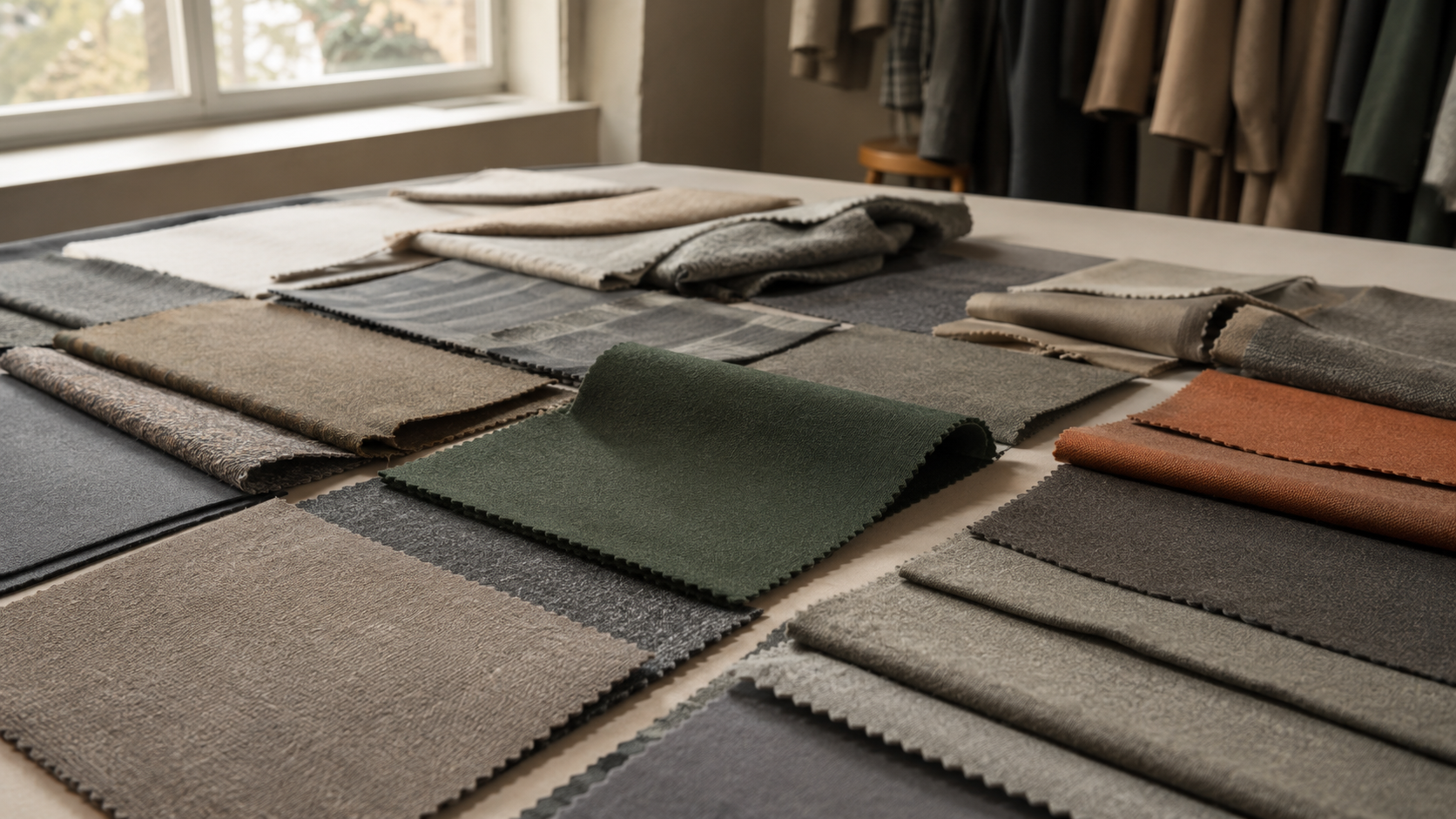
Algae Gel. Mycelium Beige. Place them next to the autumn/winter 2027/2028 palette from WGSN and its color arm Coloro, which names Russet, Peaceful Lilac, Maize, and Deep Green alongside the returning Color of the Year, Luminous Blue, and a pattern emerges. The vocabulary of the season keeps reaching for living systems: algae, fungal networks, root vegetables, grain.
That vocabulary tells you where fabric development is heading. Forecasters name colors after the things the industry wants to be seen pursuing, and for AW 27/28 the reference points sit squarely in regenerative fiber, mineral and plant-derived dye, and materials that look like they came from somewhere rather than from a machine. A brand does not have to chase any of it. But a mill choosing what to weave and a buyer choosing where to commit will both read the same signal at the same time. We cover the textile and silhouette direction that runs alongside the palette in our companion piece on AW 27/28 fashion trends in textures, fabrics, and silhouettes.
This is the same mechanism that quietly reshaped the contents of most closets over the past two decades, which we covered in why so much of what we wear is now polyester. Material decisions made upstream, for reasons of cost, capacity, and performance, arrive downstream as the clothes available for purchase.
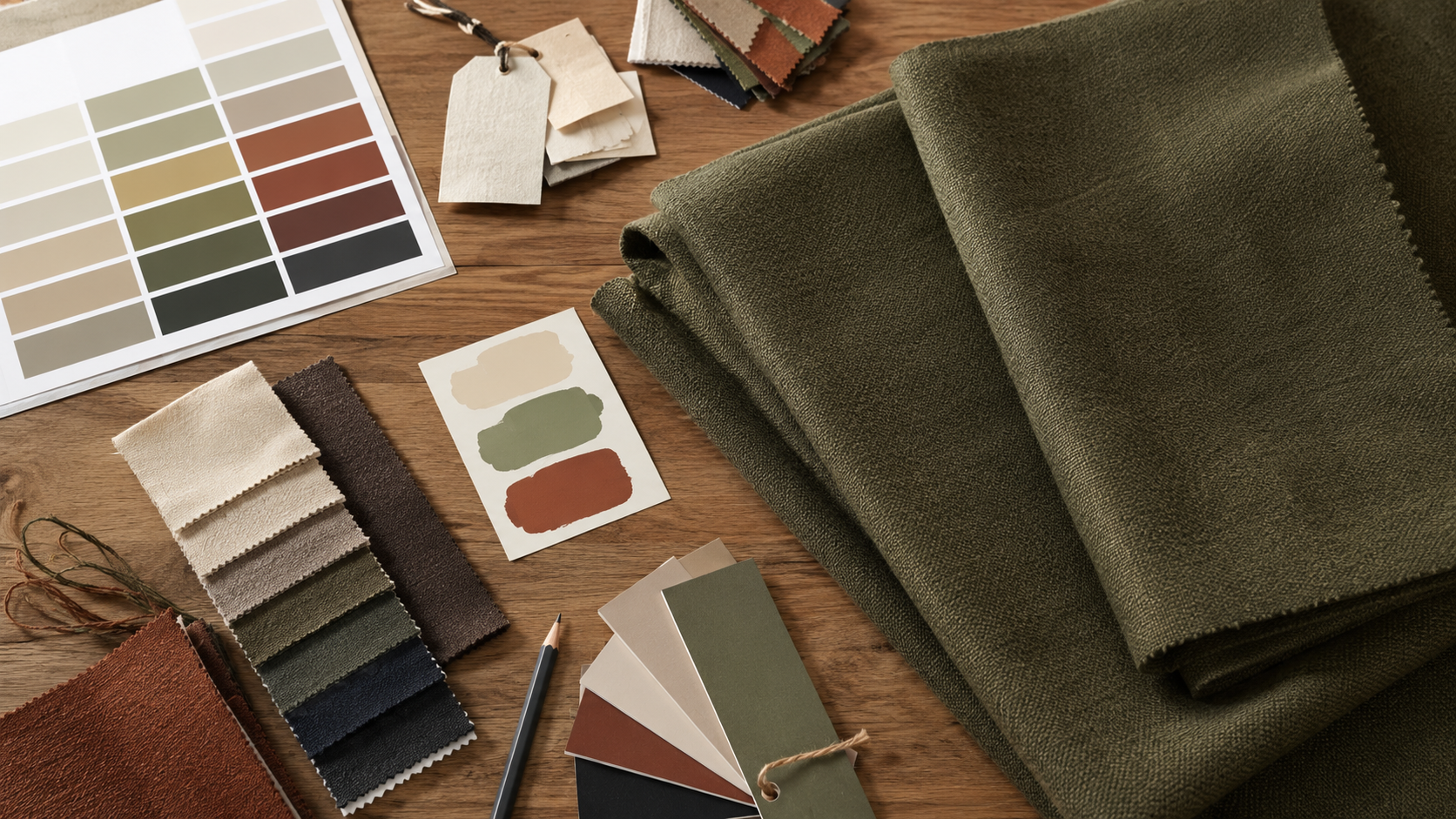
A color agreed on in a Paris hall in September becomes a mill order over the winter and a finished coat in a shipping container the following summer.
From Color Card to Cut Fabric
The gap between this September's trade show palette and a garment on a hanger in autumn 2027 is a little over a year, and it is filled with sequential work. Each stage depends on the one before it, which is why the calendar is hard to compress and why brands that miss a window usually lose a full season rather than a few weeks.
Color and yarn direction
Around fifteen months before retail. Palettes are presented, yarn spinners commit, and the season acquires a vocabulary.
Fabric development
Mills weave, knit, and finish to the direction, then present finished qualities for brands to order. Wool and technical constructions take the longest.
Design and specification
Garments are designed to fabrics that now exist. Tech packs, graded measurements, and bills of materials are built for factory review.
Sampling and bulk production
Construction is validated, materials are confirmed, capacity is booked, and the order moves into bulk and export.
Anyone working backward from a delivery date rather than forward from a color card runs into the same wall. The fabric a design calls for has to have been developed, and the capacity to build it has to have been reserved. We break the back half of that sequence down in more detail in our guide to apparel production lead times in Vietnam.
Why Outerwear Sits at the Front of the Queue
Not every category moves at the same speed. A cotton tee compresses. A wool overcoat does not.
Wool has to be sourced, spun, woven, and finished before anything can be cut, and heavier coating fabrics carry longer mill lead times than almost anything else in the wardrobe. Technical outerwear adds another layer, because laminated and membrane-bonded fabrics require testing, seam sealing, and pressing capability that not every facility holds. When a forecaster flags a green for outerwear, performance pieces, and wool garments, as Première Vision has with Algae Gel, the categories named are the ones with the least schedule flexibility. We look at the coats that calendar is producing, from enveloping wool to capes and lighter insulated styles, in our piece on winter 2027 coat trends.
What it means for brands
Autumn 2027 outerwear decisions are near. Fabric direction, quantity intent, and factory capacity for that season are being settled through late 2026, not in the year of delivery.
What it means for buyers
Uniform programs and institutional buyers with wool or technical components in the range benefit from booking against the same calendar the fashion side uses, rather than a fiscal one.
The Part Nobody Photographs
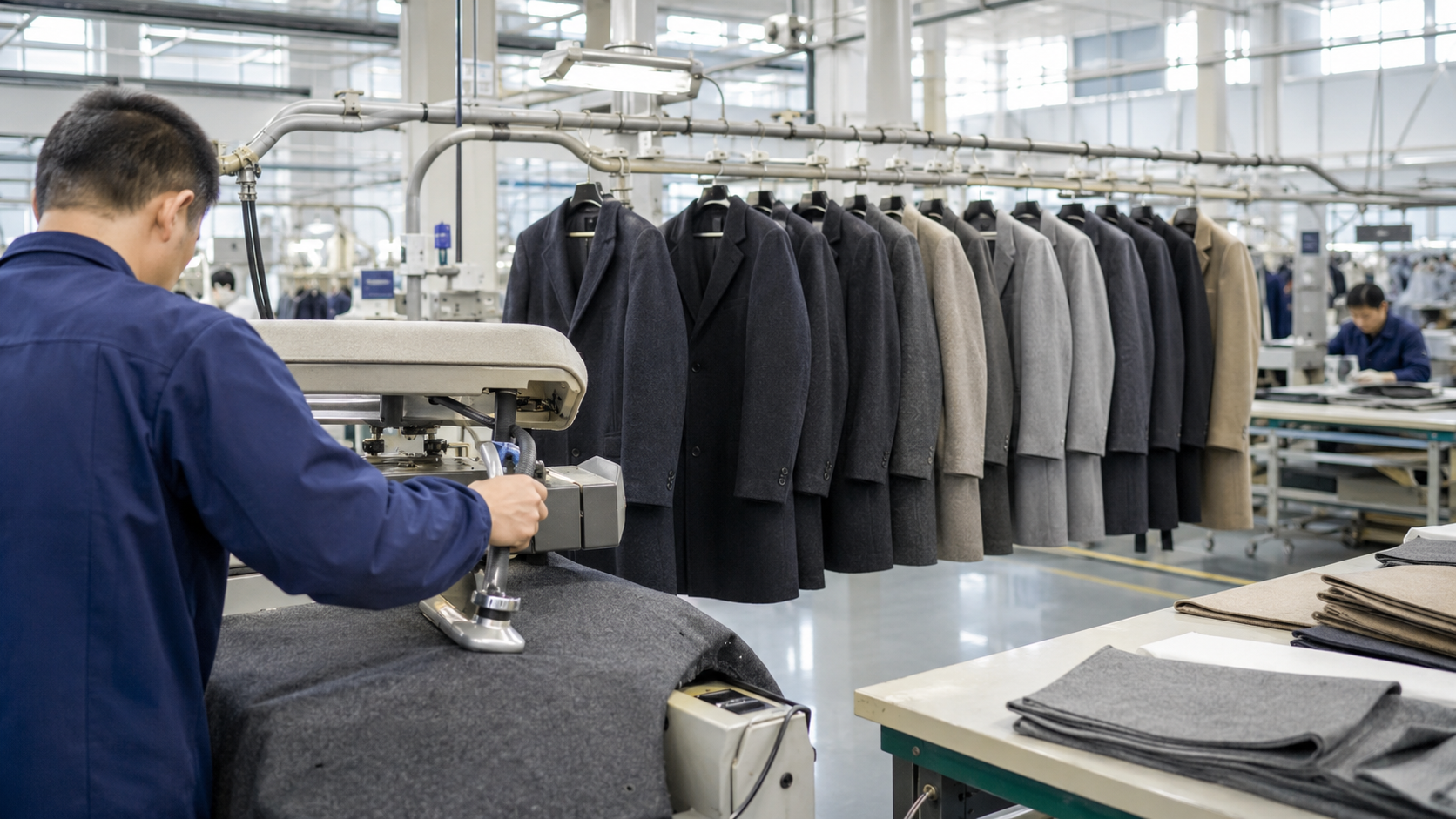
Trade show coverage stops at the palette. What follows is the less photogenic half of the season: mills confirming yardage, factories reserving lines, quality teams building measurement specs, and merchandisers holding a delivery date steady while everything upstream moves.
Pham Fashion House works in that half. We coordinate Vietnam apparel production for brands, uniform programs, and institutional buyers, managing the process from factory matching through export documentation with a New York team accountable for it end to end. Our production network covers tailored suiting, wool coats and jackets, technical outerwear, knitwear, and uniform programs at commercial scale, which means the categories with the longest runways are the ones that shape how we plan.
When a season's direction points toward regenerative fiber and considered material sourcing, as AW 27/28 does, the practical question moves quickly from aesthetics to verification. We wrote about how that verification actually works in responsible fabric sourcing in Vietnam, and about the category itself in our overview of outerwear manufacturing in Vietnam.
A Year Is Not a Long Time
Algae Gel and Mycelium Beige will not feel like predictions for much longer. Somewhere between now and the autumn of 2027 they stop being forecast language and start being a lab dip, a mill order, an approved sample, and eventually a coat that somebody buys without thinking about any of it.
That distance between a name on a color card and a garment in a shopping bag is the whole industry, compressed. Most of it happens on a factory floor, in a sample room, and on a shipping schedule, well out of view.
Vietnam apparel manufacturing and sourcing
Planning production for the seasons ahead?
Pham Fashion House coordinates Vietnam apparel production for brands, uniform programs, and institutional buyers, from factory matching through export. If you are mapping a 2027 program, we are happy to talk through the calendar.
Start a ConversationOr start with our Autumn 2027 Production Calendar.