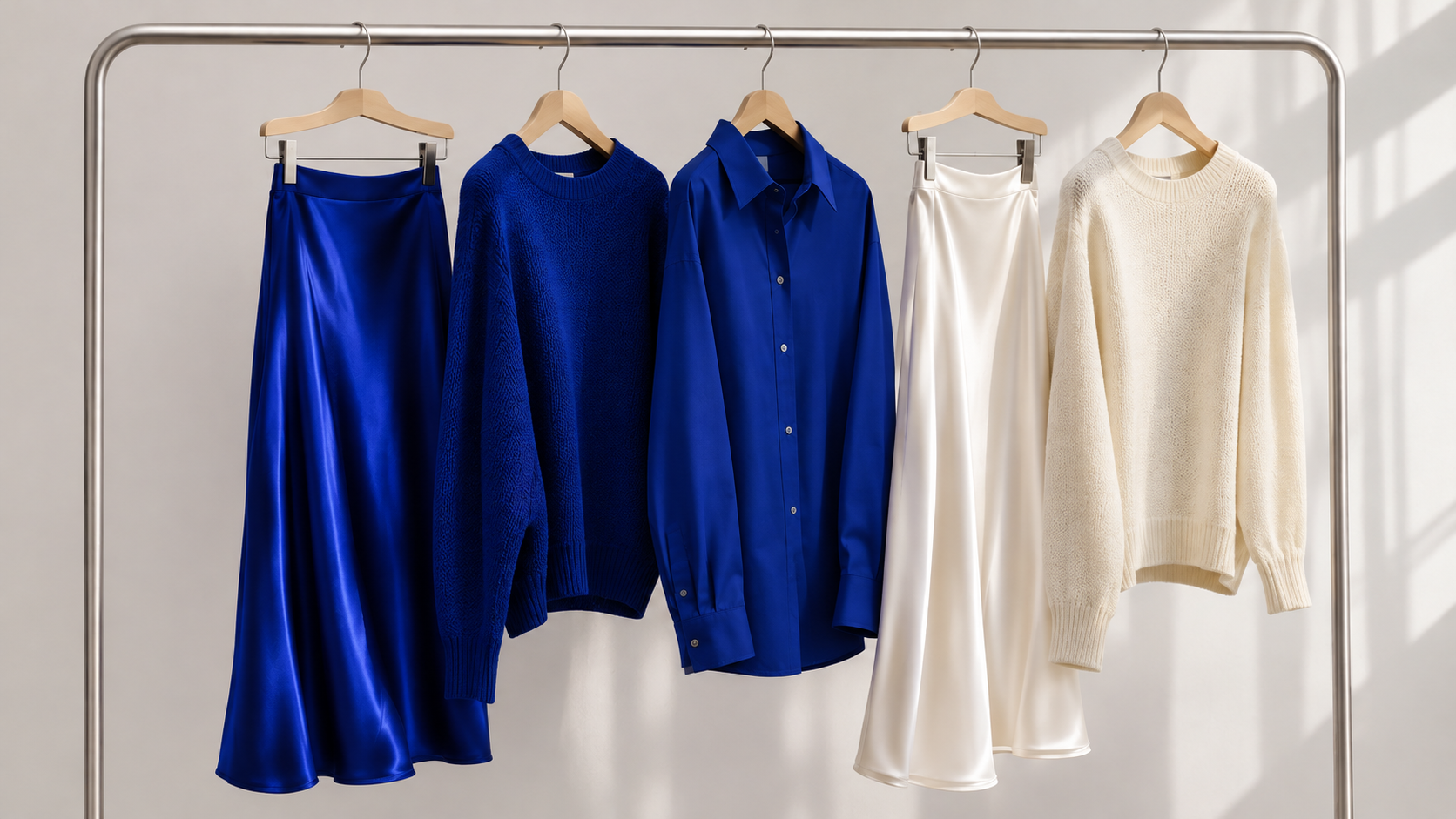
The 2027 Color of the Year is Luminous Blue. Named by the trend forecaster WGSN and its color partner Coloro, it is a deep, saturated blue in the family of cobalt and lapis, and it has already settled into the spring 2027 collections.
Pantone has not yet named its own 2027 color. The company usually announces in the first week of December, and we will add it to this page when it does.
This article covers what Luminous Blue is, where it appears across spring and autumn 2027, how to wear it, and how a named shade becomes consistent color across a full production run.
What Is the 2027 Color of the Year?
WGSN and Coloro announced Luminous Blue as their 2027 Color of the Year on April 29, 2025, more than two years ahead of the year it names. It leads their five key colors for spring/summer 2027, alongside Energy Orange, Pop Pink, Meadowland Green, and Clay.
WGSN's senior color strategist, Clare Smith, describes the shade as "mysterious and eccentric." The forecaster ties it to lapis lazuli, the semi-precious stone once ground into one of history's most prized blue pigments, and to cobalt, the mineral behind both a classic artist's blue and modern battery technology. That link between craft heritage and technology fits WGSN's theme for 2027, which it calls interconnectedness.
The shade
A vivid, deep blue between cobalt and ultramarine. Its Coloro code, 125-28-38, records hue, lightness, and chroma: a blue hue, deep in value, and highly saturated.
Where it applies
WGSN positions it as gender inclusive and transseasonal, with appeal from occasionwear to activewear. It reads as well on satin and knitwear as on technical fabrics.
What about Pantone's 2027 color?
Pantone's Color of the Year is a separate selection from WGSN and Coloro's, and the two do not always agree. Pantone named Cloud Dancer, a soft white, for 2026 in early December 2025. Its 2027 choice is expected on a similar schedule, and this page will be updated with the color, its Pantone code, and how it relates to Luminous Blue.
Where Luminous Blue Shows Up in 2027
On the spring 2027 runways
Blue was the color of the spring 2027 shows. In New York, cobalt was the clearest color trend of the week: Area sent out a full gown in shredded cobalt tinsel, Sergio Hudson showed cobalt midi dresses and a sheer knitted maxi, and Proenza Schouler, Simkhai, and Calvin Klein each worked it into their collections. Paris followed with blue looks at Chanel and Loewe, while Copenhagen leaned toward turquoise and aqua. We covered the full season in our report on the spring/summer 2027 runway trends.
The color did not arrive suddenly. Cobalt appeared at Balenciaga, Chloé, and Valentino for spring 2025, carried through spring 2026 at Victoria Beckham, Gucci, and Tom Ford, and returned for fall 2026 at Chanel, Bottega Veneta, and Givenchy. By 2027, it has the staying power of a core color rather than a single-season accent.
Worn whole, or paired with warmth
Two styling ideas carried the color through the season. The first was blue worn head to toe, part of the broader spring 2027 move toward a single color covering the whole look. The second was contrast: cobalt paired with true red on the Paris runways and in street style outside the shows, and with warm browns in place of black.
Into autumn 2027
Because WGSN treats Luminous Blue as transseasonal, it carries into the colder months alongside the autumn/winter 2027/28 key colors, Russet, Peaceful Lilac, Maize, and Deep Green. Against those warmer, earthier shades, a deep blue works as a cool anchor for knitwear, tailoring, and outerwear. The autumn palette and how early it was set are in our piece on why fall 2027 clothes are already decided, with the fabric side in our companion on autumn 2027 textures, fabrics, and silhouettes.
Outerwear is a natural home for the shade. A saturated blue lifts a wool coat or a technical shell without the weight of black, and it suits the enveloping shapes we outlined in our guide to the coats taking shape for winter 2027.
How to Wear the 2027 Color of the Year
Luminous Blue is strong enough to lead an outfit and versatile enough to sit beside neutrals. The spring 2027 collections suggest five ways to wear it.
- Head to toe. A matching set or a single-color look, with tonal shoes and bag, as seen at TWP and Sergio Hudson.
- Against white. White was one of the most worn colors of the spring shows, and it gives the blue its sharpest contrast.
- With red. A cobalt knit under a red jacket, or a red accessory against an all-blue outfit, as worn in Paris this season.
- With brown. Chocolate, tan, and cinnamon soften the blue and make it easier to wear every day.
- As one piece. A cobalt blazer, a satin skirt, a fine-gauge knit, or a trench coat, worn with denim or neutral basics.
From Named Shade to Bulk Fabric
A Color of the Year is a name and a code. For a brand producing 3,000 units per style or more, it has to become something more exact: the same blue on the shell fabric, the lining, the rib trim, the sewing thread, and the zipper, from different suppliers, in every carton. That consistency comes from a defined approval sequence agreed before bulk fabric is dyed.
1. The color standard
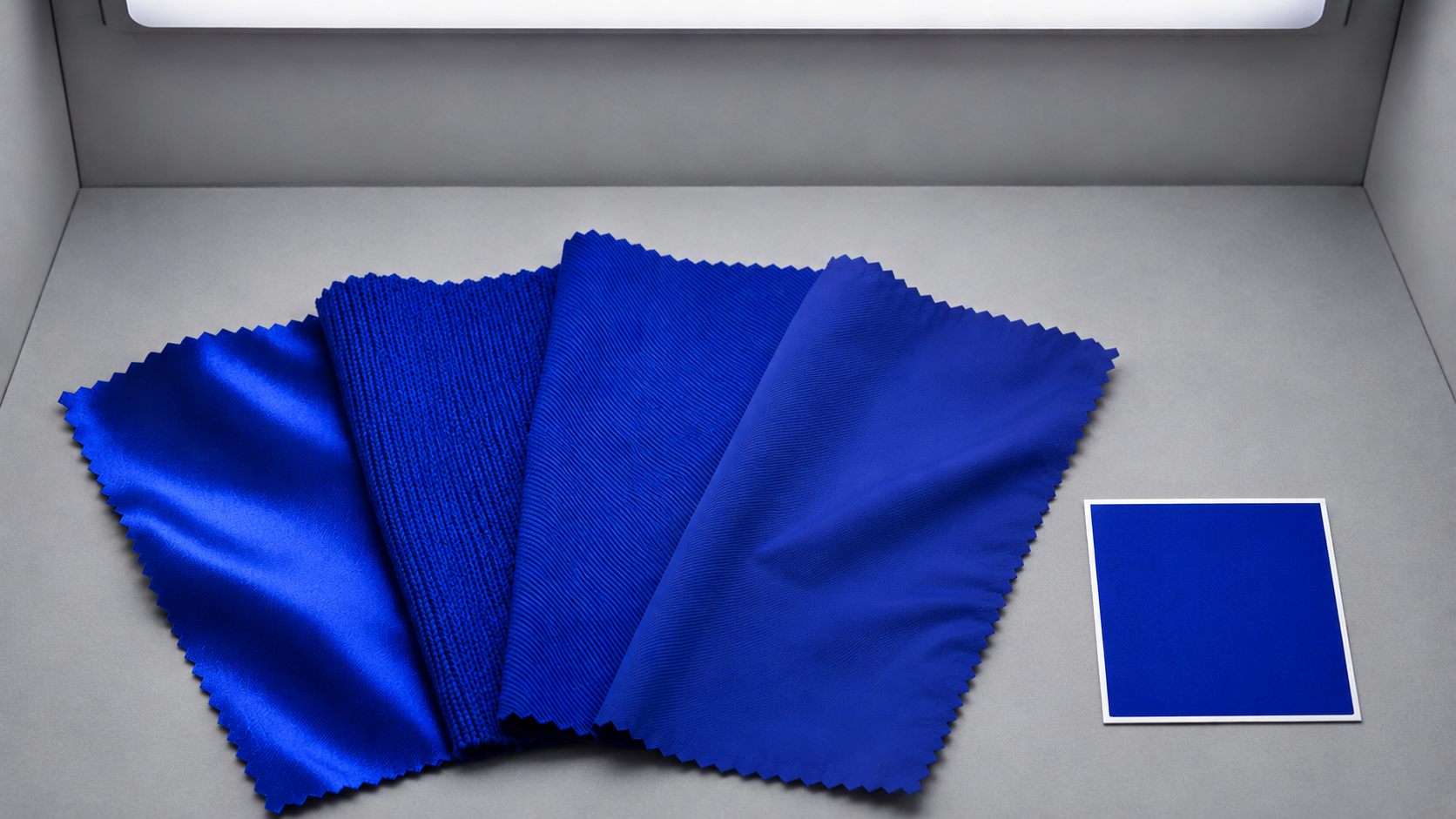
The brand fixes one physical reference, such as a Coloro or Pantone textile swatch, plus the light sources for judging the color. Every later approval is measured against it.
2. Lab dips
The mill dyes small samples on the actual production fabric. The brand reviews them in a light box and approves one, often after a second or third round of adjustment.
3. Bulk approval
Each bulk dye lot is checked against the approved lab dip. Shade bands and lot control keep panels from one dye lot together in the same garment.
4. Trims to match
Thread, zippers, buttons, rib, and labels come from separate suppliers, and each is approved against the same standard before production begins.
Why a saturated blue rewards careful matching
Different fibers take different dye families. Cotton is usually dyed with reactive dyes, polyester with disperse dyes, and nylon with acid dyes, so a blue that matches perfectly on a cotton twill has to be rebuilt for a polyester satin or a nylon shell. Two fabrics can also match in daylight and drift apart under store lighting, which is why the light sources are agreed at the start. Our article on why so much of what we wear is now polyester explains how fiber choice shapes the finished garment, color included.
Deep, saturated shades also call for colorfastness testing for washing, light, and rubbing, so the blue on the garment stays on the garment. Those results, along with shade checks across the run, form part of the inspection plan in our guide to quality control and inspection. In knit programs, where yarn is often dyed before knitting, the color decision moves even earlier, a sequence we describe in our overview of knitwear manufacturing in Vietnam.
When the color decision is made
Lab dips run inside sample development, before the fabric order is placed. Spring 2027 garments in Luminous Blue are already in production. For autumn and holiday 2027, color standards and lab dips belong in the next few months, so bulk fabric can be ordered ahead of Tet on February 6, 2027, when factories and mills run below full output. The dates are in our Tet 2027 planning calendar, and the full sequence from tech pack to ex-factory is in our guide to apparel production lead times in Vietnam.
A forecaster names the color once. The factory has to deliver it again in every dye lot.
What to Share Before Pricing a Color Program
A strong color story is easiest to price and produce when the brief is complete. Accurate pricing starts with five inputs.
- The color standard. The physical swatch or code, and the light sources for approval.
- Fabric by component. Composition and weight for the shell, lining, and trims, since each is matched separately.
- Quantity by style and color. Mills set minimums per color, and the programs we produce typically start at around 3,000 units per style.
- A finalized tech pack. Graded measurements, construction, and a full bill of materials, as set out in our guide to production-ready tech packs.
- A target landing date. The date sets the lab dip schedule, the fabric order, and the booking window.
The Blue of 2027
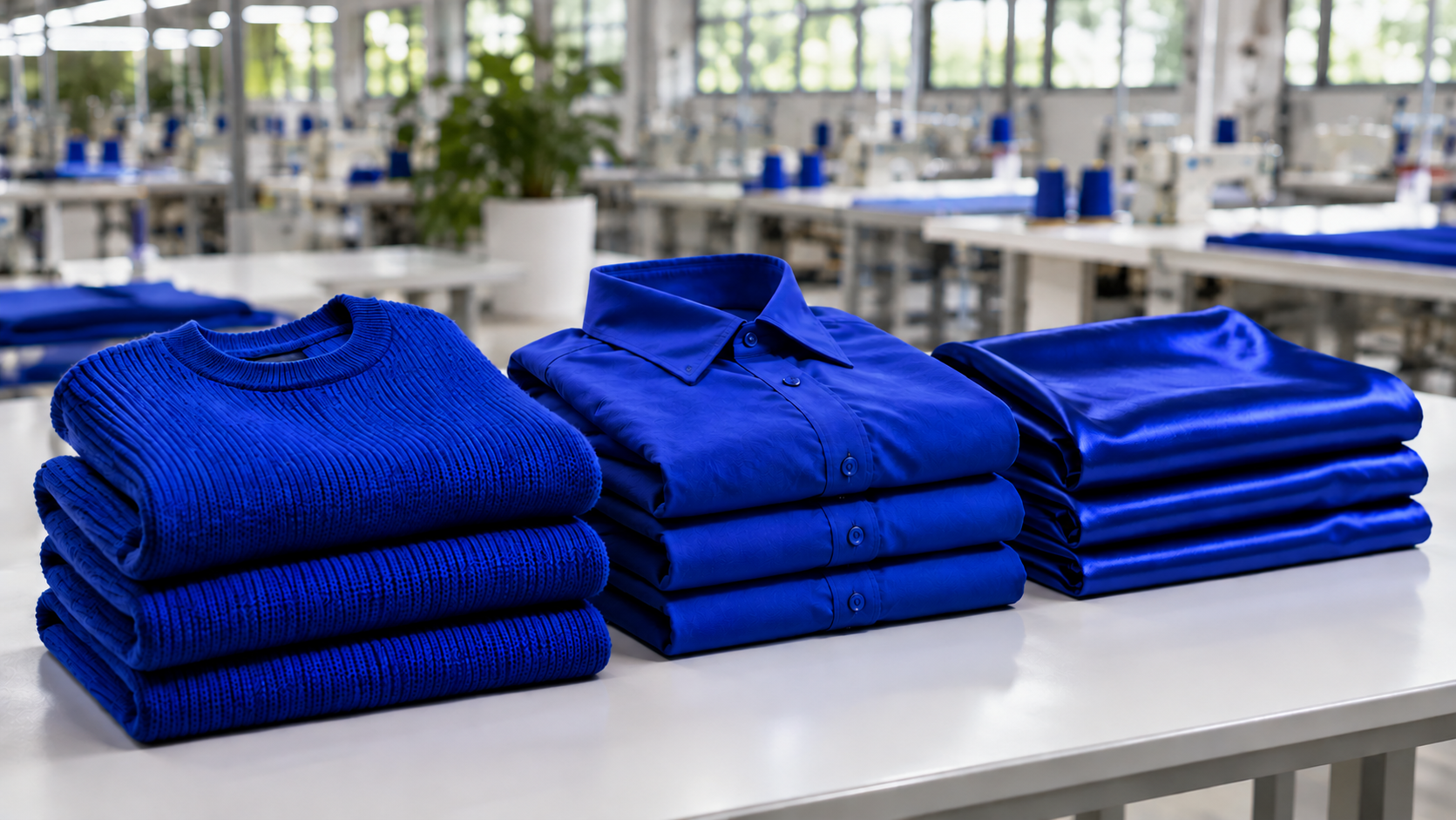
Luminous Blue will be easy to spot next year, in a satin skirt, a cobalt knit, or a blue coat on a gray winter street. Behind each of those garments sits a quieter piece of work: a standard agreed, a lab dip approved, and a dye lot checked before it ships.
Pham Fashion House coordinates Vietnam apparel production for brands and buyers producing at scale, including color-led programs across wovens, knits, and outerwear.
Vietnam apparel manufacturing and sourcing
Building a color story for 2027?
Pham Fashion House manages apparel production in Vietnam for brands, uniform programs, and institutional buyers, from tech pack review and lab dips through bulk production and export. If you are planning a 2027 program, we are glad to review the colors, materials, and calendar with you.
Start a Conversation