Vietnam Apparel Factory Audits and Compliance: A Buyer’s Guide
Compliance now shapes procurement decisions well before the first sample ships. Retailers require verified social audits. Regulators in the United States and European Union expect documented human rights and environmental due diligence across the supply chain. Insurance underwriters ask about certification coverage. For B2B apparel buyers evaluating Vietnam production, understanding factory audits and the certification landscape has become a core sourcing skill.
This guide walks through what factory audits verify, which certifications carry weight with Western retailers and regulators, and the specific checks buyers should run before placing production orders in Vietnam. It covers both the certification landscape and the buyer-side due diligence process, weighted toward what serious buyers should do before signing a contract with a Vietnam apparel factory.
Why compliance is now a procurement input
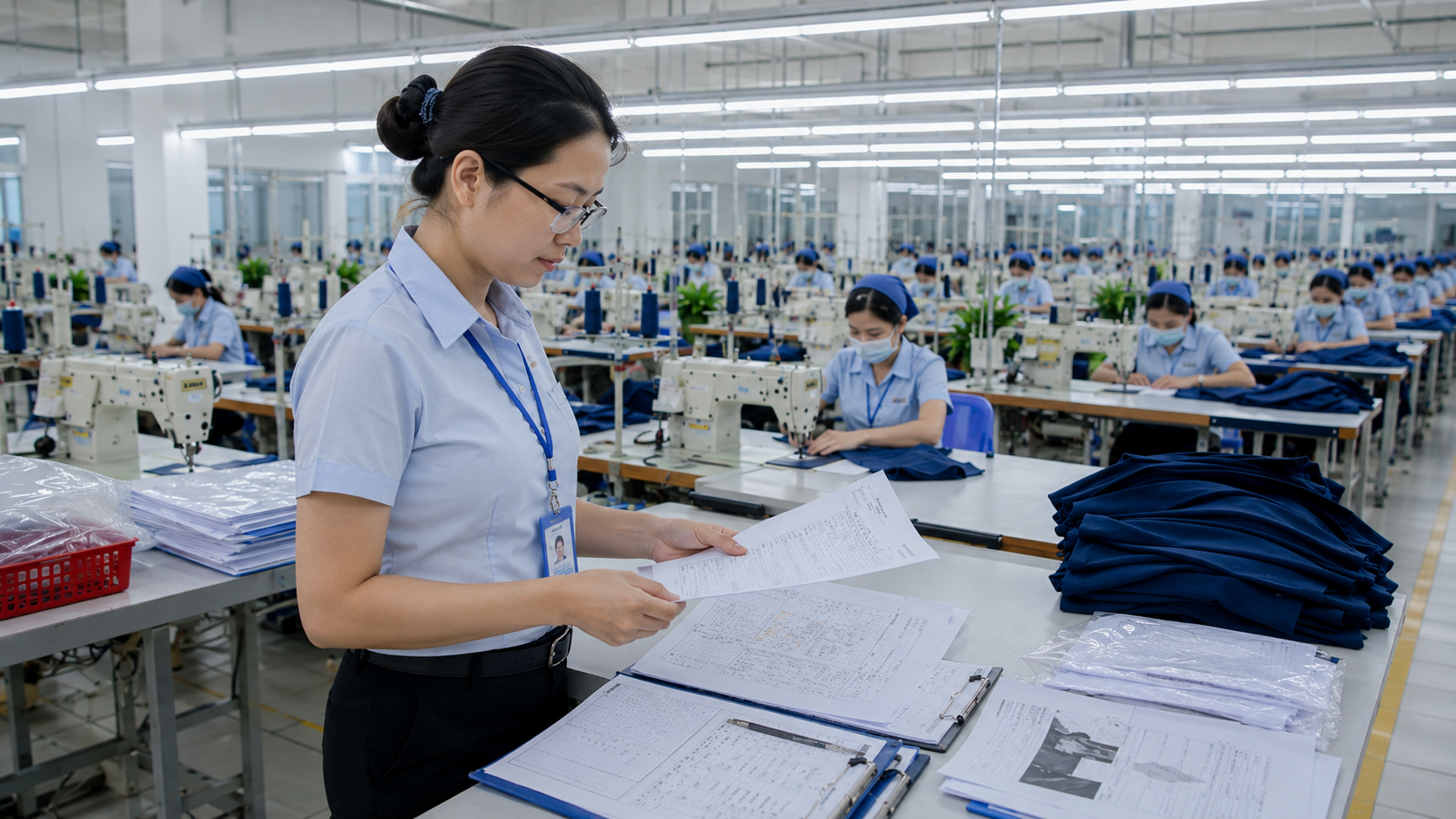
Compliance verification used to sit at the end of the sourcing process. It now sits at the front. Retailer onboarding, UFLPA enforcement, CSDDD reporting, insurance underwriting, and trade finance all depend on documented audit coverage from the factory floor. Buyers who cannot produce audit records for their manufacturing partners face customs holds, financial penalties, and reputational exposure.
Why Compliance Sits at the Front of Every Buyer Conversation
Three forces have pushed compliance up the priority list for apparel buyers over the last five years.
Retailer requirements. Major US and European retailers require documented social audit coverage from every factory in their supply chain. Walmart, Target, Costco, H&M, Marks & Spencer, and most large department stores mandate BSCI, Sedex, WRAP, or equivalent audit records before onboarding a supplier. Without those records, a factory cannot ship goods into the retailer's distribution network.
Regulatory pressure. The US Uyghur Forced Labor Prevention Act (UFLPA), the EU Corporate Sustainability Due Diligence Directive (CSDDD), and Germany's Supply Chain Due Diligence Act now require importers to demonstrate active human rights and environmental due diligence across their supply chains. Documentation matters. Buyers evaluating a move from China to Vietnam, or diversifying beyond China as part of a broader sourcing strategy, will find that compliance documentation is now a gating requirement, not a preference.
Brand and financial risk. A single labor violation traced back to a supplier can trigger consumer backlash, retail delistings, and coverage denials from cargo and product liability insurers. Trade finance lenders increasingly ask for supplier audit coverage before extending letters of credit or supply chain financing. Compliance is now underwritten by the financial system as much as by procurement teams.
What Factory Audits Actually Verify
A factory audit is a structured on-site inspection performed by a qualified third party. Audit scope varies by standard, but most audits cover four broad categories that together give buyers and regulators a documented view of factory operations.
Social compliance
Labor practices, wages and hours, freedom of association, forced and child labor prevention, workplace safety, grievance mechanisms, and worker representation. This is the largest category by audit volume, and the one most retailers and regulators focus on first.
Environmental compliance
Chemical management, wastewater treatment, air emissions, energy use, waste disposal, and environmental management systems. Standards in this category have become more important as brands report against Scope 3 emissions and material impact metrics.
Security compliance
Supply chain security controls that prevent tampering, smuggling, and unauthorized access to shipments. This category applies to any factory shipping into the United States and affects customs clearance times and inspection rates.
Quality systems
Documented processes, corrective action systems, management review procedures, and continuous improvement programs. Quality system audits often overlap with the same production controls covered in apparel quality control inspection.

Social and Labor Compliance Standards
Social and labor audits are the most widely required certifications in Western apparel supply chains. The standards below carry the most weight with retailers and regulators.
BSCI
Managed by amfori, the Business Social Compliance Initiative is the most widely recognized social audit framework in European supply chains. Audits cover eleven areas including fair remuneration, working hours, health and safety, and prohibitions on child and forced labor. Retailers require BSCI ratings of A, B, or C before approving suppliers.
Sedex and SMETA
Sedex is a shared audit platform. SMETA (Sedex Members Ethical Trade Audit) is the audit protocol used across the Sedex network. Most UK retailers and many US retailers accept SMETA audits (2-Pillar or 4-Pillar) as the primary social compliance check.
WRAP
Worldwide Responsible Accredited Production is the largest independent apparel and footwear social compliance certification, with Gold, Silver, and Platinum tiers. US retailers frequently accept WRAP certification in place of BSCI.
SA8000
Developed by Social Accountability International, SA8000 is one of the most rigorous social certifications available. Certification requires management system implementation, not simply an audit pass. Fewer factories hold SA8000 than BSCI or WRAP.
BetterWork Vietnam
A partnership between the International Labour Organization and the IFC, BetterWork Vietnam engages directly with factories on labor practices and worker wellbeing. Active participation signals ongoing engagement, not a one-time audit pass.
SLCP
The Social and Labor Convergence Program replaces duplicative brand-specific social audits with a single verified assessment that multiple brands can accept. Adoption has grown across major sourcing programs and reduces audit fatigue at the factory level.
Environmental and Product Standards
Environmental and product certifications verify material claims and factory environmental performance. Buyers making claims about organic content, recycled content, or responsible sourcing need chain of custody documentation across the supply chain, which is what these standards provide.
Higg Index
Developed by the Sustainable Apparel Coalition, the Higg Facility Environmental Module (FEM) and Higg Facility Social and Labor Module (FSLM) measure environmental and social performance at the factory level. Many brands use Higg scores in their sustainability reporting.
GOTS
The Global Organic Textile Standard is the leading certification for organic textiles. GOTS covers both the material (minimum 70% organic fiber) and the processing chain (chemicals, wastewater, social criteria). Every entity in the chain of custody must be individually certified.
GRS
The Global Recycled Standard verifies recycled content claims across the supply chain. Requires chain of custody documentation from the recycler through to the finished garment. Common in sustainable fabric sourcing programs.
OCS and RCS
The Organic Content Standard and Recycled Claim Standard are simpler content verification standards used when full GOTS or GRS certification is not required. Useful for buyers making basic content claims without the full processing requirements.
RDS
The Responsible Down Standard verifies down and feather sourcing meets animal welfare requirements. Standard credential for outerwear buyers working with insulated jackets and coats. Required by most major outerwear brands and retailers.
Quality, Security, and Systems Standards
Quality management, supply chain security, and systems certifications round out the compliance stack. These are particularly important for shipments into the United States and for buyers with rigorous quality documentation requirements.
ISO 9001:2015
The international standard for quality management systems. Not apparel-specific, but signals documented process control, corrective action systems, and management review procedures. Common baseline for enterprise buyers.
C-TPAT
Customs Trade Partnership Against Terrorism is a US Customs and Border Protection program covering supply chain security. Factories certified under C-TPAT receive expedited customs clearance and reduced inspection rates on shipments into the United States.
SCAN
The Supplier Compliance Audit Network is a shared security audit platform used by major US retailers. SCAN reduces audit duplication when multiple retailers require security verification at the same facility.
WCA
Workplace Conditions Assessment, developed by Intertek, is a widely used social and workplace conditions audit protocol. Common across US retail supply chains and often accepted in place of or alongside BSCI or WRAP.

What Buyers Should Verify Before Placing Orders
Certifications appear on factory profiles and marketing materials, but the details determine whether the certification protects the buyer's order. The distinction between corporate marketing and facility-level documentation is where most compliance verification errors originate.
Verify at the facility level
Certifications like GOTS, WRAP, and BSCI are issued at the facility level, not the corporate level. A large manufacturer may hold certifications at some facilities and not others. Before placing an order, confirm the specific facility that will produce the goods holds the certification and that the certification is current.
Verify at the scope level
GOTS, GRS, RDS, and similar product certifications apply only to products and materials the factory has explicitly listed within its certification scope. A GOTS-certified facility may be certified for knit garments but not woven, or for finished garments but not accessories. Always request the current scope certificate before assuming coverage.
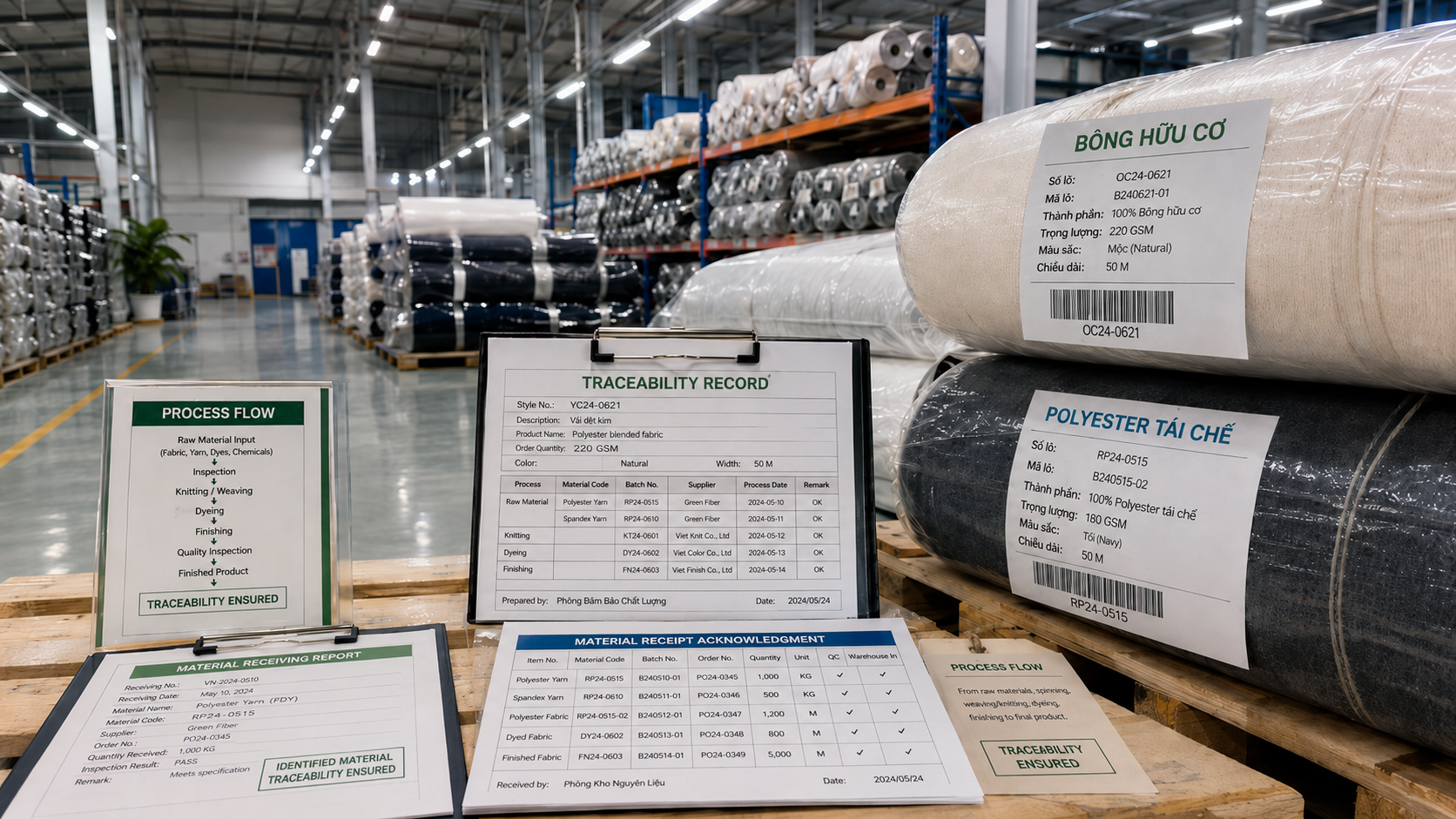
Chain of custody is a separate check. For material claims such as organic cotton, recycled polyester, and responsibly sourced down, chain of custody documentation must exist for every step from raw material through to finished garment. If the fabric mill is not certified, the finished garment cannot legitimately carry the claim, regardless of what the factory holds.
Audit reports should be available for review. Certified factories should provide copies of recent audit reports, or grant Sedex platform access, on request. If a factory declines to share audit documentation, treat that as a signal to slow the process down and ask more questions.
The certifying body should be recognized. Not all audits carry equal weight. Certifications from recognized bodies such as Intertek, SGS, Bureau Veritas, TÜV, and UL carry more credibility than certifications from unfamiliar or unaccredited auditors. Cross-check the certifying body against the standard's official directory.
A factory's corporate marketing may list every certification in the industry. The buyer's order is only protected by the specific facility, scope, and validity of the certificate that applies to the garment being produced.
Buyer Due Diligence Checklist
Before signing a production contract with a Vietnam apparel factory, run this checklist. The goal is documented, verifiable compliance coverage at the facility that will produce the goods, not general assurances at the corporate level.
Confirm the production facility
Identify the exact facility that will produce the goods and cross-reference its individual certifications against the corporate claims.
Request current certificates
Ask for current, dated certificates for every claimed certification, and note renewal dates. Expired certificates are a common issue.
Verify scope coverage
Confirm certification scope covers the product category, construction, and materials in the intended order.
Review recent audit history
Review the last 12 to 24 months of social audit findings and confirm corrective actions have been closed.
Trace chain of custody
Confirm chain of custody documentation for any material claims including organic, recycled, or responsibly sourced content.
Confirm C-TPAT status
For shipments into the United States, confirm C-TPAT certification and SCAN participation for expedited customs clearance.
Check retailer references
Ask which retailers and brands currently source from the facility. Active retail relationships signal accepted audit coverage.
Review environmental permits
Verify environmental permits and wastewater discharge records for any wet processing operations such as dyeing, washing, or printing.
Red Flags Buyers Should Recognize
Certain patterns warrant closer scrutiny before placing orders. None of these disqualify a factory on their own, but taken together they signal a supplier relationship that will require significantly more oversight and risk management, and one that may not clear retailer or regulator scrutiny when it matters most.
Certificates expired more than six months ago with no evidence of active renewal. Refusal to share audit reports or grant Sedex platform access. Corporate-level marketing claims that do not match facility-level documentation. Auditor names that do not appear in recognized directories. Repeated corrective actions on the same finding across multiple audit cycles. No evidence of environmental permits for wet processing operations. Inconsistent responses about which retailers or brands the facility currently supplies.
Any single flag warrants a conversation. Multiple flags warrant walking away and finding a different production partner.
How Pham Fashion House Manages Compliance
Compliance oversight is central to how Pham Fashion House qualifies production partners in Vietnam. Our primary manufacturing partner holds facility-level certifications including BSCI, WRAP, Sedex and SMETA, ISO 9001:2015, Higg FEM and FSLM, SA8000, GOTS, Global Recycled Standard, RDS, C-TPAT, SCAN, WCA, SLCP, and BetterWork Vietnam, alongside product-specific certifications for down, organic content, recycled content, and technical waterproof membranes.
For buyers, this means audit documentation, certification scopes, and chain of custody records are available for review before production begins. It also means our production network can accept orders from retailers and brands with strict compliance requirements without gaps in audit coverage. Our approach to ethical garment manufacturing and sustainable production at scale is built on that facility-level certification base.
On our role as intermediary
Pham Fashion House operates as a Sedex B member, appropriate for our role as sourcing and production intermediary between Western B2B buyers and Vietnam manufacturing capacity. Facility-level certifications (GOTS, WRAP, BSCI, and others) are held by our production partners at the factory level, where the actual production, wet processing, and chain of custody controls exist. We can share the full certification stack of the producing facility with buyers on request.
Compliance depth also affects how orders are costed and quoted, which is covered in more detail in our guide to apparel costing and FOB pricing. For buyers still evaluating production partners, our guide to choosing an apparel manufacturing partner in Vietnam covers the broader qualification process, including how compliance sits alongside capacity, quality, and lead time considerations.
Vietnam apparel production partner
Have compliance requirements to verify before your next order?
Pham Fashion House works with established brands and institutional buyers who need documented audit coverage across their supply chain. Programs typically start at 3,000+ units per style.
Discuss Your Program