Ethical Garment Manufacturing in Vietnam: What Buyers Need to Know About Labor Standards and Factory Compliance
Ethical garment manufacturing is not the same conversation as sustainable manufacturing. Environmental certifications, recycled fabrics, and carbon commitments address one dimension of responsible sourcing. Labor practices, worker welfare, and factory compliance address another. For buyers whose sourcing requirements include both, understanding the distinction matters. This guide focuses specifically on labor standards: what ethical manufacturing means at the factory level, how audit systems work, and what buyers should evaluate before committing to a production relationship in Vietnam.
Vietnam's garment sector has developed a well-established labor compliance infrastructure driven by two decades of European buyer requirements, international trade agreement obligations, and government labor law reform. That infrastructure does not mean every factory in Vietnam operates to the same standard. It means the systems for verifying and documenting labor practices are in place for buyers who know what to ask for and how to evaluate the responses.

How this guide differs from our sustainability guide
Our sustainable garment manufacturing guide covers environmental certifications, eco-friendly fabric options, and EU ecodesign compliance. This article focuses specifically on labor practices, worker welfare, and how factory audit systems work. Buyers with requirements in both areas should read both.
What Ethical Manufacturing Means in a Production Context
Ethical manufacturing in a B2B sourcing context means documented and verifiable labor practices at the factory level. It is not a brand values statement or a marketing claim. It is a set of measurable standards covering wages, working hours, health and safety conditions, freedom of association, and the absence of forced or child labor, verified through third-party audits conducted by independent bodies on a scheduled basis.
The distinction between ethical and sustainable matters because they require different verification processes and different documentation from factory partners. A factory can hold robust environmental certifications and still have undocumented overtime practices. A factory can have impeccable labor audit records and still use conventional fabrics with no environmental standard attached. Buyers whose sourcing programs require both need to specify both, and evaluate both separately.
Labor compliance covers
Wages and wage documentation, working hours and overtime practices, health and safety conditions, freedom of association and collective bargaining rights, absence of forced labor and child labor, non-discrimination policies, and disciplinary practice documentation.
Environmental compliance covers
Fabric and material certifications, chemical management and wastewater treatment, energy consumption and renewable energy use, waste management and recycling practices, and carbon footprint documentation. Covered separately in our sustainable manufacturing guide.
Vietnam's Labor Framework and Legal Protections
Vietnam's labor law framework has strengthened significantly over the past decade, driven by the requirements of international trade agreements and pressure from export market buyers. The 2021 Labor Code revisions introduced meaningful protections that were absent from earlier versions, including expanded rights around freedom of association and clearer overtime limitations.
For buyers evaluating Vietnam, the relevant context is that the legal framework is real and the enforcement infrastructure exists in the export sector, particularly in factories producing for European buyers who require regular third-party labor audits as a condition of their supplier relationships. Whether a specific factory is operating within that framework is a factory-level question, not a country-level assumption.
ILO core convention ratification
Vietnam has ratified seven of the eight ILO core labor conventions, covering child labor, forced labor, freedom of association, right to organize and collective bargaining, equal remuneration, and non-discrimination. The eighth convention on freedom of association was partially addressed in the 2021 Labor Code amendments.
EVFTA labor obligations
The EU-Vietnam Free Trade Agreement includes binding commitments on labor rights and environmental standards, with a complaint mechanism for non-compliance. Factories supplying EU-bound goods operate under more active enforcement scrutiny than those serving markets without comparable trade agreement obligations.
Regional minimum wage structure
Vietnam operates a four-region minimum wage structure, with higher minimums in urban and industrial zones where most export garment production is concentrated. Wages in these zones are meaningfully higher than in rural areas and competitive within the broader Southeast Asian production context.
Freedom of association reforms
The 2021 Labor Code permitted the establishment of worker representative organizations outside the traditional state-controlled union structure for the first time. This reform, implemented as part of CPTPP and EVFTA obligations, represents a significant shift in Vietnamese labor law.
Working hours regulations
Vietnamese law limits standard working hours to 48 per week and overtime to 40 hours per month or 200 hours per year, with higher limits in specific circumstances requiring employee consent. Overtime pay requirements apply to all excess hours.
Health and safety standards
Export-focused factories are subject to Vietnamese occupational health and safety regulations and, in many cases, to the health and safety requirements of international audit standards that go beyond domestic legal minimums. Factory-level implementation varies and is a primary area of third-party audit focus.
How Factory Labor Audits Work
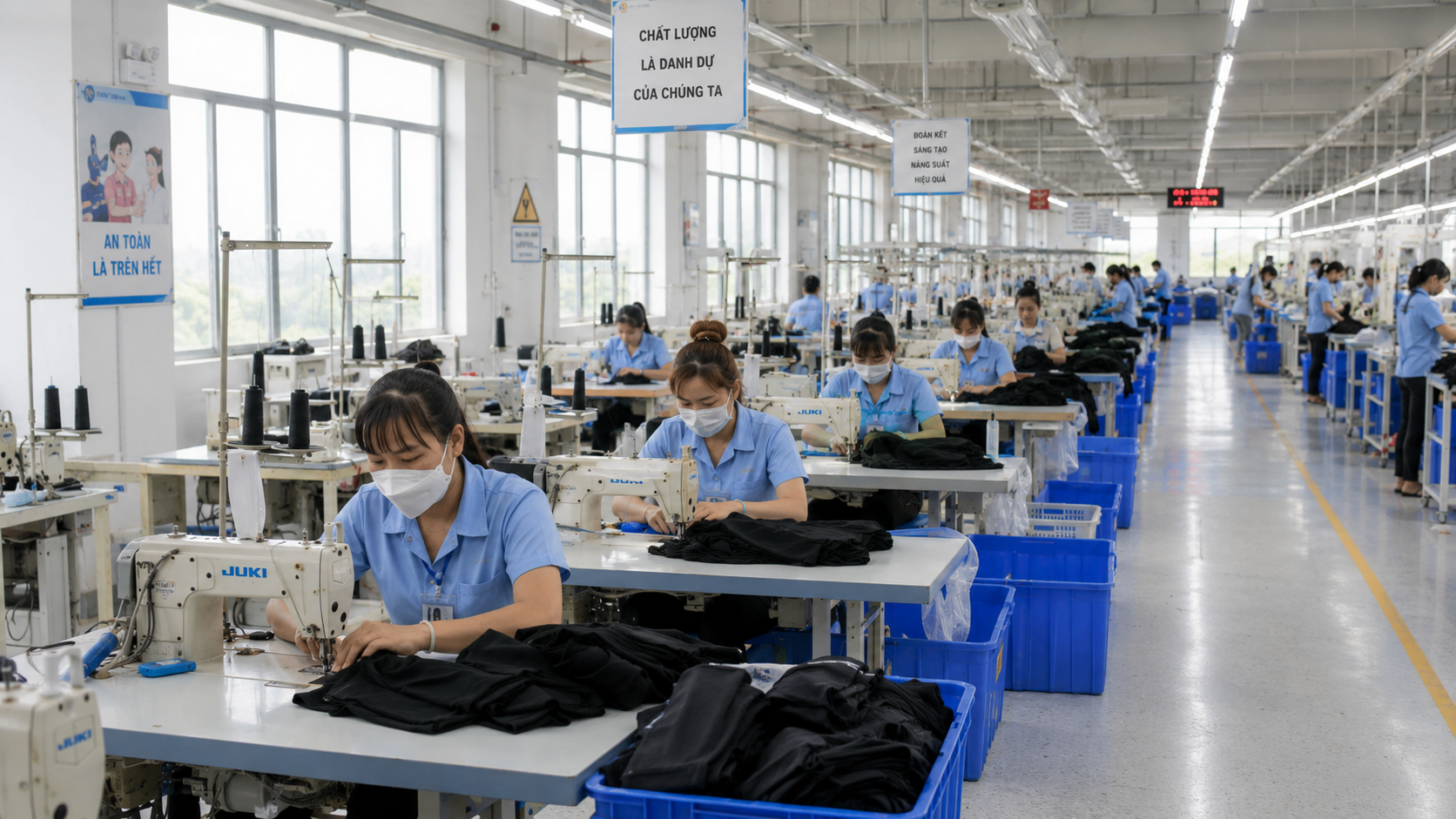
Labor audits are the primary mechanism through which buyers verify factory compliance with labor standards. Understanding how they work, what they cover, and what their limitations are is essential context for specifying labor requirements in a sourcing program.
The most widely used audit frameworks in the Vietnam garment sector are amfori BSCI, Sedex/SMETA, SA8000, and Fair Wear Foundation. Each covers similar core areas but with different methodologies, reporting formats, and third-party auditor requirements. Many European retailers specify a preferred audit standard as part of their supplier requirements. Buyers without a specific retailer requirement can work with their production partner to determine which standard is most appropriate for their supply chain.
Audit certifications confirm how a factory treats its workforce; they do not by themselves confirm how it controls product quality. Our guide to quality control and inspection in Vietnam apparel manufacturing covers the four-stage inspection process that runs alongside social compliance, from fabric approval through final AQL inspection.
Wages and working hours
Auditors verify that wages meet or exceed legal minimums, that overtime is paid at the legally required rate, that working hours are documented and within legal limits, and that payroll records are accurate and accessible to workers.
Health and safety conditions
Physical inspection of the factory environment covering fire safety, emergency exits, machine guarding, chemical storage, ventilation, lighting, and first aid provision. Health and safety is typically the largest single section of a factory audit.
Freedom of association
Verification that workers are not prevented from organizing, that worker representative bodies exist or are permitted to exist, and that documented disciplinary processes do not penalize workers for union activity or collective action.
No forced or child labor
Review of age verification documentation for all workers, absence of document retention practices that could constitute forced labor, voluntary nature of employment, and freedom to terminate employment with reasonable notice.
Non-discrimination and harassment
Documented policies covering hiring, promotion, and disciplinary practices, absence of discriminatory criteria in employment decisions, and grievance mechanisms that workers can access without fear of retaliation.
Management systems
Written policies covering all labor standard areas, evidence that policies are communicated to workers, management responsibility for compliance, and corrective action processes for identified issues. Management systems documentation distinguishes factories with embedded compliance cultures from those producing paperwork for audit purposes.
What to Look for When Evaluating a Factory's Labor Practices
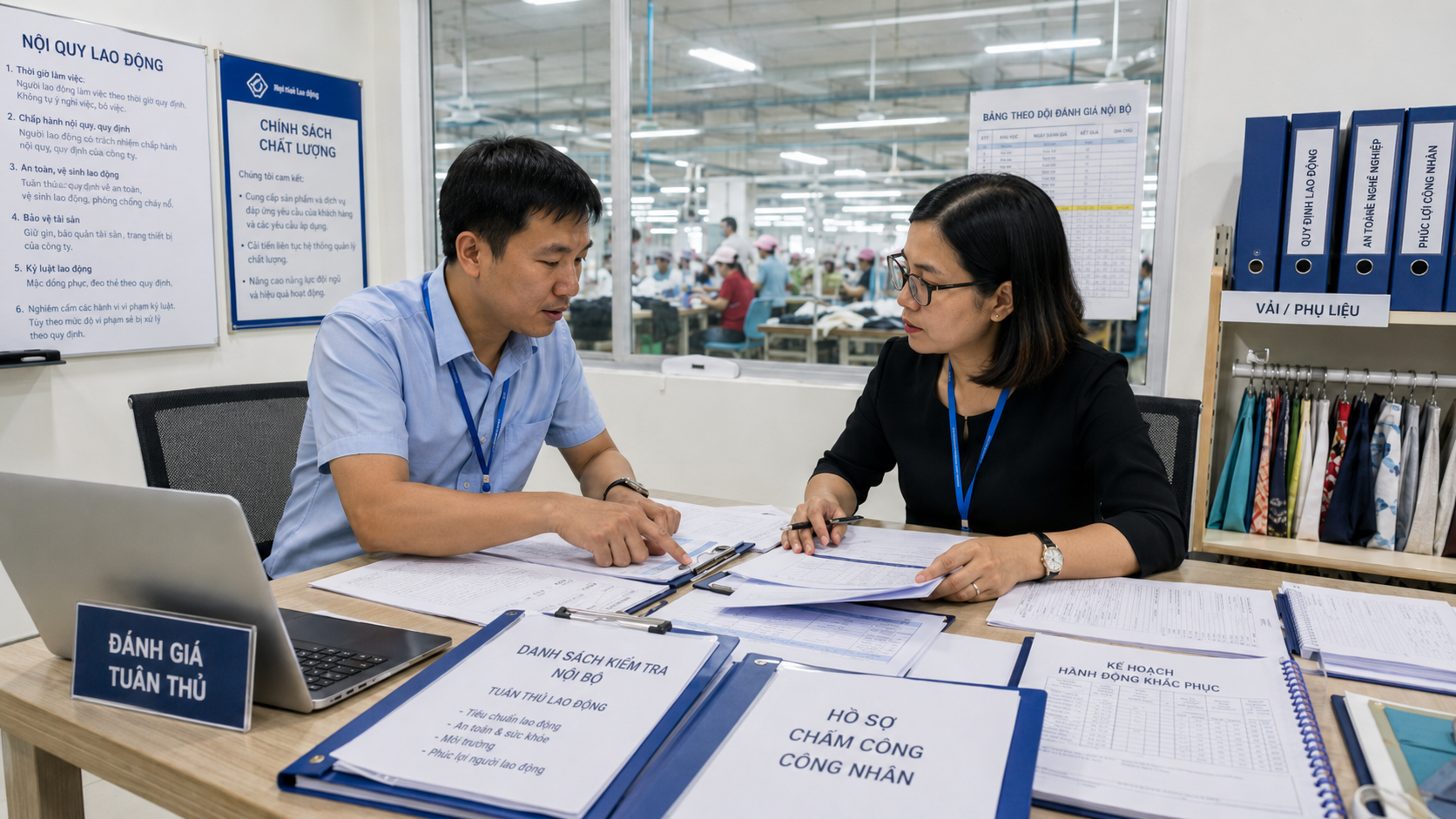
A current third-party audit certificate is the starting point, not the endpoint, of a labor compliance evaluation. The audit report itself, the corrective action history, and how the factory responds to questions about its compliance program tell buyers significantly more than a certificate alone.
Indicators of credible compliance
Current audit certificate from a recognized third-party body. Previous audit reports available for review showing corrective action history. Workers able to speak independently to auditors. Wage documentation organized and accessible. Written policies distributed to workers in their language. Management able to explain compliance policies without referring to paperwork.
Indicators worth investigating further
No third-party audit on record or only a self-assessment. Reluctance to share previous audit reports or corrective action records. Undisclosed subcontracting of any production elements. Overtime documentation inconsistent with production volumes. High turnover that makes worker interviews less reliable. Policies that exist on paper but cannot be explained by management.
How to Specify Labor Standards in a Production Brief
Labor compliance requirements that are too vague create problems at the end of a production program rather than preventing them at the beginning. A brief that says a factory should operate "ethically" gives a factory no specific target to demonstrate and gives a buyer no specific documentation to request. Clear requirements specified at the start of a production relationship produce documentable outcomes.
Before approaching a production partner, buyers should know which audit standard their retailer or compliance program requires, or which standard they want to specify if the choice is theirs. They should also know whether they need an audit completed before production begins, whether they will accept a factory with a recent audit already in place, and what corrective action history they are prepared to accept.
What to include in a sourcing brief for labor compliance
Name the specific audit standard required. State whether an existing current audit is acceptable or whether a new audit is required before production begins. Specify whether you require access to the full audit report and corrective action history. Clarify any specific areas of non-negotiable compliance, such as no subcontracting without disclosure or documented age verification. These specifications allow a production partner to match programs to the right factory rather than simply claiming general compliance.
A factory that says it operates ethically and a factory with a current third-party audit report and documented corrective action history are not the same thing. The documentation is what creates accountability.
The Limits of Audit-Based Compliance
Audits are a necessary part of ethical manufacturing verification but they are not sufficient on their own. A factory can prepare for and pass a scheduled audit while maintaining practices between audits that would not pass the same scrutiny. This is a well-documented limitation of the audit system, and buyers whose compliance requirements are serious need to understand it rather than treat a certificate as a closed question.
The factors that create more reliable compliance over time are audit frequency, unannounced audit capability where the audit standard permits it, long-term production relationships that give buyers ongoing visibility into factory operations, and the culture of factory management rather than just its paperwork. A factory whose management genuinely understands why labor standards matter produces more reliable compliance outcomes than one whose management views audits as a documentation exercise.
For buyers building ongoing production programs in Vietnam rather than placing one-time orders, the production partner relationship is the primary mechanism for maintaining compliance visibility. A partner with established factory relationships, regular factory visits, and accountability on the buyer's side of the relationship provides meaningfully better compliance assurance than a buyer relying solely on audit certificates.

How Pham Fashion House Approaches Factory Labor Standards
Pham Fashion House works with factory partners that operate under active third-party labor compliance programs. Factory labor standards are part of the evaluation process when we match a production program to a factory, alongside garment category capability, MOQ, construction experience, and quality management systems. Factories that cannot demonstrate current audit status or that have unresolved major corrective actions are not part of our active production network.
For buyers with specific audit standard requirements, we help clarify which factories in our network hold the relevant certifications, what the corrective action history looks like, and how to specify requirements in a production brief clearly enough that compliance can be documented rather than assumed. Buyers whose programs require new audits prior to production should factor the lead time and cost into their program timeline.
We work with established brands, uniform programs, and institutional buyers producing at scale across North America, Europe, Japan, Korea, Australia, and other markets. For buyers evaluating Vietnam production more broadly, our Vietnam garment production guide and our guide to choosing an apparel manufacturing partner in Vietnam cover the full factory evaluation process. For buyers whose requirements include both labor and environmental standards, our sustainable garment manufacturing guide covers the environmental certification landscape in detail.
Ethical production in Vietnam
Building a production program with labor compliance requirements?
Pham Fashion House works with established brands and institutional buyers whose sourcing programs include documented labor standards and third-party audit requirements. Programs typically start at 3,000+ units per style.
Discuss Your Program