Most apparel brands did not choose single-country sourcing as a strategy. It accumulated, order by order, until one country held the entire production calendar.
Unwinding that concentration is mostly a qualification exercise. Sourcing teams generally know they want a second origin well before they have one. What holds the program up is the practical question of proving that a new factory can produce their product to standard before any real volume depends on it.
This article covers the phasing established brands use: the proving order, parallel production at a defined share of the calendar, and the documentation a receiving factory needs before the first purchase order ships.

Why Single-Origin Sourcing Became a Risk
Consolidating production in one country was the efficient answer for two decades. One set of factory relationships, one freight lane, one compliance framework. That efficiency held, and it has since been repriced. Tariff schedules now shift between seasons rather than between decades, ocean freight has proven volatile enough to reshape landed cost inside a single quarter, and retail and institutional buyers increasingly ask what happens to delivery commitments if one origin is disrupted.
The goal is optionality
Moving all production from one country to another replaces one concentration with another. A qualified second origin keeps existing capacity where it performs while building production-proven capacity elsewhere, so allocation can shift between origins as costs, tariffs, and capacity conditions change.
What to Evaluate in a Second Production Country
Four things determine whether a country can carry a real share of a scaled program:
- Category depth. Factories with proven capability in your product category at your volumes, rather than general sewing capacity that can attempt it.
- Compliance infrastructure. An audit trail your retail partners will accept, through certifications such as WRAP, BSCI, SMETA, and ISO 9001.
- Trade access. Tariff treatment and free trade agreement coverage across your destination markets, not only the US.
- Logistics maturity. Port capacity, consolidation services, and established freight lanes, so the production calendar survives contact with real shipping schedules.
Our guide to choosing an apparel manufacturing partner in Vietnam covers those evaluation criteria in detail. Vietnam anchors most second-source programs because its garment sector was built for export, its major manufacturers hold the certification portfolios Western retailers require, and its trade agreement network covers the EU, UK, and CPTPP markets. Our comparison of China and Vietnam garment manufacturing covers how the two origins differ in practice, and our Vietnam apparel tariffs guide carries current rates by market.
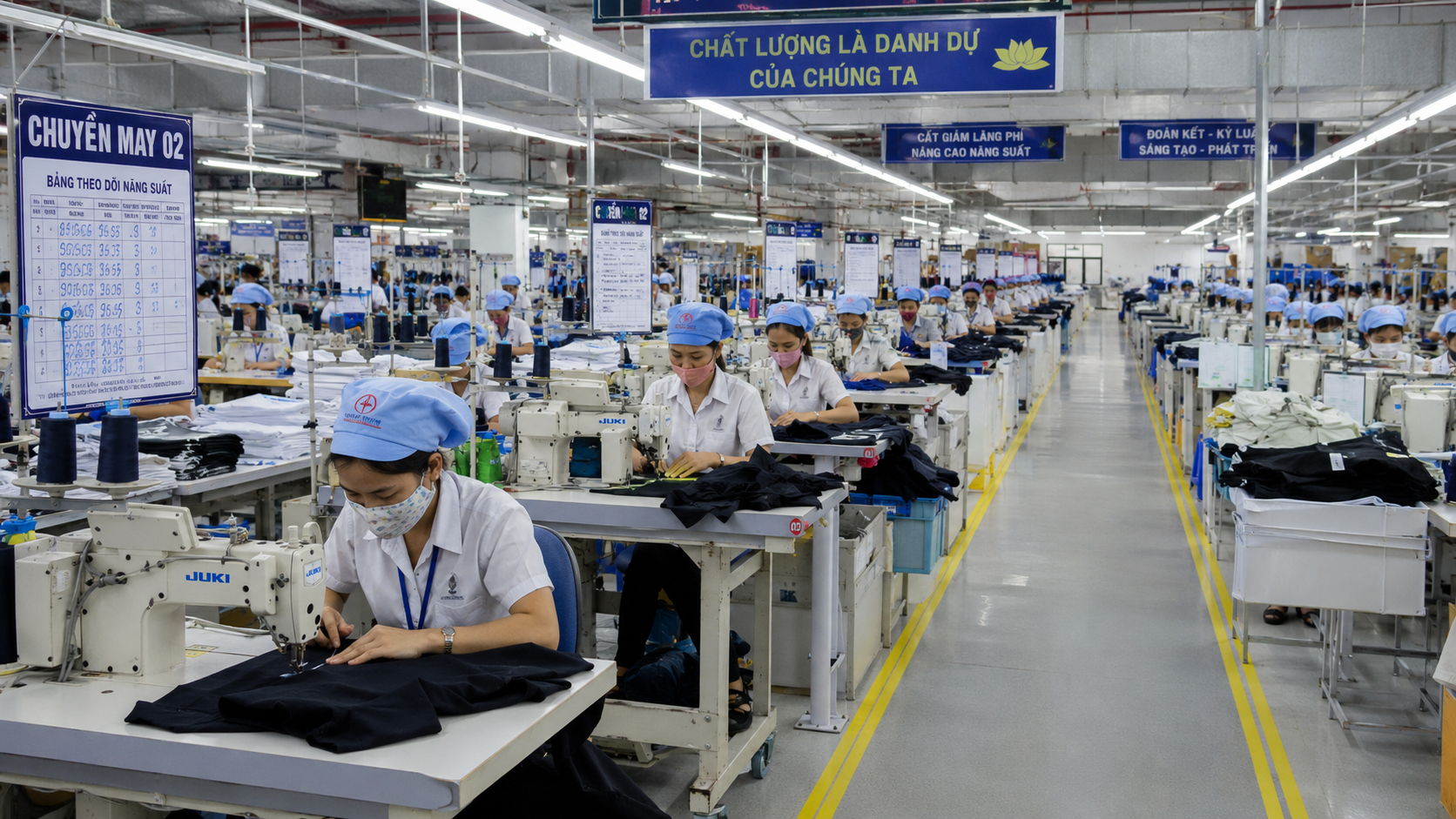
A second origin is qualified when the brand can shift allocation to it without missing a delivery.
The Proving Order and Phased Allocation
The most common failure in this process is moving too much volume too fast. A factory that has never produced your product needs to prove itself on a real order before it carries a meaningful share of the calendar. Established brands phase the work in two stages.
Stage one: the proving order
One or two styles at standard MOQ, ideally repeat styles with stable specifications and known quality benchmarks from the current origin. The order tests sampling, communication, quality, and delivery against a baseline you already trust.
Stage two: parallel production
Once the proving order ships clean, the new origin takes a defined share of the seasonal calendar, often 20 to 30 percent, running alongside the incumbent. Allocation then adjusts season over season on measured performance.
What "ships clean" actually means
Judging a proving order by impression defeats the purpose. Agree the pass criteria before the order is placed, so the result is measured rather than debated.
Measurement conformance
Graded measurements verified across the full size run, including the extremes of the range, not only the sample size. Fit failures concentrate at the ends of a grade.
Defect rate against AQL
Final random inspection against the AQL agreed in advance, with major and minor defect thresholds defined before production rather than negotiated after.
Delivery against the original date
On time measured against the date first confirmed, not a revised one. A factory that hits every revised date has still missed the original schedule.
Materials as approved
Fabric and trims matching the approved standards, with no substitution made without written approval. This is the single most common surprise in a first order.
Why repeat styles make better proving orders
A new development style introduces two unknowns at once: an unproven factory and an unproven design. When something goes wrong, there is no way to tell which one caused it. A repeat style removes that ambiguity. You already know how the garment should measure, how the fabric behaves, and where construction problems tend to appear, because the incumbent factory produced it. Its tech pack has also matured through real production, so the ambiguities a new factory would otherwise interpret on its own have already been resolved.
When the proving order does not ship clean
The useful distinction is between a process problem and a capability ceiling, and the failure pattern tells you which one you have.
Process problems show up as inconsistency. Some units are correct and some are not, defects cluster in particular cartons or particular operators, and measurements drift over the run. Those causes are usually line training, supervision, or a gap in inline inspection, and a second proving order is worth running once they are addressed.
Capability ceilings show up as consistency. Every unit fails the same way at the same point, which means the factory lacks the equipment, the operator skill, or the fabric handling that construction requires. Another round will produce the same result. That is the point to change factories rather than to iterate.

How allocation moves after the proving order
In the season after a clean proving order, the new origin takes its defined share on styles chosen for their similarity to what was already proven. Expanding by category rather than by volume is what keeps the program stable: add the next construction type only once the current one has delivered consistently across a full season.
Allocation should move on measured performance rather than on quoted price. A factory quoting lower and delivering late costs more than the quote suggests, once air freight, markdowns, or a missed retail window are counted.
Both stages depend on documentation quality. The receiving factory has no institutional memory of your product, so everything the incumbent learned over years of production needs to arrive on paper: finalized tech packs, graded specifications, approved fabric standards, and quality tolerances. Our guide to production-ready tech packs covers what that package should contain, and our factory audits and compliance guide covers how to verify a new origin before the first purchase order.
What a Sourcing Partner Changes
The obstacle is usually bandwidth. Qualifying factories in a new country, verifying certifications, managing sampling across time zones, and supervising a proving order all require presence and relationships that most sourcing teams lack in a second origin on day one.
Pham Fashion House manages Vietnam production for Western brands from a New York base, with established factory relationships, quality control processes already in place, and a network covering tailored garments, outerwear, knits, uniforms, and technical products at scale. Brands entering Vietnam through a partner skip the multi-year work of building factory relationships from zero, and the proving order runs under supervision from the first sample onward. Our overview of switching garment production to Vietnam walks through the transition mechanics in more detail.
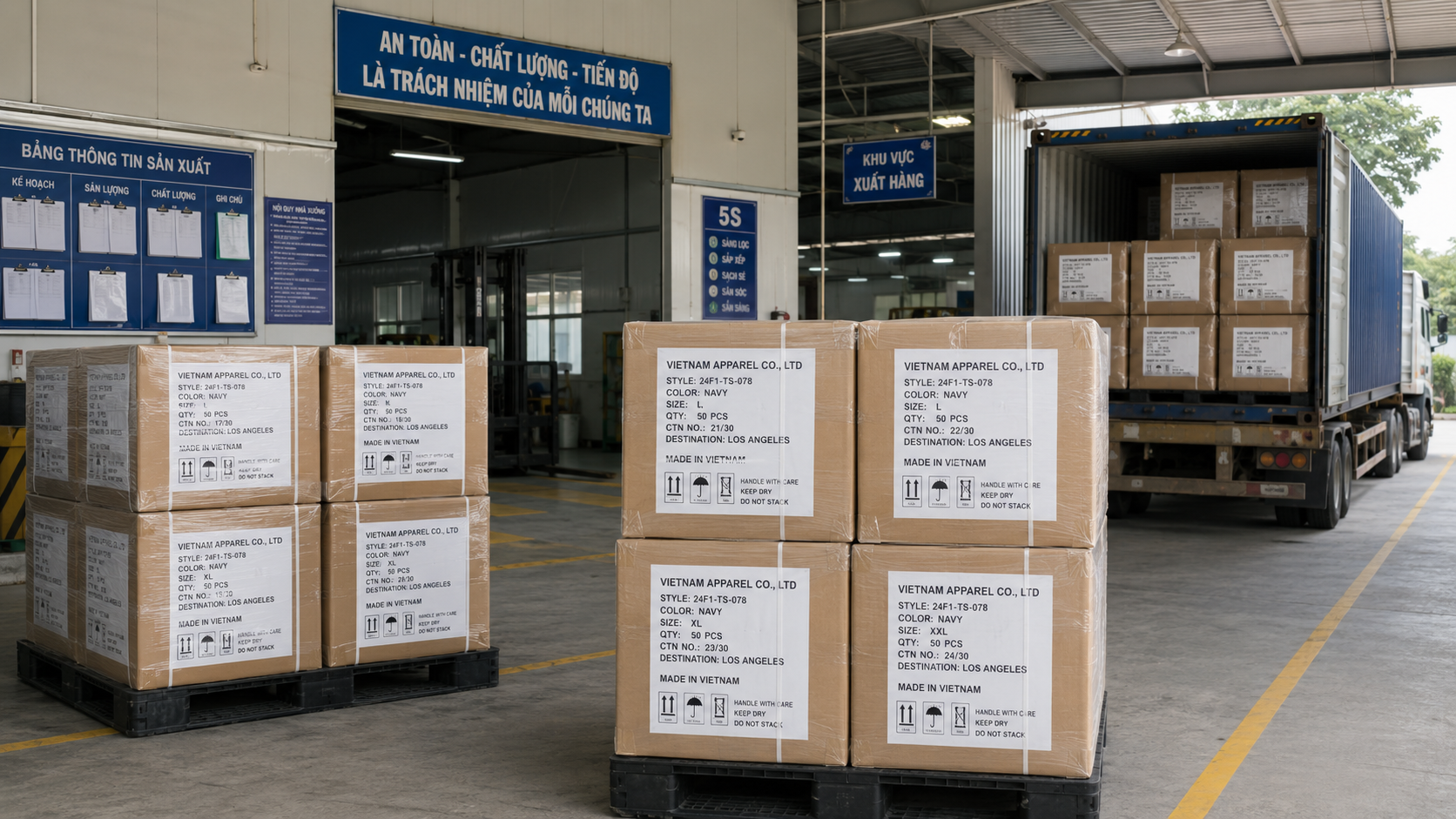
Vietnam apparel production partner
Qualifying a second production origin?
Pham Fashion House helps established brands and institutional buyers build qualified Vietnam production capacity, from factory matching through the proving order and into ongoing programs. Programs typically start at 3,000 units per style.
Discuss Your Program