Private Label Apparel Manufacturing in Vietnam: A Guide for Brands and Retailers Building Their Own Programs
Private label apparel production is a different exercise from buying wholesale. Buyers building their own brand on Vietnam production need more than a factory that can make the right garment. They need a partner who can integrate brand identity into the product, manage labeling, packaging, and trims to specification, protect the IP in their designs, and build a program structured for reorder rather than a one-time run.
Vietnam's manufacturing depth makes it a strong fit for private label programs across a wide range of categories. This guide covers what private label production actually requires, how the different production models work, what buyers need before approaching a factory, and how to build a program that gets more efficient over time.
Who this guide is for
This article is written for retailers building own-brand programs, direct-to-consumer brands moving into scaled production, hospitality and corporate organizations developing branded apparel, and established brands adding new categories under their own label. It covers the production model, not a specific garment category. For category-specific guidance, see our articles on formal wear, women's apparel, and technical outerwear manufacturing in Vietnam.
What Private Label Production Actually Means
Private label production means manufacturing garments that carry your brand identity rather than someone else's. The product is made to your specifications, carries your labels and branding, and belongs to you. That makes it different from buying wholesale, where you purchase from an existing brand's line; different from white labeling, where you put your name on a stock product without modification; and different from licensed production, where you manufacture under someone else's trademark.
The upside of private label is real: better margins than wholesale, full control over design and construction, the ability to build a fit block specific to your customer, and product that no other retailer is selling. The tradeoff is that product development responsibility sits entirely with you. Tech packs, graded specs, fabric direction, fit standards, and quality requirements all belong to the buyer. A factory produces to your brief. If the brief is incomplete, the outcome will be too.
For retailers and brands that have outgrown buying from existing wholesale lines, private label production in Vietnam is one of the more accessible paths to building a differentiated product at meaningful volume. The infrastructure for it is well developed, and the range of categories it covers is broad.
The Three Production Models Private Label Buyers Should Understand
ODM (Original Design Manufacturing)
The factory develops the product. The buyer provides direction on category, silhouette, and brand requirements, and the production partner handles pattern making, grading, and construction. ODM suits brands that want to build a private label range without a full in-house product development team. Vietnam factories with established ODM divisions can move quickly once direction is clear.
OEM or CMT (Cut, Make, Trim)
The buyer provides finalized tech packs; the factory produces to specification. This is the standard model for established private label brands. The buyer owns the design, pattern, and IP. The factory does the cutting, sewing, and trimming, often sourcing fabrics and trims to the buyer's specification as part of the arrangement.
FOB (Free On Board)
A pricing and shipping term rather than a production model, but worth understanding. FOB means the factory delivers finished goods to the port of export. The buyer takes ownership there and arranges onward freight. Most Vietnam private label production is priced and transacted on FOB terms. DDP arrangements, where the production partner manages freight and import all the way to the buyer's door, are available but less common.
Hybrid models
Many private label buyers sit somewhere between ODM and OEM: they have a clear design direction and some specifications, but rely on the production partner for pattern making, grading, and material sourcing. This is a practical middle ground for brands with strong aesthetic vision but limited technical production resources, and it is well supported in Vietnam's manufacturing network.
Fabric and trim sourcing
Private label programs need to decide who sources materials. Buyer-supplied fabric gives complete control over quality and sourcing credentials but adds sourcing lead time and minimums to manage. Factory-sourced materials, where the production partner sources to your specification, are more common and simpler to coordinate, particularly for buyers without an existing material sourcing operation.
Packaging and labeling
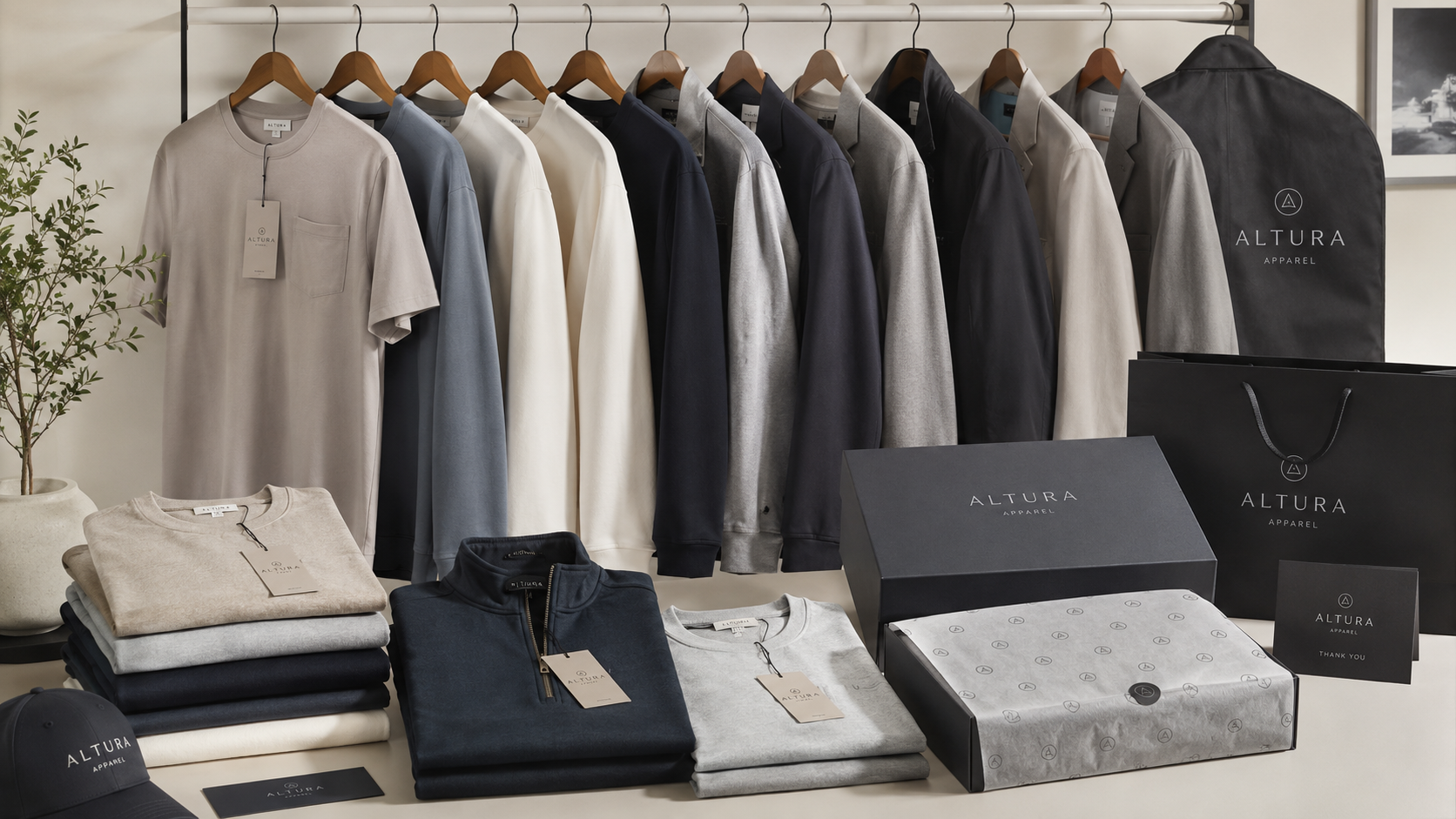
Private label programs need branded components across woven main labels, care labels, hangtags, size labels, and outer packaging. Each has its own lead time and minimum order, and all need to arrive at the factory before production begins. Buyers who treat labeling as an afterthought frequently end up with finished garments waiting on a label order. Plan for six to eight weeks from artwork approval for woven labels.

What Vietnam Offers Private Label Programs
Vietnam's manufacturing depth makes it a practical fit for private label programs in ways that go beyond production cost. Factories in the export sector have spent decades managing the labeling documentation, compliance audits, and quality management systems that North American and European retail buyers require. That experience is not universal across every factory, but it is common among the export-focused facilities that have run serious buyer programs for years. Finding the right one for your category and scale is the work.
ODM capability at commercial scale
Buyers who need design and development support rather than arriving with complete tech packs have real options in Vietnam. Our production network has run a dedicated ODM division since 2010, serving international private label brands across multiple categories at commercial volume. This is not a boutique service: it is a production infrastructure built for repeat, scaled programs.
Breadth of category capability
Private label ranges rarely stay in one category. Vietnam's manufacturing depth covers suiting, outerwear, dresses, blouses, activewear, knitwear, and casualwear. That means a brand building a multi-category private label program can consolidate production within a single network rather than managing separate factory relationships across each category.
Compliance and certification
Retail distribution often requires labor audit documentation, chemical safety testing, and environmental certifications. Vietnam's export factories have built compliance programs calibrated to European and North American retail requirements. Getting the right certification documentation is generally more straightforward here than in newer, less export-mature manufacturing locations.
Trade agreement access
Vietnam's trade agreements give private label buyers shipping to the EU, Japan, Australia, Canada, and other markets preferential tariff access. For brands building international distribution, Vietnam's trade position is a real economic consideration, not just a production quality one.
What You Need to Bring to a Private Label Program
Private label programs take more preparation than most buyers expect. The relationship moves fastest when a buyer shows up with clear specifications across every element that needs to be coordinated: not just the garment construction, but the brand identity components, compliance requirements, and commercial terms. Gaps in any of those areas create friction that compounds during development.
What production partners need from you
Tech packs or clear design direction if using ODM. Brand standards document covering label artwork, hangtag design, care label wording, color standards, and packaging specifications. Fabric and trim direction. Size range and grade specifications. Compliance requirements by market. Target FOB pricing. Quantity by style, colorway, and size. Delivery timeline and destination port. Reorder expectations and program structure.
What affects development timeline
Completeness of tech packs or design direction at the start. Lead time for branded labeling components, typically six to eight weeks for woven labels from artwork approval. Fabric and trim sourcing lead times, particularly for certified or specialty materials. Number of sample rounds required before production approval. Whether the program includes a new fit block or works from an existing one. Complexity of colorway range.

IP, Exclusivity, and Brand Protection in Vietnam Production
Intellectual property protection is a legitimate concern in overseas garment production, and private label buyers should approach it with specific, practical steps rather than general anxiety. The risk in Vietnam production is not categorically different from production in any other country. It is most effectively managed through contract terms, production partner selection, and production brief discipline rather than assumed away or avoided entirely.
The most practical IP protection step is ensuring that your tech packs, pattern files, fit blocks, and design specifications are clearly documented as owned by your brand in your production agreements. This is standard in professional production relationships and worth confirming in writing before development begins. For genuinely novel construction techniques or patentable elements, legal counsel familiar with Vietnamese IP law is the appropriate resource.
Exclusivity in private label programs
Exclusivity, meaning the factory will not produce your design for other buyers, is a separate question from IP ownership. True style exclusivity is difficult to enforce in practice and rarely offered in standard production agreements. The more effective approach is to invest in the fit block and construction details that make your product distinctively yours, and to build production relationships where the development history creates a practical barrier to replication. Buyers who have invested in a proprietary fit block and brand-specific construction details have more durable product differentiation than those relying on exclusivity agreements alone.
Building and Scaling a Private Label Program
The most common mistake in private label program development is starting too broad. Brands that try to launch a full multi-category range in the first season tend to hit longer development timelines, more complex quality management, and higher sampling costs than they planned for. A focused first-season approach, one or two hero styles that represent the brand clearly, gets to market faster and creates a production foundation that extends more efficiently into additional styles.
The second season is usually where private label programs start to feel efficient. An approved fit block, an established factory relationship, and a labeling program already in place mean development moves faster and costs less. Buyers who think about the second season from the start, building reorder structures into initial agreements rather than treating the first order as a standalone exercise, see better economics from the program overall.
A private label program built around one well-developed hero style produces better brand results than a broad range built on underdeveloped specs. Start focused. Scale from strength.
Scaling from a first range into a full seasonal model requires a production calendar that accounts for lead times across development, sampling, labeling components, fabric sourcing, and production. Vietnam programs typically run twelve to twenty weeks from tech pack approval to finished goods at port, depending on complexity and material sourcing requirements. Building that timeline into the seasonal calendar from the start avoids the compressed development schedules that create most of the quality problems in first-season private label programs.

How Pham Fashion House Supports Private Label Programs
Pham Fashion House is a New York-based apparel sourcing and production partner with operations in Vietnam. We support private label programs through the full development process: production model selection, factory matching by category and capability, fabric and trim sourcing, sample development, brand identity integration, quality oversight, and export coordination.
Our production network includes factories with established ODM and FOB divisions built for international private label buyers. For buyers who need design direction support rather than arriving with complete tech packs, we connect programs to ODM production partners with the right category experience. For buyers with complete specifications, we match programs to the right OEM factory based on garment type, scale, and compliance requirements.
We work with established brands, retailers, and institutional organizations building private label programs across North America, Europe, Japan, Korea, Australia, and other markets. Programs typically start at 3,000 units per style. For buyers evaluating Vietnam production more broadly, our guide to choosing an apparel manufacturing partner in Vietnam and our Vietnam garment manufacturing guide for scaled production are useful starting points. Category-specific guides covering formal wear, women's apparel, and technical outerwear cover the construction and compliance requirements relevant to each.
Private label production partner
Building a private label apparel program in Vietnam?
Pham Fashion House supports brands, retailers, and institutional organizations developing private label apparel programs in Vietnam. We work across ODM and OEM production models, with factory partners capable of integrating full brand identity programs at commercial scale. Programs typically start at 3,000+ units per style.
Discuss Your Program