Dresses and Blouses Manufacturing in Vietnam: A Guide for Department Stores, Retailers, and Institutional Buyers
Dresses and blouses are one of the more technically demanding categories to produce well at scale. Unlike a basic knit top or a five-pocket trouser, where construction is relatively standardized, dresses and blouses involve fabric drape behavior, lining decisions, fit variables that change meaningfully across the size range, closure systems that affect both function and finish, and silhouette variety that requires genuine pattern development capability from the factory.
For department stores, specialty retailers, hospitality groups, corporate apparel programs, and wholesale buyers, sourcing this category means evaluating construction capability, not just sewing capacity. This guide covers what makes dresses and blouses a distinct production category, what buyers need to specify, and what to look for in a Vietnam production partner.

How this guide relates to our women's apparel content
Our women's apparel manufacturing guide covers the broader category including dresses, blouses, skirts, and structured garments. This article goes deeper on dresses and blouses specifically, covering the construction, fabric, and production considerations that make this product family its own sourcing conversation.
Why Dresses and Blouses Require a Different Production Conversation
A factory that produces basic knit tops or standard trousers at high volume does not automatically have the capability to produce a lined sheath dress, a draped wrap dress, or a structured woven blouse at the same quality level. The construction disciplines are different enough that the factory matching process needs to account for them specifically.
The variables that make this category distinct are fabric behavior, lining and underlining decisions, closure complexity, fit sensitivity across the size range, and silhouette variety within a single program. A department store private label range or a wholesale blouse program may include four or five distinct silhouettes, each with its own pattern, fabric handling requirements, and finishing standards. That is a different production planning challenge than running a single style at high volume.
Fabric and Drape: The Foundation of the Category
Fabric behavior matters more in dresses and blouses than in almost any other apparel category. A fabric that drapes beautifully in a sample can behave differently across a production run if weight, finish, or hand feel varies between dye lots. A fabric that looks right on a hanger can fail on the body if the drape does not fall as the designer intended across the full size range.
For buyers sourcing dresses and blouses at scale, fabric selection is not just a cost and availability decision. It is a construction decision that affects how the garment hangs, moves, recovers from wear, and performs across repeated laundering. The specification needs to include not only fiber content and weight but also drape behavior, opacity, stretch recovery if applicable, and how the fabric interacts with the lining or underlining.
Drape and hand feel
How the fabric falls on the body determines the silhouette. A fabric that is too stiff or too limp for the intended design produces a garment that does not match the approved sample, even if every measurement is correct.
Weight consistency across dye lots
Fabric weight can vary between production runs at the mill level. For dresses where drape is the defining quality, even small GSM variation between lots can produce visible inconsistency across the finished order.
Opacity and coverage
Lightweight woven fabrics used in blouses and summer dresses need to be evaluated for opacity against the skin and against lining colors. This is a fit and construction consideration that affects customer satisfaction directly.
Laundering performance
Hospitality and corporate programs launder garments frequently. Fabric selection needs to account for shrinkage, color retention, and drape recovery after repeated washing, not just how the fabric looks and feels when new.
Construction Complexity: Lining, Closures, and Finishing
Dresses and blouses carry construction requirements that simpler garment categories do not. Lining, closure systems, and finishing details all need to be specified clearly in the tech pack rather than left to factory interpretation.
Lining and underlining
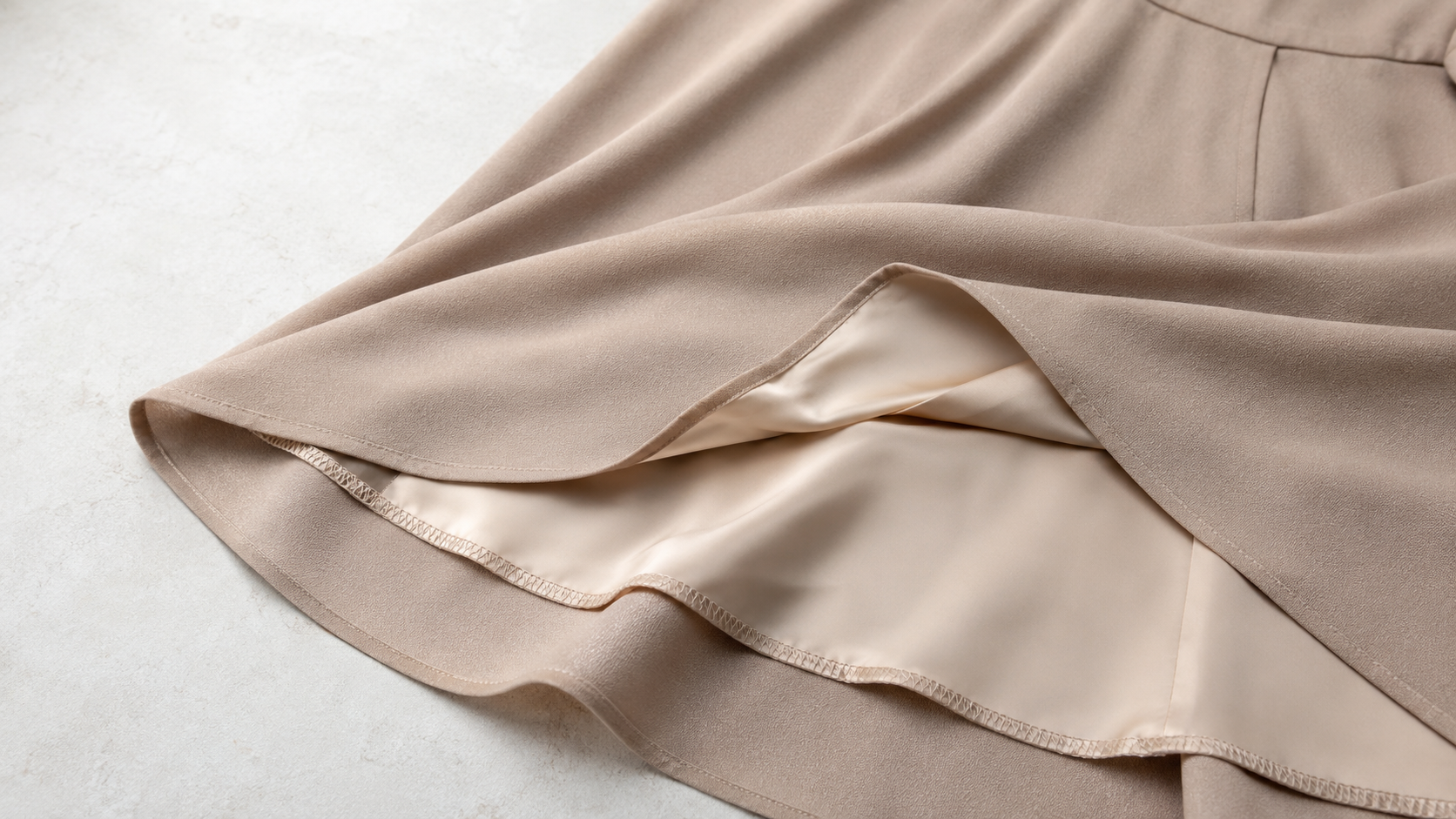
Whether a dress is fully lined, half-lined, or unlined affects cost, construction, comfort, and how the outer fabric drapes. The lining fabric itself needs to be specified for weight, stretch compatibility, color match, and laundering behavior. Lining decisions made late in development create quality problems that are difficult to correct in production.
Closure systems
Back zippers, invisible zippers, button plackets, concealed closures, hook-and-eye systems, and wrap ties each require different construction methods and create different finishing challenges. The closure affects fit, appearance, and how the garment looks when worn, and needs to be specified at the tech pack stage rather than decided during sampling.
Seam finishing
French seams, Hong Kong seams, bound seams, and serged finishes each produce a different interior quality level. For dresses and blouses where the interior may be visible during wear, particularly in unlined or partially lined styles, seam finishing is part of the perceived quality.
Detail finishing
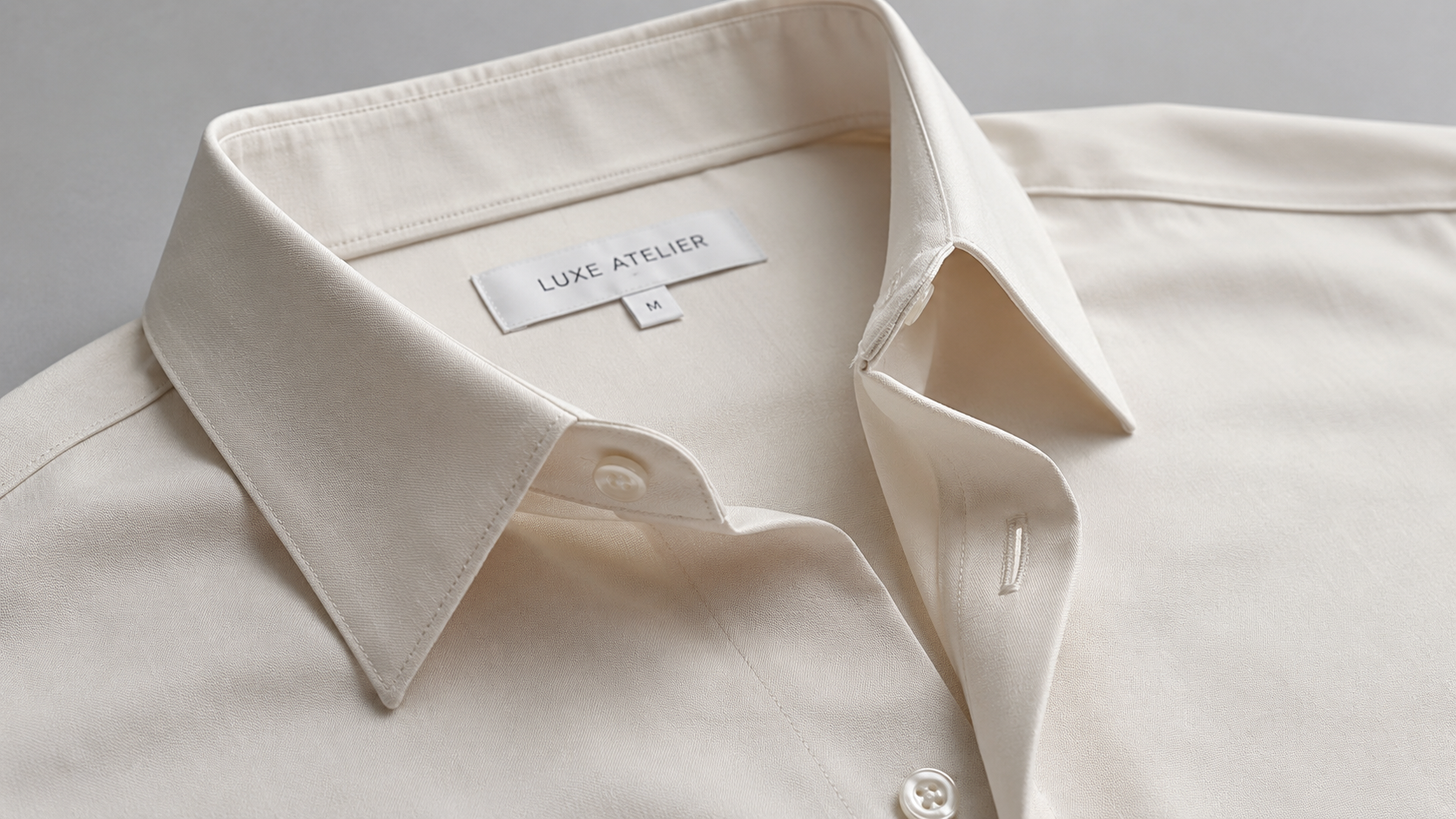
Collar construction, cuff finishing, hem weight, buttonhole quality, and pleat precision are the details that separate a well-made blouse or dress from a garment that reads as inexpensive regardless of the fabric. These finishing standards need to be specified, sampled, and approved before production begins.
Fit Across the Size Range
Dresses and blouses are among the most fit-sensitive garment categories because proportional changes in bust, waist, hip, and torso length affect the pattern differently than in simpler garments. A basic t-shirt can be graded up and down a size range with relatively linear scaling. A fitted sheath dress or a darted blouse cannot, because the relationship between bust point, waist suppression, and hip curve changes at each size in ways that require pattern adjustments beyond simple scaling.
For institutional buyers ordering across a full size range, fit consistency from the smallest to the largest size is where grading discipline shows. A dress that fits well in the sample size but fails at the ends of the range is a grading problem, not a sizing problem, and it needs to be caught during fit review rather than discovered after bulk production.
Fit review before bulk production
Buyers sourcing dresses and blouses at scale should review fit at multiple points across the size range, not only at the sample size. A size small and a size 2X have different proportional relationships, and the pattern needs to account for those differences rather than relying on linear grading alone.
Blouses: What Separates Construction Quality
Blouses are often treated as a simpler garment than dresses, but the construction details that separate a well-made blouse from a basic woven top are precise and visible. Collar set, placket construction, cuff finishing, buttonhole quality, yoke alignment, and dart placement all contribute to whether a blouse reads as a professional garment or a commodity product.
For hospitality programs, corporate apparel, and retail private label, blouse quality is often the most visible daily indicator of the program's production standards. A blouse that puckers at the collar, gaps at the placket, or loses its shape after a few washes reflects poorly on the program regardless of what was specified on paper. This is a category where factory construction experience matters as much as fabric quality.
Who This Category Is Built For
Department stores and specialty retailers
Buying teams sourcing private label dress and blouse programs across multiple silhouettes, fabrications, and seasonal deliveries, where construction consistency and fit accuracy across the size range are baseline requirements.
Hospitality and corporate programs
Hotels, resorts, airlines, and corporate organizations sourcing professional dresses and blouses as part of a broader uniform or staff apparel program, where laundering durability and brand presentation standards apply.
Wholesale buyers
Buyers distributing dresses and blouses to multiple retail accounts, where consistent quality, reliable reorder capability, and grading accuracy determine which accounts a program can supply.
Contemporary and established brands
Brands building or expanding a dresses and blouses category within a broader apparel range, where construction detail and finishing quality need to match the standard set by the rest of the brand.
What Buyers Need Before Approaching Production
What production partners need from you
Tech packs with fabric specification including drape behavior and weight, lining requirements, closure system detail, seam finishing standards, graded measurements across the full size range, fit review notes at multiple sizes, target quantity by style and colorway, and delivery timeline.
What affects pricing and timeline
Number of silhouettes in the program, lining and construction complexity, fabric sourcing requirements including drape-specific materials, number of sizes across the grading range, closure and finishing detail, and whether the program requires laundering performance testing for institutional end use.
A dress that fits well in the sample size but fails at the ends of the range is a grading problem, not a sizing problem. Fit review across multiple sizes before bulk production is where that gets caught.
How Pham Fashion House Supports Dresses and Blouses Programs
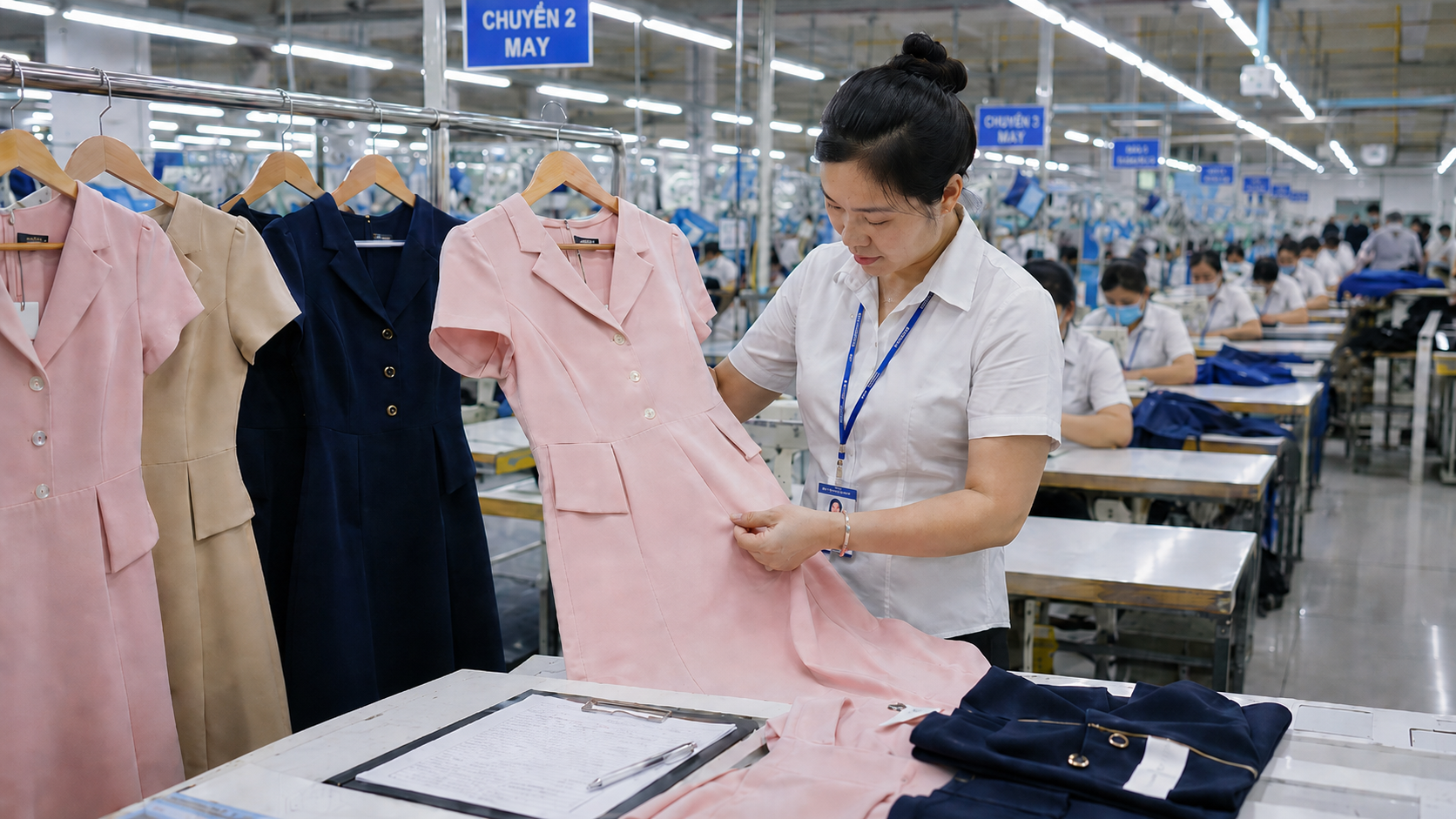
Pham Fashion House is a New York-based apparel sourcing and production partner with operations in Vietnam. Our production network produces over 400,000 dresses and 600,000 shirts and tops monthly across institutional, retail, and wholesale programs. That capacity is supported by pattern engineering through Gerber Design Technology and 3D Optitex for digital garment development, which are particularly valuable in a category where drape simulation and fit review across the size range can reduce sample rounds and catch grading issues earlier.
We work with department stores, specialty retailers, hospitality groups, corporate programs, and wholesale buyers sourcing dresses and blouses at meaningful volume. Programs typically start at 3,000 units per style. For buyers evaluating Vietnam production more broadly, our guide to choosing an apparel manufacturing partner in Vietnam covers factory evaluation criteria that apply across categories. For buyers sourcing dresses and blouses as part of a broader women's apparel program, our women's apparel manufacturing guide covers the full category.
Vietnam apparel production partner
Building a dresses or blouses program at scale?
Pham Fashion House works with department stores, specialty retailers, hospitality groups, and wholesale buyers sourcing dresses and blouses in Vietnam. Programs typically start at 3,000+ units per style.
Discuss Your Program