Vietnam Garment Manufacturing for Scaled Production
Vietnam has become a serious manufacturing option for apparel brands that are planning larger production runs, repeat orders, or more structured sourcing programs. For companies that already have product direction, sales momentum, or operational demand, Vietnam can offer a strong base for quality-focused garment production.
Many brands begin their search with phrases like "Vietnam garment manufacturing," "garment manufacturing Vietnam," or "Vietnam garment factory." Those are useful starting points, but the real decision usually comes down to fit. The right factory depends on the product category, materials, order volume, construction details, quality expectations, and timeline. For brands evaluating a broader production partner, our Vietnam apparel manufacturing services can help connect factory capability with sourcing, quality control, and logistics support.
For established brands, uniform programs, healthcare apparel companies, hospitality groups, and retailers, the goal is usually consistency. They need garments that can be produced at scale, reordered over time, and delivered with the same standards across sizes, colors, and locations. For teams specifically planning uniforms, our guide to custom uniform manufacturing in Vietnam explains how scaled programs differ from small one-time orders.
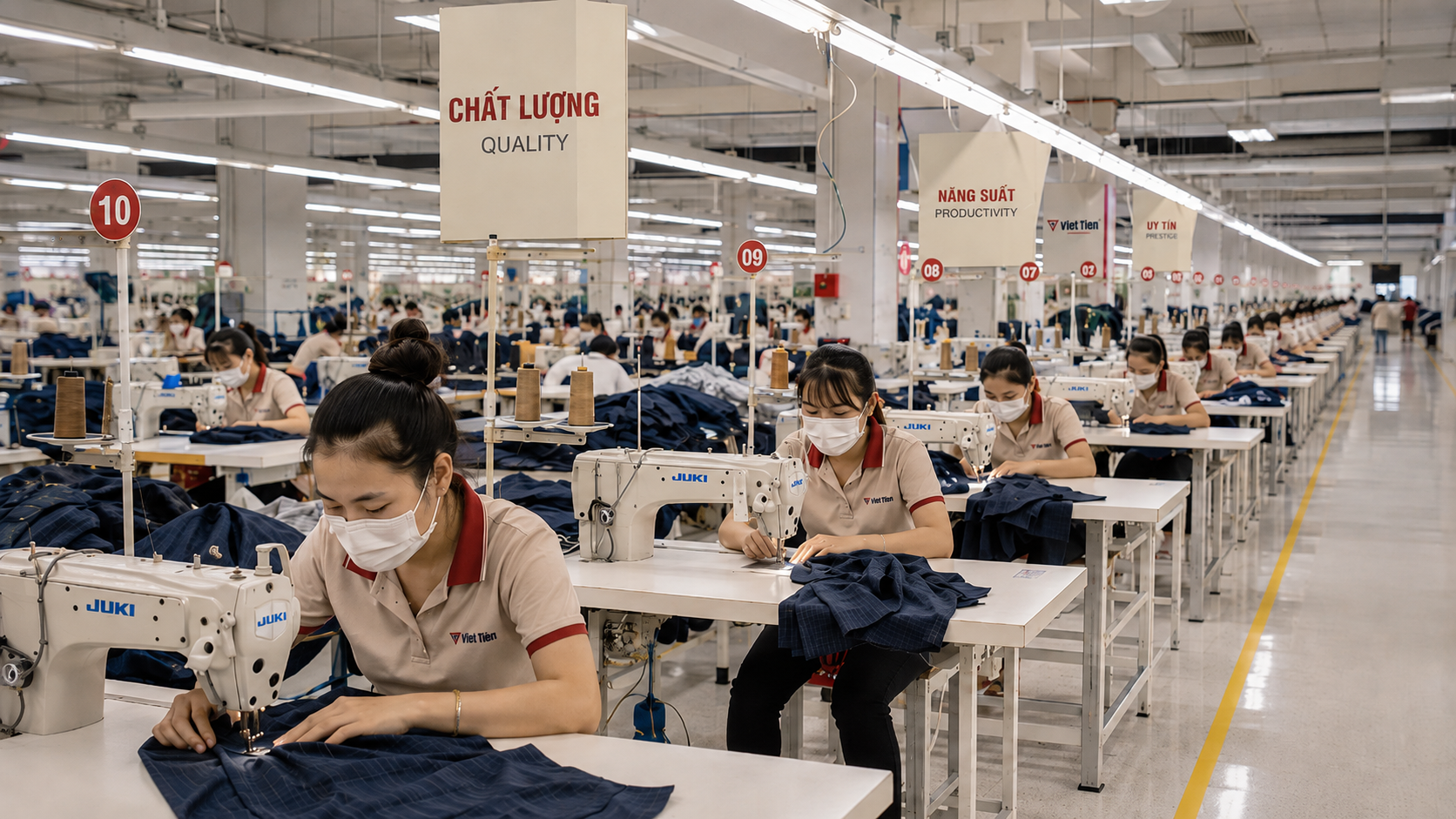
Why Brands Are Looking at Vietnam for Garment Manufacturing
Vietnam has built a strong reputation in apparel manufacturing because of its skilled workforce, export experience, and range of garment production capabilities. Many factories are used to working with international buyers and understand the importance of construction quality, packaging requirements, documentation, and final inspection.
The country can support many apparel categories, including performance apparel, uniforms, casualwear, outerwear, knits, woven garments, formal wear and structured garments, healthcare apparel, hospitality uniforms, and workwear. Brands producing technical or activewear products may also want to review our article on performance apparel manufacturing in Vietnam. Buyers evaluating formal wear and structured garment production can find more detail in our formal wear manufacturing guide.
Tariffs and trade policy often play a role in sourcing decisions, but production decisions should go deeper than landed cost. Brands also need to consider factory capability, material availability, communication, quality control, and how the relationship will work after the first order. For more context on import cost planning, see our Vietnam apparel tariffs guide.
Where Vietnam is often a strong fit
Vietnam garment manufacturing is usually most effective for brands and organizations planning scaled apparel production, repeat programs, or larger custom orders where consistency and execution matter.
What Scaled Production Really Requires
A factory may have the machines, workers, and floor capacity to produce garments, but strong production outcomes depend on the details that come before and during manufacturing. Larger orders require more planning because small issues can become expensive once production begins.
Brands should be ready with clear technical documentation before approaching factories for sampling or pricing. That usually means technical drawings, graded measurements, fabric requirements, trim details, label placement, packaging instructions, size ratios, and a bill of materials.
This level of preparation helps the factory quote more accurately, sample more efficiently, and avoid confusion during production. It also helps the brand compare options in a more meaningful way. If your team is still defining what belongs in the production process, our apparel sourcing and production support page outlines how Pham Fashion House helps organize the path from specifications to shipment.
Clear tech packs
Technical drawings, measurements, construction details, trims, labels, and finishing instructions help reduce confusion before sampling begins.
Fabric planning
Composition, GSM, stretch, shrinkage, hand feel, color, and finish requirements all influence sourcing, pricing, timing, and quality.
Production volume
Larger orders allow factories to manage sourcing, cutting, sewing, inspection, and finishing with better consistency and efficiency.
Quality standards
Quality expectations should be aligned before bulk production so the brand, factory, and production team are working toward the same standard.
Why Minimum Order Quantities Matter
Minimum order quantities are a practical part of custom apparel manufacturing. They are often tied to fabric mill minimums, dye lots, cutting efficiency, production line setup, trims, labels, packaging, inspection, and freight.
Very small runs can be difficult to produce efficiently because many of the same steps are required regardless of order size. Fabric still needs to be sourced or dyed. Samples still need to be reviewed. Production still needs to be scheduled. Finished goods still need to be inspected, packed, and shipped.
This is why Vietnam garment manufacturing is often a better fit for brands planning meaningful production volume. Larger orders give the factory and production team more room to manage quality, consistency, and unit economics in a practical way.
The strongest production programs usually start with clear specifications, realistic order volume, and a plan for repeatable quality.
The Best-Fit Buyers for Vietnam Garment Manufacturing
Vietnam can be a strong option for brands that already understand their customer and are preparing for a serious production run. This may include established fashion brands, healthcare apparel companies, performance apparel brands, formal wear and private label buyers, hospitality groups, school and institutional uniform programs, retail chains, and service companies.
These buyers usually need more than a small trial order. They need consistent fit, reliable materials, clear branding, repeatable quality, and the ability to reorder over time. In many cases, they are managing apparel across multiple styles, departments, stores, teams, or locations.
For this type of buyer, the right production setup can support more than a single order. It can become part of a longer-term sourcing strategy, especially for brands that need factory coordination, quality control, and logistics support in Vietnam.
Established apparel brands
Brands with existing sales, wholesale accounts, retail distribution, or repeat demand are often better positioned for Vietnam production. Formal wear, private label, and performance apparel buyers with clear product specifications and meaningful volume fit this profile well.
Uniform and institutional programs
Healthcare networks, hospitality groups, education systems, retail chains, and corporate organizations need durable garments produced with consistent standards over time and reliable reorder capability.

Uniforms, Scrubs, and Workwear Need More Planning
Uniform programs, medical apparel, hospitality apparel, and workwear are especially dependent on consistency. These products are worn repeatedly, washed often, and expected to represent a brand or organization in real-world settings. A sample that meets the standard once needs to be replicated reliably across thousands of units and across future reorders.
These programs require careful planning around fabric durability, color consistency, logo placement, shrinkage, wash performance, packaging, sizing, and future replenishment. For detailed guidance on specific categories, our articles on hospitality uniform manufacturing and medical apparel manufacturing cover those verticals in depth.
Repeatability is the real objective
A good sample matters, but the larger goal is ensuring the approved product can be produced reliably at scale and reproduced consistently on every subsequent reorder. That requires sealed approved samples, dye lot documentation, and a production partner who manages the reorder standard as rigorously as the first order.
Quality Control Should Start Early
Quality control should not be treated as a final checkpoint only. For larger garment programs, it needs to be part of the process from sample development through shipment. That means reviewing samples against sealed standards, confirming fabric and trims before cutting, monitoring production status, and ensuring finished goods match the approved standard before they leave the factory.
Communication also matters. Brands producing in Vietnam often need to coordinate across time zones, languages, and production teams. Clear communication around fabric, color, fit, labeling, packaging, and delivery expectations can prevent costly delays later. For a detailed breakdown of the quality disciplines that matter most at scale, our apparel production quality guide covers the full framework.
Factory Search vs. Production Partnership
Searching for a Vietnam garment factory is a natural first step. Some brands have the internal team, local relationships, and production experience to manage factory-direct work successfully.
Other brands need more support around factory selection, product clarification, sampling, communication, quality control, and export coordination. This is especially common when a company is producing multiple styles, managing a uniform program, or building a new Vietnam sourcing lane. In those cases, working with a partner that understands Vietnam apparel sourcing and production management can make the process easier to control.
Factory access is only one part of production
The right production setup should account for sourcing, communication, sampling, quality control, documentation, and logistics, not only sewing capacity.
How Pham Fashion House Supports Garment Manufacturing in Vietnam
Pham Fashion House supports brands and organizations that want to manufacture apparel in Vietnam with greater confidence. Through our Vietnam manufacturing network and production coordination model, we help clients navigate sourcing, factory fit, sampling, production oversight, quality control, and export-ready production.
We are best suited for clients planning larger garment production runs, repeat programs, or scaled custom apparel orders across uniforms, formal wear, performance apparel, structured garments, and institutional programs. Our work is focused on helping brands manage the details that shape production outcomes, from fabric and construction to communication, inspection, and logistics.
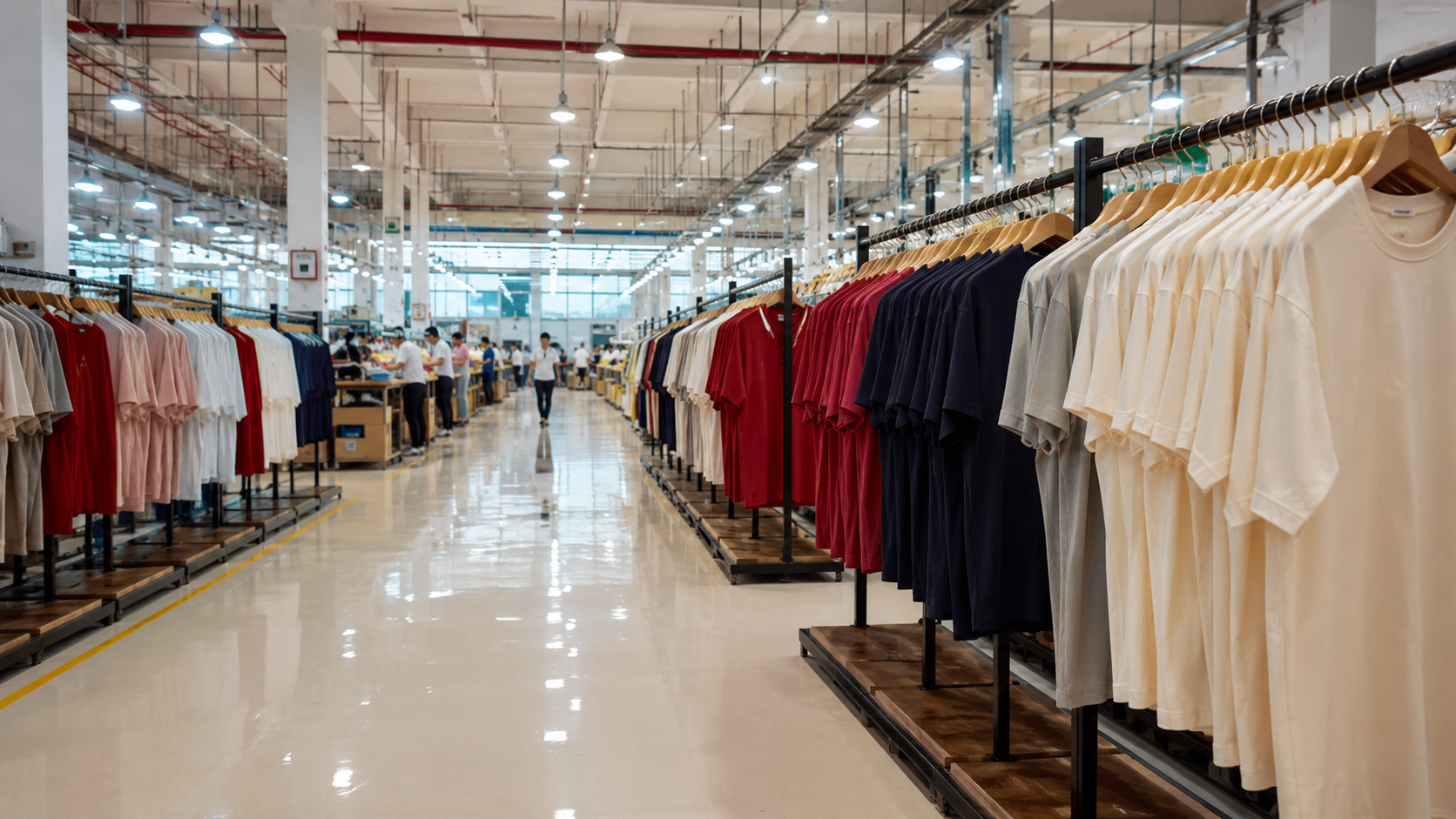
Vietnam garment manufacturing
Build a stronger production program in Vietnam
Pham Fashion House supports established brands and institutional buyers with apparel sourcing, factory coordination, quality control, and scaled garment production in Vietnam. Programs typically start at 3,000+ units per style.
Explore Our Services