Vietnam is one of the world's leading apparel exporters, and for many brands it now sits at the center of the production plan. Its factories combine skilled labor, long export experience, and modern capability across knits, wovens, outerwear, and uniforms.
The country's appeal goes beyond price. Vietnam garment production works best when a brand arrives with a clear product direction, realistic order volume, and a plan for quality control. With that in place, the same factory base can support performance apparel, uniform programs, casualwear, knitwear, tailored garments, outerwear, and private label production.
This guide covers why brands choose Vietnam, what production costs and timelines depend on, how minimum order quantities work, and what to prepare before approaching a factory.
Where Vietnam fits best
Vietnam is strongest for brands that need a reliable balance of quality, cost, supplier diversification, and scalable production, and that plan to reorder proven styles over several seasons.
Why Fashion Brands Choose Vietnam for Garment Production
Vietnam has built its reputation on factories that serve international buyers every day. Many are fluent in the documentation export production requires: tech packs, sampling rounds, production calendars, packaging and labeling specifications, third-party inspection, and shipping coordination.
A factory alone rarely makes a production program. Brands also need material sourcing, clear communication across time zones, quality control, and a defined path from sample approval to bulk production. For many growing brands, the production partner who manages that process is as important as the factory itself.
Our Vietnam apparel manufacturing services page explains how Pham Fashion House coordinates sourcing, factory communication, production oversight, quality control, and logistics for brands producing in Vietnam.
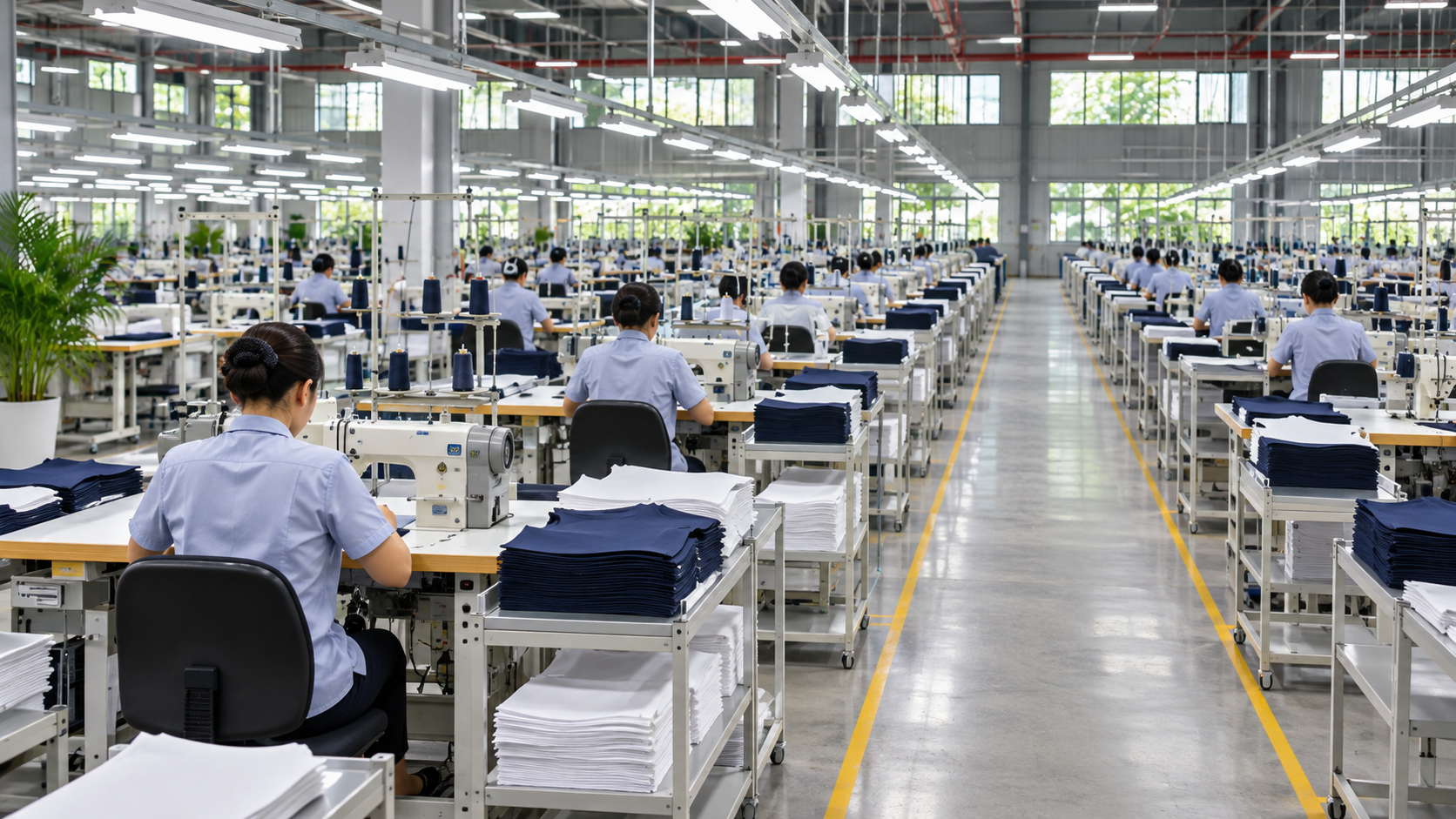
Cost Efficiency with Quality Expectations
Cost is one reason brands look at Vietnam, but it should never be the only reason. A lower unit price has value only when the finished garment meets the brand's standards for fit, construction, material performance, and consistency across the run.
Vietnam offers competitive production economics alongside quality-focused manufacturing. Experienced sewing teams, production managers, and export-oriented factories produce garments to commercial standards at scale. What a garment costs depends on fabric, trims, construction complexity, quantity, and finishing, and we show how a factory price is built in our guide to apparel costing and FOB pricing.
The strongest results come from technical preparation. Brands should provide production-ready tech packs, graded measurements, fabric requirements, trim specifications, packaging instructions, and approved samples before moving into bulk.
Clear specifications
Tech packs, graded measurements, construction details, trims, labels, and packaging instructions let factories quote and sample accurately.
Realistic volume
Production quantities, typically from around 3,000 units per style, allow factories to plan fabric, cutting, sewing, inspection, and finishing efficiently.
Quality alignment
Fit, fabric, stitching, finishing, color, and packaging standards are agreed in writing before bulk production begins.
Production oversight
Regular communication and inline inspection keep sampling, production, and shipment on schedule and to standard.
A Skilled Workforce and Established Factory Base
Vietnam's garment industry spans specialized factories for technical garments and large facilities built for high-volume export programs. That range gives brands more options when matching a product to the right capability, order size, and quality level.
Categories produced at scale include T-shirts and polos, knitwear, activewear and athleisure, woven shirts, dresses, tailored garments, outerwear, workwear, scrubs, and hospitality uniforms. For technical and knit categories, fabric performance, fit, durability, and construction carry the most weight, as covered in our guides to performance apparel manufacturing and knitwear manufacturing in Vietnam.
Broad category coverage
From everyday knits to structured tailoring and seam-sealed outerwear, most apparel categories can be produced within one country's supply base.
Export-ready production
Established factories work to international expectations for sampling, labeling, packaging, documentation, and final inspection.
Vietnam as Part of a Modern Sourcing Strategy
Few brands now rely on a single production country or a single supplier. Vietnam often anchors a broader sourcing strategy that spreads risk, adds capacity, and builds more resilient programs, a comparison we work through in China compared with Vietnam for garment manufacturing.
Moving production should still be a deliberate decision. The right answer depends on product category, fabric availability, order volume, lead time, compliance requirements, and the kind of factory relationship the brand needs.
Brands comparing suppliers should look past the first price quote. A sound sourcing decision also weighs communication, factory fit, minimum order quantities, sample development, the inspection process, documentation, and long-term reorder potential.
The best sourcing decisions balance cost, capability, quality, communication, and long-term production fit.
Strategic Location and Export Experience
Vietnam's position in Southeast Asia gives brands access to a mature export environment, with deep-water ports in the north and south, established manufacturing zones, and regional supplier networks for fabric and trims.
Trade policy shapes the landed cost of every order. Vietnam's free trade agreements, including the EVFTA, UKVFTA, CPTPP, and RCEP, can reduce or remove duties in key markets when a garment meets the rules of origin, which we explain in our guide to Vietnam's free trade agreements and market access. For US-bound goods, current duty rates and recent changes are tracked in our Vietnam apparel tariffs guide.
What a Vietnam Production Timeline Looks Like
Planning should cover more than the factory's sewing time. A typical program moves through four stages, each depending on the one before it.
1. Tech pack review
The factory confirms construction, materials, and measurements, and identifies anything that needs clarification before sampling.
2. Sampling and approvals
Fit samples, lab dips, and a pre-production sample are approved. That sample becomes the reference for bulk.
3. Materials and booking
Fabric and trims are ordered, and production capacity is reserved against the delivery date.
4. Bulk production and inspection
Cutting, sewing, finishing, and inline checks, followed by a final inspection before goods are packed and shipped.
From a complete tech pack, a scaled program in Vietnam typically runs 90 to 150 days to ex-factory, with outerwear and imported fabrics at the longer end. The sampling stage is covered in our guide to the sample development process, and the inspection stage in our guide to quality control and inspection. The calendar also has to account for Tet, the Lunar New Year, which falls on February 6, 2027, when factories and fabric mills run below full output for several weeks.
Sustainability and Responsible Production
Buyers, retailers, and regulators now expect evidence of responsible production. In Vietnam, many manufacturers work to international social compliance audits, chemical management requirements, and quality and safety standards, and more mills offer certified and recycled materials.
For brands, responsible production is an operating discipline. It covers fabric selection, waste reduction, worker safety, fair labor practices, chemical management, packaging, and quality control that keeps defective output low. Our guide to ethical garment manufacturing in Vietnam explains how responsible sourcing and scaled production work together.
Responsible production starts with planning
Clear specifications, realistic order planning, and consistent quality control reduce waste and rework long before any certificate is issued.
Why Minimum Order Quantities Matter
Minimum order quantities are tied to real production costs: fabric mill minimums, dye lots, cutting efficiency, line setup, trims, labels, packaging, inspection, and freight.
Many of those steps take the same effort whatever the order size. Samples still need to be developed, fabric still needs to be sourced or dyed, production still needs to be scheduled, and finished goods still need to be inspected, packed, and shipped. Spread across a larger run, those fixed costs fall per unit, and quality becomes easier to hold steady.
For that reason, Vietnam suits brands planning meaningful volume, repeat orders, or scalable programs. The programs we produce typically start at around 3,000 units per style, and quantities by style and color shape which fabrics and factories are available.
Uniforms, Workwear, and Repeat Programs
Vietnam is especially well suited to organizations that need consistent apparel across teams, sites, and customer-facing roles. That includes healthcare apparel, hospitality uniforms, retail team apparel, school uniforms, industrial workwear, and corporate programs.
These programs depend on durability, color consistency, sizing, wash performance, logo placement, replenishment, and packaging. Our guide to custom uniform manufacturing in Vietnam covers how institutional buyers approach scaled production, and our piece on repeat production programs explains why proven styles receive priority when factories allocate capacity.
Uniform programs
Healthcare, hospitality, retail, school, and service teams need consistent garments that can be reordered season after season.
Repeat production
Programs grow stronger when fabric, fit, color, trims, packaging, and quality standards carry across every order.
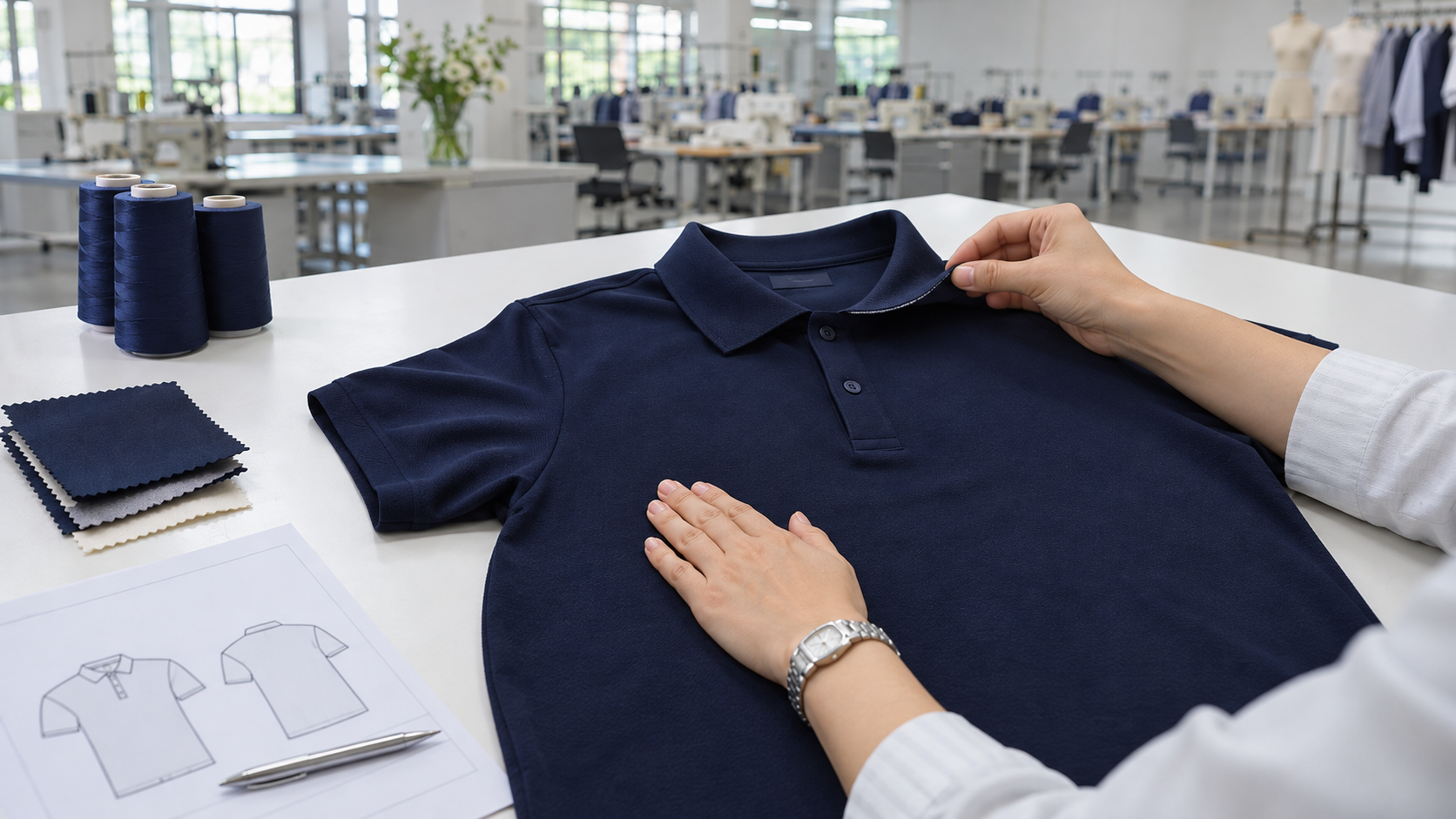
Choosing the Right Apparel Manufacturing Partner
Searching for a garment factory in Vietnam is a natural first step, but access to a factory does not guarantee a good outcome. The product category, order volume, technical requirements, quality expectations, communication, and export process all need to match.
A strong production partner brings structure to that match. That includes clarifying requirements, identifying suitable capability, coordinating sampling, managing communication, overseeing quality, and preparing orders for shipment. Our article on how to choose an apparel manufacturing partner in Vietnam sets out the questions worth asking.
Why Partner with Pham Fashion House?
Pham Fashion House is a New York based apparel manufacturing and sourcing partner with production operations in Vietnam. We manage programs from tech pack review and sampling through bulk production, quality control, and export, with one team accountable from start to finish.
Our work is best suited to brands and organizations with clear product requirements, meaningful production plans, and a need for structured support across the process. We help move an approved design into an organized, repeatable production program.
Planning Garment Production in Vietnam?
Vietnam's garment industry combines skilled production, export experience, competitive economics, and capability across nearly every apparel category. The opportunity is strongest when requirements are clear, volumes are realistic, and quality control is built in from the start.
Accurate pricing and a realistic timeline start with six inputs:
- Garment type and category, with any reference samples.
- A finalized tech pack with graded measurements and a bill of materials.
- Fabric and construction requirements, including composition, weight, and finish.
- Quantity by style and color, and whether the order is one-time or ongoing.
- Size range and any fit standards.
- Target delivery date and destination.
Vietnam garment production
Planning a production program in Vietnam?
Pham Fashion House manages apparel production in Vietnam for brands, uniform programs, and institutional buyers, from tech pack review through export. If you are preparing a program, we are glad to review your requirements and calendar with you.
Start a ConversationOr explore our Vietnam apparel manufacturing services.