Children's Apparel Manufacturing in Vietnam: A Guide for School Districts, Retail Chains, and Institutional Buyers
Children's apparel production carries technical requirements that general garment manufacturing does not. Safety compliance, growth-stage size grading, and construction standards specific to active and developing bodies all need to be built into the production process from the start, not added as an afterthought. A factory with strong adult apparel capability does not automatically have the compliance infrastructure or grading experience that children's programs require.
This guide is written for school districts, retail chains, hospitality groups, and wholesale buyers building children's apparel programs at scale in Vietnam. It covers what makes children's production a distinct category, the safety and compliance standards that matter, and what large institutional buyers need before approaching a factory.
How this guide relates to our uniform manufacturing content
Our custom uniform manufacturing guide covers workforce uniform programs across healthcare, hospitality, education staff, and corporate categories. This article is distinct: it addresses children's apparel specifically, which introduces safety compliance, growth-stage grading, and construction requirements that adult workforce uniforms do not.
Why Children's Apparel Is a Distinct Production Category
Children's apparel production sits under a different regulatory and technical standard than adult garments in nearly every market. A factory producing this category needs to manage compliance testing, construction details specific to younger and more active wearers, and a size grading system that spans a wider range of body proportions across a shorter unit of growth than adult sizing.
Regulatory compliance
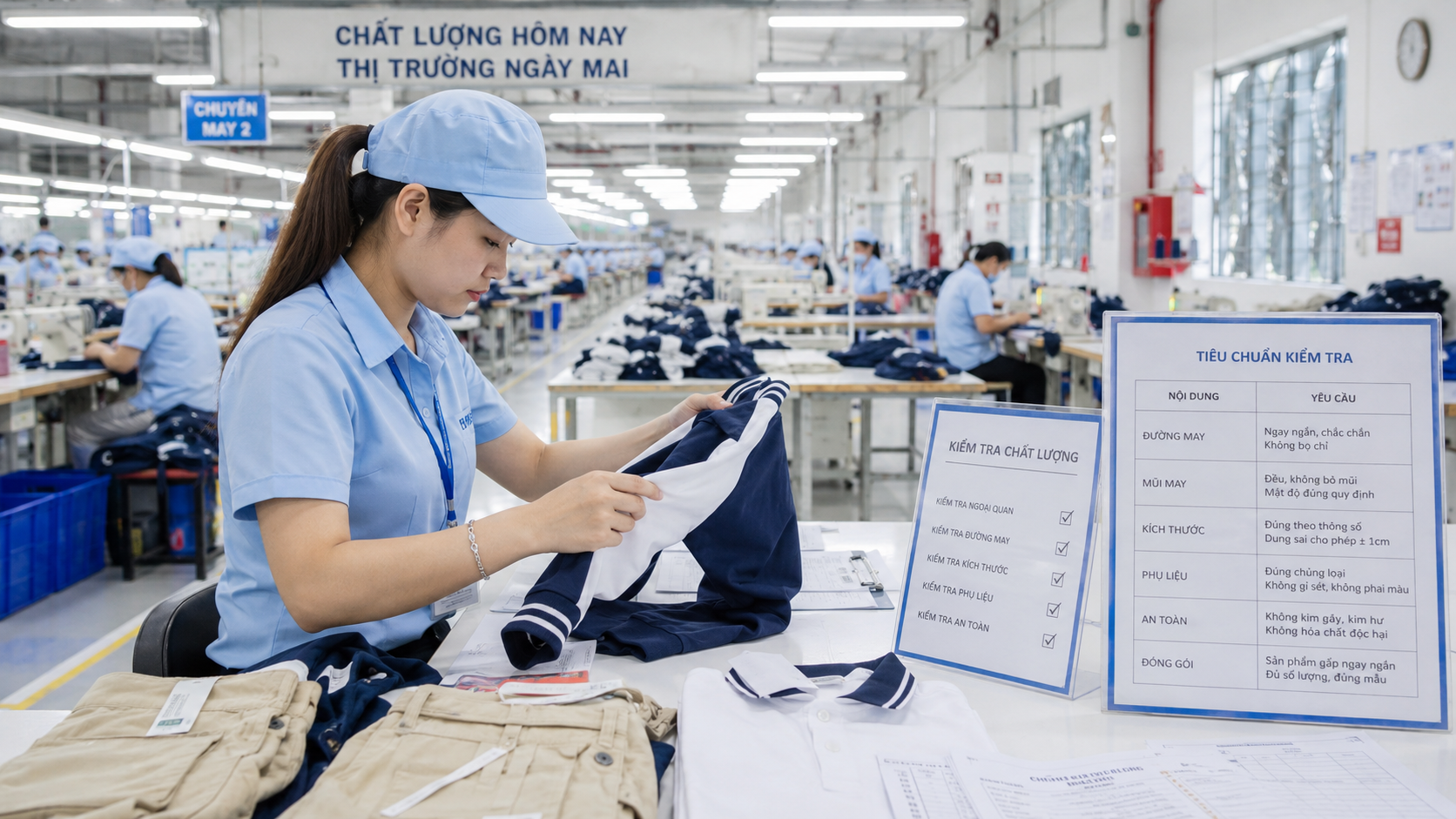
Children's apparel sold in the US is subject to CPSIA (Consumer Product Safety Improvement Act) requirements, including lead content limits, phthalate restrictions, and flammability standards. The EU and other markets apply their own children's product safety frameworks. A production partner needs testing infrastructure built around these standards, not general apparel compliance alone.
Drawstring and cord safety
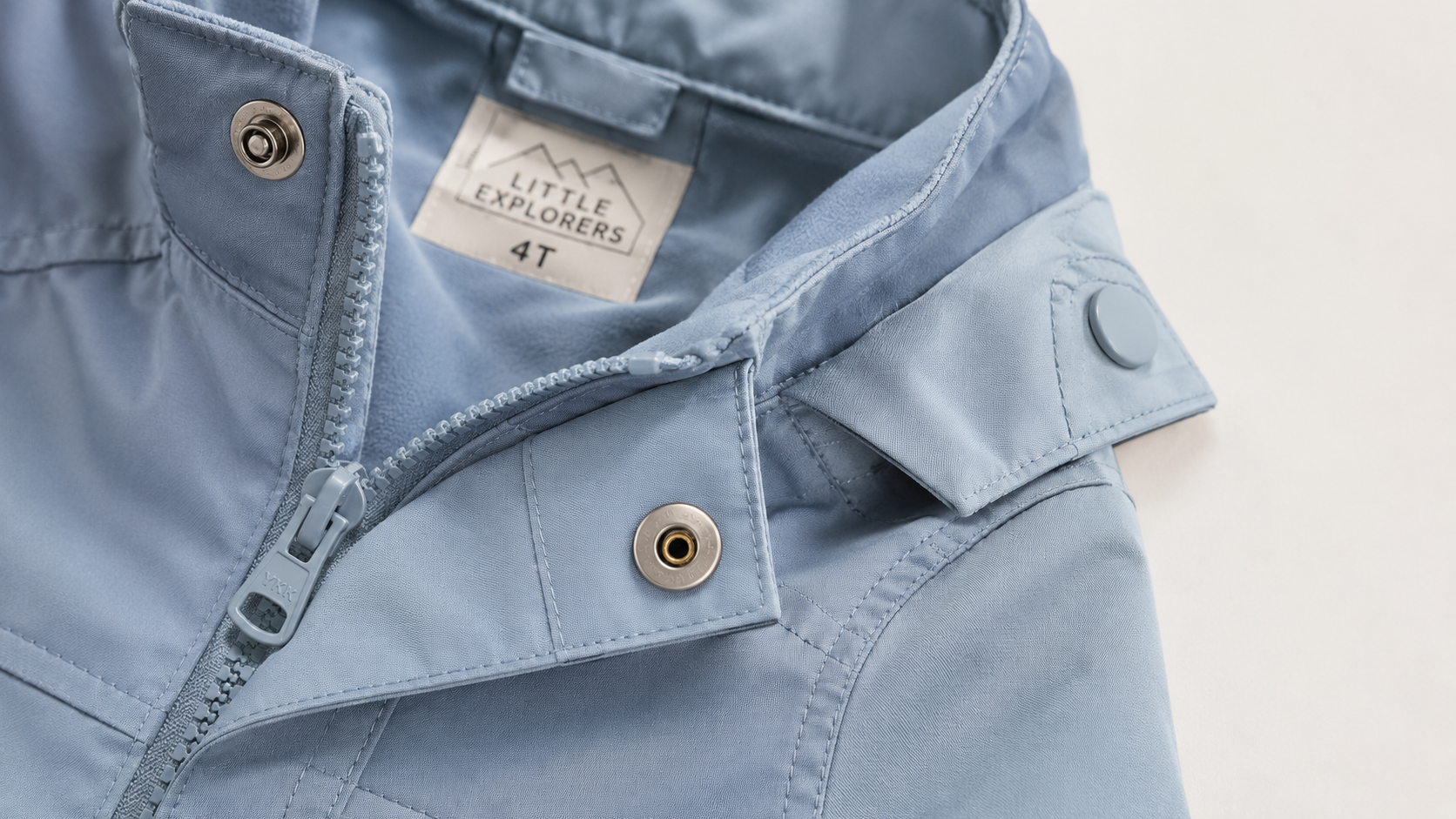
Drawstrings, cords, and similar closures on children's outerwear and tops are subject to specific safety standards governing length, placement, and attachment, intended to prevent strangulation and entanglement hazards. These standards need to be built into the construction specification, not addressed after a sample is already made.
Choking hazard testing
Buttons, snaps, decorative trims, and other small components need to meet small parts testing standards to confirm they cannot detach and present a choking hazard. This applies across the full size range, including styles produced in toddler and young children's sizes.
Growth-stage size grading
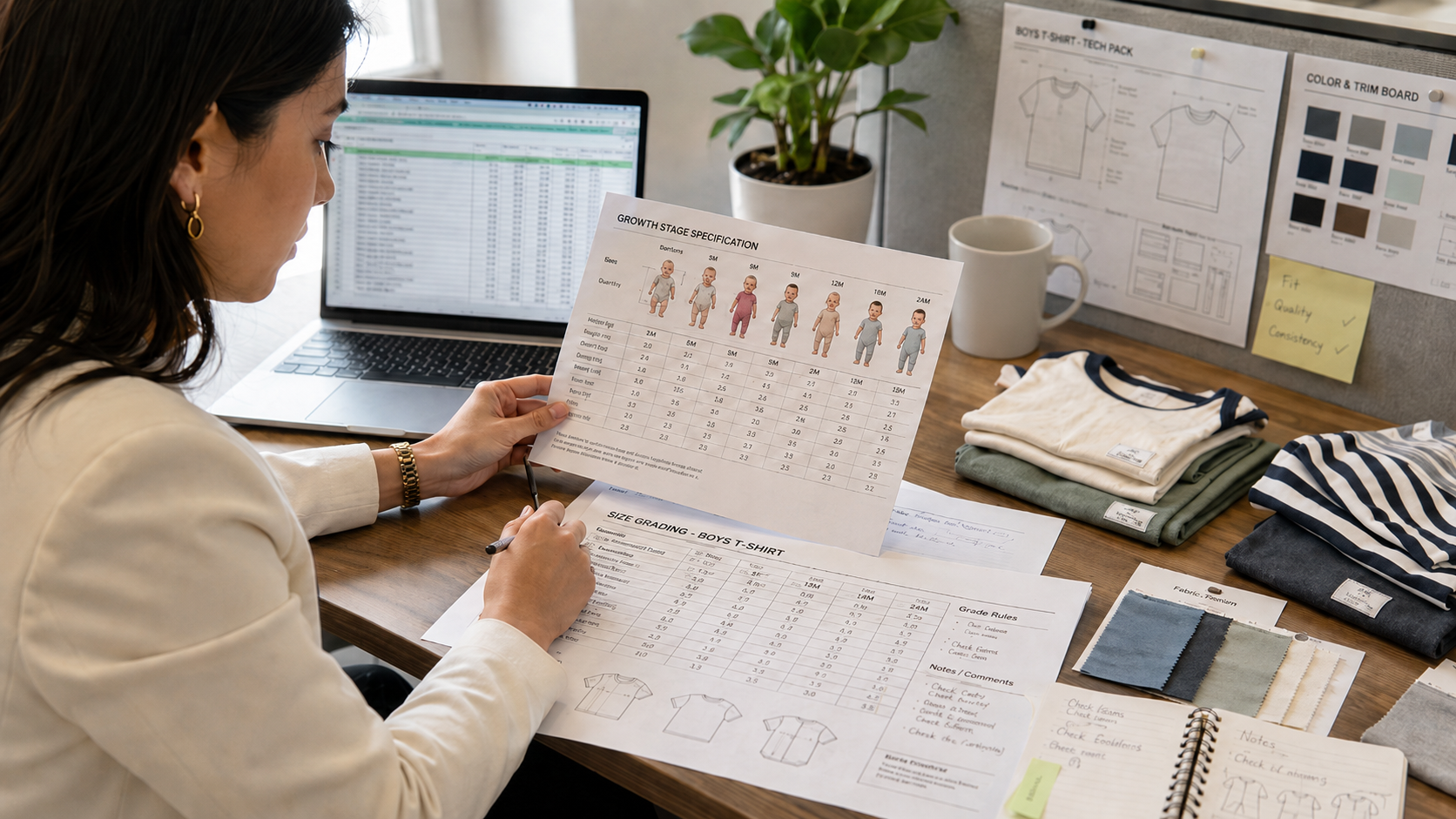
Children's size ranges span faster and less linear growth patterns than adult grading. A program covering ages five through fourteen, for example, needs a grading system that accounts for proportional changes in torso, limb length, and fit, not a simple scaled-down version of an adult block.
Construction Standards for Active Wear
Beyond regulatory compliance, children's apparel needs to withstand a different pattern of wear than adult clothing. Active use, frequent laundering, and growth all place demands on construction that a standard adult garment specification does not anticipate.
Reinforced stress points
Knees, seat seams, and underarm construction see more repeated stress in children's apparel than in most adult garments. Reinforced stitching and appropriate fabric selection at these points reduce premature failure across a long wear cycle.
Growth allowance construction
Adjustable waistbands, let-down hems, and similar construction features extend a garment's usable life across a growth period, which matters for institutional programs managing per-student or per-child apparel budgets across a school year or season.
Durable, repeat-launderable fabric
Institutional children's programs typically launder garments more frequently than retail apparel sees in normal use. Fabric and dye selection need to hold color and shape across many wash cycles without the program needing frequent reorders for fading or shrinkage.
Consistent fit across a large population
A school network or retail chain ordering across a full children's size range needs fit consistency from the smallest size to the largest. Grading errors that are minor in a small order become a significant problem at the scale these buyers operate.
Production network capability
Childrenswear is a confirmed category within our production network's range, alongside suiting, outerwear, uniforms, and other core categories. Specific certifications and compliance documentation are confirmed during the factory matching process based on the destination market and program requirements.
Who This Category Is Built For
School districts and school networks
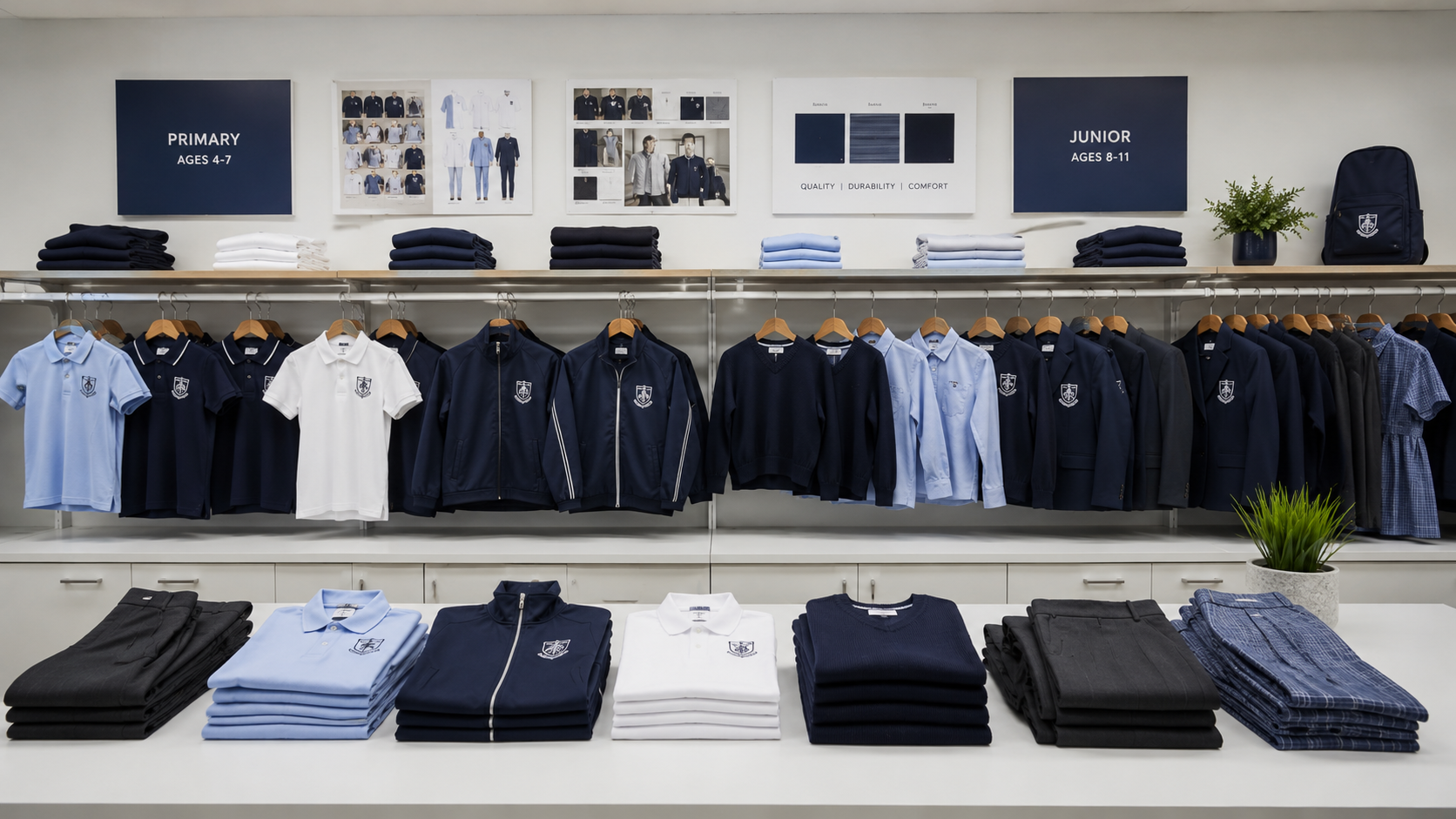
Bulk uniform programs covering thousands of students across multiple grade levels and campuses, where consistency, durability, and reorder reliability across a school year matter as much as initial unit cost.
Retail chains and department stores
Buying teams sourcing private label children's apparel lines at meaningful volume, where compliance documentation and consistent quality across a broad size range are baseline requirements for retail distribution.
Hospitality and resort groups
Properties with children's club programming, family amenity lines, or branded kids' merchandise distributed across multiple locations, requiring the same brand consistency standards as adult-facing hospitality uniforms.
Wholesale buyers
Buyers distributing children's apparel to multiple retail accounts, where compliance documentation, grading accuracy, and production reliability determine which accounts a program can realistically supply.
What Buyers Need Before Approaching Production
What production partners need from you
Tech packs with size range and grading specifications, destination market for compliance purposes, fabric and trim direction, construction details including any growth allowance features, target quantity by style and size, and delivery timeline aligned to a school year or seasonal program if applicable.
What affects pricing and timeline
Compliance testing requirements by destination market, breadth of the size range and number of grading points, construction complexity including growth allowance features, fabric durability requirements for repeat institutional laundering, and quantity by style and size combination.
A grading error that is minor in a small order becomes a significant problem at the scale a school network or retail chain operates. Consistency across the full size range is where children's apparel production is actually tested.
How Pham Fashion House Supports Children's Apparel Programs
Pham Fashion House is a New York-based apparel sourcing and production partner with operations in Vietnam. Childrenswear is a confirmed category within our production network, supported by the same compliance infrastructure, certification documentation, and quality oversight that support our broader manufacturing programs.
We work with school districts, retail chains, hospitality groups, and wholesale buyers building children's apparel programs at institutional scale. Programs typically start at 3,000 units per style. For buyers managing broader uniform programs that include both adult and children's categories, our custom uniform manufacturing guide covers the workforce side of that program. For buyers evaluating Vietnam production more broadly, our guide to choosing an apparel manufacturing partner in Vietnam covers factory evaluation criteria that apply across categories.
Vietnam apparel production partner
Building a children's apparel program at scale?
Pham Fashion House works with school districts, retail chains, hospitality groups, and wholesale buyers building children's apparel programs in Vietnam, supported by the compliance and quality infrastructure institutional programs require. Programs typically start at 3,000+ units per style.
Discuss Your Program