Denim and Casual Bottoms Manufacturing in Vietnam: A Guide for Specialty Retailers and Wholesale Buyers
Denim manufacturing conversations often start and end with unit cost at the highest possible volume, which makes sense as a starting point. It is just not the whole conversation. Wash technique, fit innovation, and construction detail carry real weight in determining the right production partner, whatever the order size.
Specialty retailers, department stores, and wholesale buyers sourcing this category are evaluating product development capability alongside cost. This guide covers what denim and casual bottoms production actually requires in Vietnam, what to expect from a capable factory partner, and who this category is built for.
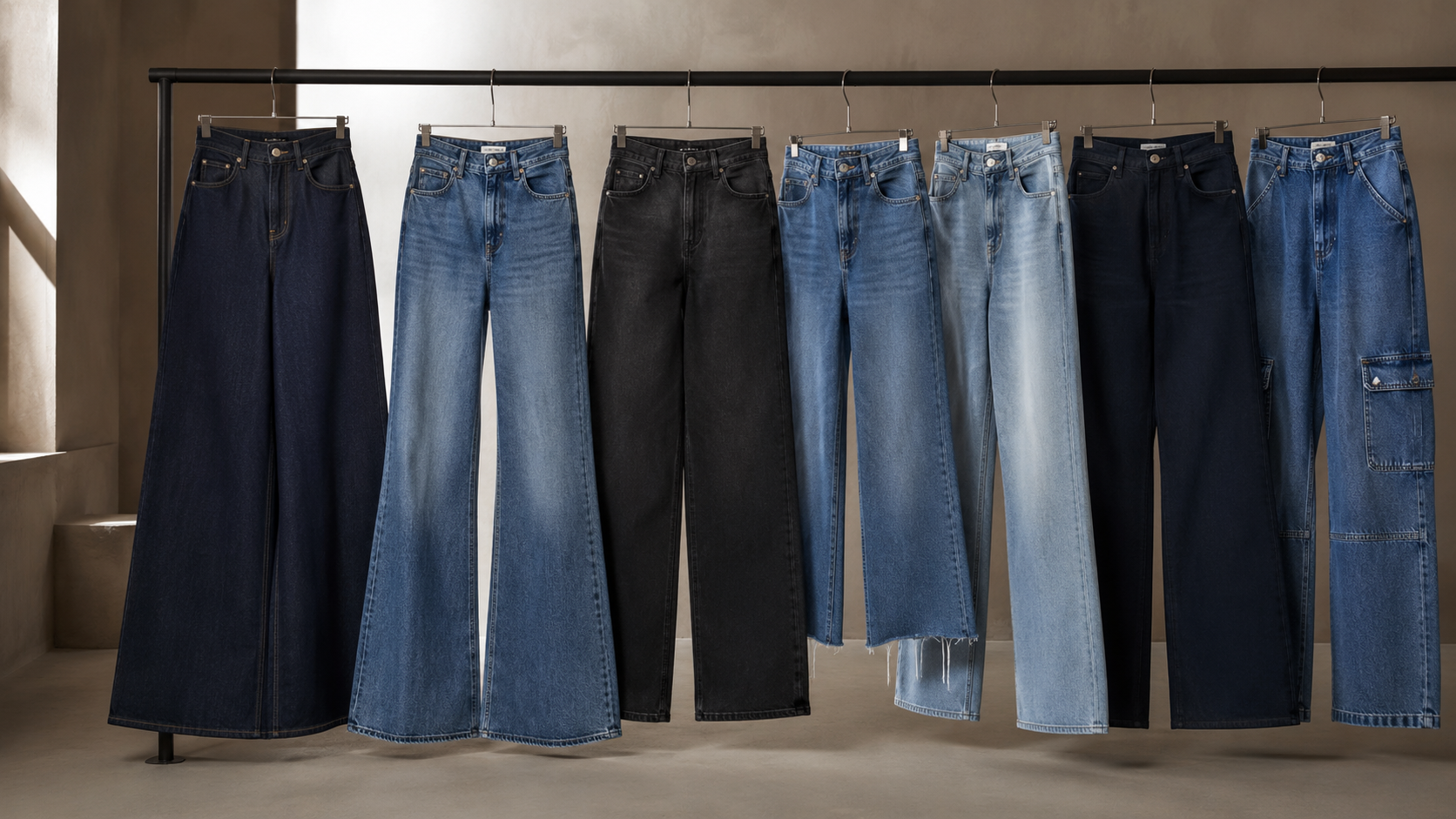
What Strong Denim and Casual Bottoms Production Looks Like
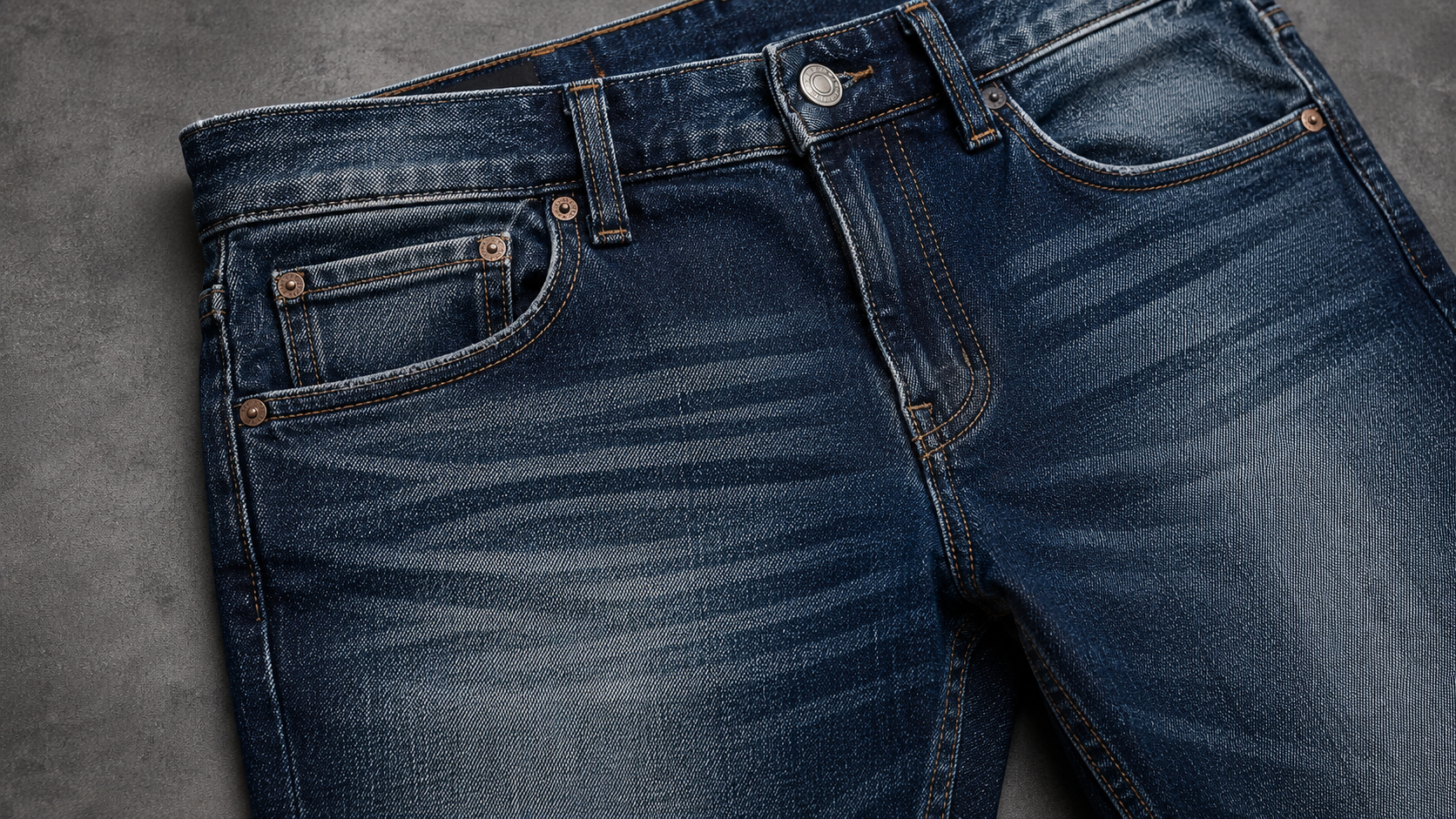
The construction disciplines behind denim and casual bottoms show up directly in the finished garment. Whiskering, distressing, button hem detail, and fit innovations like flare and wide-leg silhouettes all require pattern development and wash process control. Producing these details consistently, whether across a focused specialty run or a large private label program, is where a factory's product development capability actually gets tested.
Our production network has demonstrated this capability directly, including fit-forward silhouettes, wash and finishing technique, and corduroy construction in a classic five-pocket build. That depth applies across order types, from a specialty retailer's curated assortment to a department store's private label program at meaningful volume.
What Denim and Casual Bottoms Production Requires
Wash and finishing technique
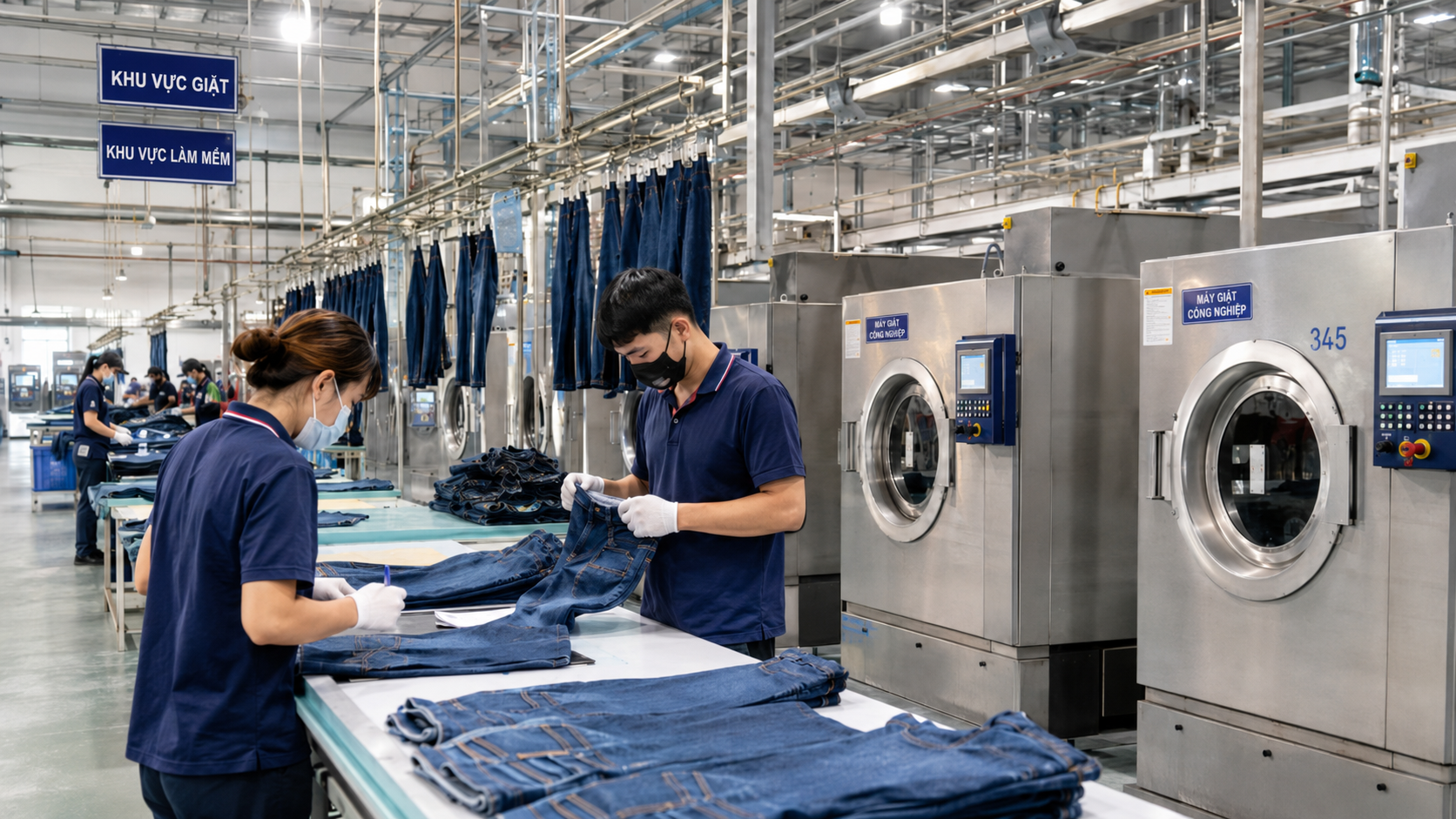
Whiskering, distressing, stonewashing, and enzyme washing each require specific process control to execute consistently. A wash technique that looks right on a sample needs to reproduce reliably across every unit in a full production run, which depends on the factory's washing infrastructure and process discipline.
Fit and pattern development
Flare, wide-leg, and other contemporary silhouettes depend on pattern development experience specific to denim's weight and stretch behavior. A factory with strength in lighter wovens does not automatically translate that skill to denim's particular drape and construction requirements.
Hardware and trim detail
Button hem finishing, rivets, and other denim-specific hardware need to be specified and sourced as part of the tech pack. These details are part of what separates a fashion garment from a basic one and need the same level of specification as fabric and construction.
Cross-category construction
Denim increasingly appears in hybrid constructions, denim paired with knit ribbing at the waist and cuff, or denim-adjacent fabrications like corduroy in the same five-pocket silhouette family. A factory capable of this range offers buyers more flexibility within a single production relationship.
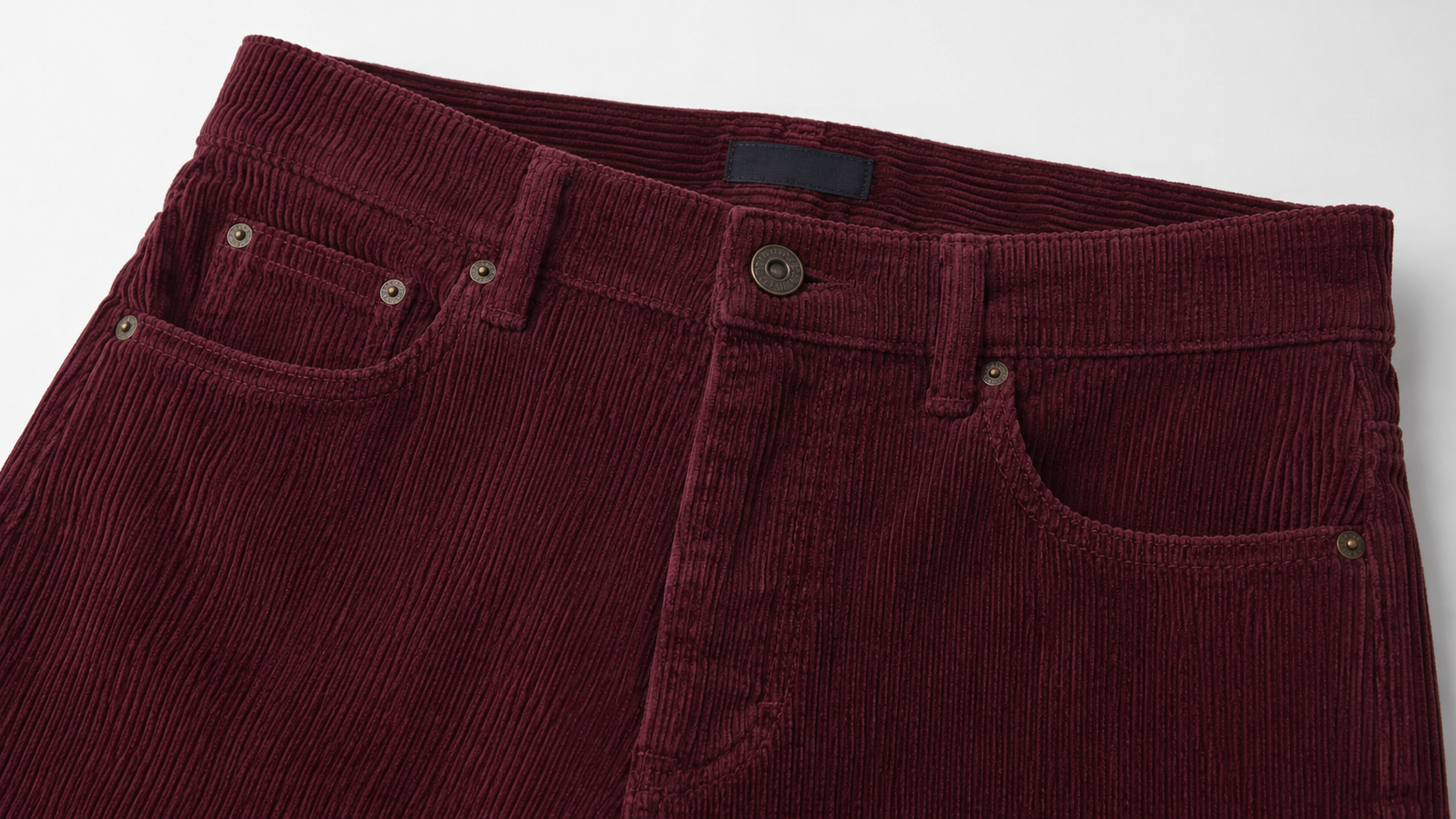
Corduroy and Adjacent Casual Fabrications
Corduroy occupies a similar production logic to denim despite being a different fabric entirely. Classic five-pocket corduroy trousers require the same pattern development and construction discipline as denim, with the added consideration of wale direction and pile consistency across cut pieces.
For buyers building a casual bottoms program that spans denim and corduroy, sourcing both from the same production network simplifies development and keeps construction standards consistent across the range. A factory experienced in denim construction generally translates that capability to corduroy and similar casual fabrications without needing a separate specialist relationship.
What this looks like in practice
Production samples in our network include denim with whiskering and button hem detail in flare and wide-leg silhouettes, a denim and knit hybrid jogger construction, and burgundy corduroy trousers in a classic five-pocket build. These reflect the pattern development and finishing capability that well-constructed programs require, at any volume.
Who This Category Is Built For
Specialty retailers
Retailers building a denim and casual bottoms assortment with real construction quality and styling detail. Wash technique and fit development are part of the brand experience, whatever the order size.
Department store buyers
Buying teams sourcing private label denim and casual bottoms programs at meaningful volume, where construction quality and consistent fit across a size run matter as much as price.
Wholesale buyers
Buyers sourcing denim and casual bottoms for distribution to multiple retail accounts, where product development capability and reliable reorder consistency are the deciding factors in a production partner.
Contemporary and premium brands
Brands building a denim or casual bottoms category within a broader apparel range, where construction detail and fit innovation need to match the standard set by the rest of the brand's product.
What Buyers Need Before Approaching Production
What production partners need from you
Tech packs with wash and finishing specification, fit and pattern reference, hardware and trim details, size range and grading, target quantity by style and colorway, and target FOB pricing. Reference samples for wash technique are especially useful since fade and distressing are difficult to specify in writing alone.
What affects pricing and timeline
Wash and finishing complexity, fit development requirements if working from a new pattern rather than an existing block, hardware specification, and whether the program includes cross-category construction like denim and knit hybrids. Quantity by style and colorway affects both pricing and minimum order structure.
A wash technique that looks right on a single sample needs to reproduce reliably across an entire production run. That consistency is what separates a strong denim production partner from a general garment factory.
How Pham Fashion House Supports Denim and Casual Bottoms Programs
Pham Fashion House is a New York-based apparel sourcing and production partner with operations in Vietnam. Our production network has demonstrated strong denim and casual bottoms capability, including wash and finishing technique, fit-forward silhouettes, and cross-category construction, alongside corduroy in a classic five-pocket build.
We work with specialty retailers, department stores, and wholesale buyers sourcing denim and casual bottoms programs at meaningful volume. Programs typically start at 3,000 units per style. For buyers evaluating Vietnam production more broadly, our guide to choosing an apparel manufacturing partner in Vietnam covers factory evaluation criteria that apply across categories.
Vietnam apparel production partner
Building a denim or casual bottoms program?
Pham Fashion House works with specialty retailers, department stores, and wholesale buyers sourcing denim and casual bottoms in Vietnam. Programs typically start at 3,000+ units per style.
Discuss Your Program